

Buying Your First Home Outside the GTA? What to Consider Before Choosing Where to Live
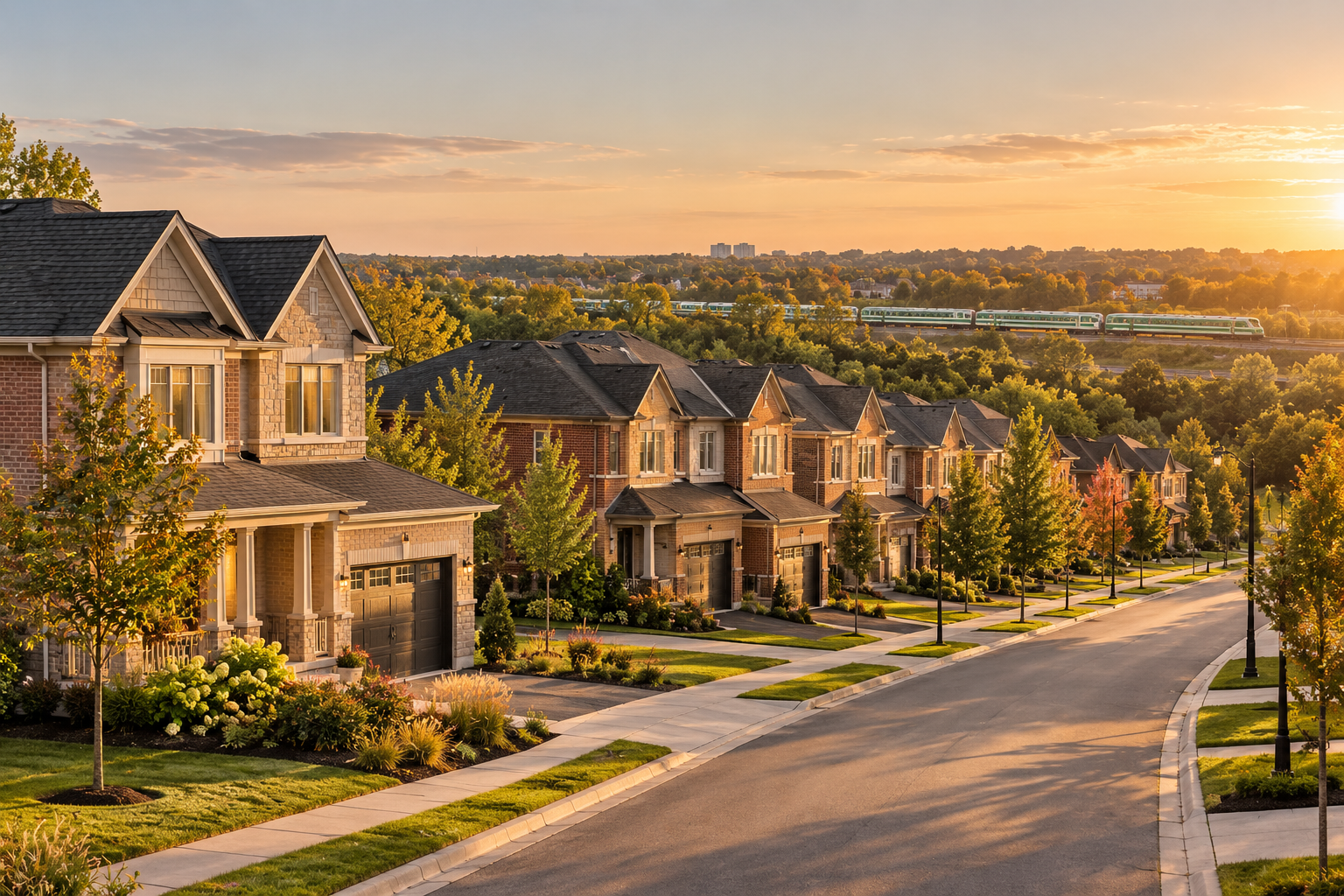
For a lot of first-time buyers, the real choice isn’t between a home and no home. It’s between a smaller place close to Toronto and a very different kind of home a little farther out.
Moving outside the GTA can be a smart move for a first-time home buyer in Ontario, as long as you compare more than the listing price. Before choosing a community, estimate the full monthly cost of owning the specific home: mortgage, property tax (based on MPAC’s assessed value and the municipality’s rates), insurance, utilities, maintenance and transportation. Then measure the real door-to-door commute, including GO station parking and highway access, at the time you would actually travel. Check what is planned nearby, whether the home is resale or new construction, and whether it carries condo or POTL fees. Budget for closing costs, including Ontario land transfer tax, and keep some savings in reserve afterward. Finally, spend a Saturday in the community. The goal is to know what your budget buys and what daily life there looks like.
If you are a first-time home buyer in Ontario, you may be discovering that moving outside the GTA can open up more space, different housing types and communities that fit a budget and a lifestyle better than the postal codes they started with. That is the good news, and I want to start there. The rest of this guide is about making that choice with your eyes open: what to check, what to compare, and how to know when a home outside the GTA is the right one for you. If you are still deciding on timing, our look at whether to wait to buy a house in Ontario in 2026 is a useful companion.
What Can Moving Outside the GTA Unlock?
Picture a buyer with a fixed budget. Close to Toronto, that money may point toward a condo or a compact townhome, and with Toronto rents and first-time buyer conditions shifting in 2026, many people are weighing renting longer against buying farther out. Farther out, the same money may mean a townhouse with a garage, a detached house on a real lot, a newer build with a finished layout, or an extra bedroom that becomes the home office. People describe the pull in consistent terms: a backyard, a quieter street, trails nearby, room for kids or a dog, and a community with a different rhythm.
That is why cities like Hamilton, Brantford, Caledonia, Cambridge, Kitchener-Waterloo and Guelph, along with communities farther east, come up so often in first-home searches. I am not going to tell you one is better than another. Each offers a different mix of housing, transit and lifestyle, and the right one depends on how you live. What I can offer is a method for comparing them properly. Once you have found places where your budget goes further, the next step is understanding what everyday ownership looks like there.
Start With a Budget You’re Comfortable Carrying
Mortgage pre-approval, down payment and affordability are covered at length elsewhere, including in our guide to mortgage pre-approval and financing, so I will keep this short. The one distinction worth making is between the maximum a lender will approve and the monthly payment you are personally comfortable carrying. They are rarely the same number, and the second one is the one you live with.
Mortgage + property tax + insurance + utilities + maintenance + transportation + any condo or POTL fee
= your estimated monthly home-and-location cost
Run every home you like through this one formula. It turns a listing price into a monthly number you can compare across cities.
Closing costs, and the programs that help
Keep cash back after closing rather than putting every dollar into the purchase. Closing costs usually include your deposit and down payment, Ontario land transfer tax, legal fees, title insurance, a home inspection, an appraisal where your lender requires one, adjustments, moving and the first things you will want to fix or buy. Buying inside the City of Toronto also adds the municipal land transfer tax.
Here is a concrete figure. By my calculation from Ontario’s published rates, land transfer tax on a $750,000 purchase comes to $11,475 before any refund. Eligible first-time buyers can claim an Ontario refund of up to $4,000 through the province’s first-time homebuyer refund, which brings that example to roughly $7,475. Your lawyer will confirm the exact amount.
On the federal side, the main programs to look up are the First Home Savings Account (up to $8,000 a year, $40,000 lifetime), the RRSP Home Buyers’ Plan (up to $60,000 per person) and the First-Time Home Buyers’ Tax Credit ($10,000, worth up to $1,500). Rules change, so confirm current limits and eligibility with the Canada Revenue Agency before you rely on any of them. Thousands of pages already cover these programs in depth. My focus here is on the decisions that come after you have decided to buy.
How Do Property Taxes Work Before You Choose a City?
If you have been renting, you may never have seen a property tax bill, because it is built into rent. As an owner it becomes its own line in your budget, and it varies a lot from one municipality to the next.
The basic mechanics are simple. The Municipal Property Assessment Corporation (MPAC) assesses every property in Ontario, and municipalities set their tax rates and collect the tax. The province’s formula is assessed value multiplied by the combined municipal and education tax rates, as Ontario.ca explains. What can surprise first-time buyers is that a property’s assessed value may look very different from what the home recently sold for. Assessments are still based on a January 1, 2016 valuation date, so a home that sold last month at today’s prices will often carry an assessment well below its sale price.
Ask your agent for the listing’s annual tax figure, then check it against the municipality’s records.
The Property Assessment Notice or MPAC’s lookup shows the January 1, 2016 value used for billing.
Find the current residential tax rate, which combines the municipal and education rates.
Don’t just compare the rates of two municipalities. Work out the annual figure for the actual property in front of you.
Buying new? Build the eventual property tax in from the start
New construction has its own wrinkle. A newly built home may first be billed on the land alone, until MPAC assesses the finished house. Municipalities then issue supplementary or omitted tax bills, and as the City of Toronto explains, MPAC can assign these for the current year and two years prior. Smaller municipalities describe the same pattern. Owen Sound, for example, notes that bills for newly built homes may cover only the land until the assessment is done, and that supplementary taxes then run from the date of occupancy.
None of this is a reason to avoid a new build. It is a reason to ask the municipal tax office what a fully assessed home in that subdivision typically pays, and to set that amount aside from day one. If you are weighing a pre-construction purchase, our pre-construction cost guide walks through the other numbers to plan for.
What Lifestyle Does Your Budget Actually Buy?
Instead of asking where the cheapest house is, ask what a specific budget buys in each community you are considering. Take a hypothetical buyer with $750,000. In Toronto or the inner GTA that might mean a condo or a townhome, depending on the neighbourhood. In Hamilton, Brantford, Kitchener-Waterloo, Cambridge or Caledonia it will be a different mix in each. I am deliberately not quoting prices here, because they move month to month and a stale number does more harm than none. Pull current sold listings for your own target budget from your agent or the local real estate board, then compare what you actually receive.
Look past the price to bedrooms, bathrooms, square footage, garage, lot size, age of the home, basement and neighbourhood. Then add the commute. A home that costs the same but delivers a third more space is a different proposition. For a sense of where the GTA market itself is heading, see our read on the GTA housing market in 2026.
How Often Will You Actually Commute?
Your work schedule largely decides how far your search can comfortably stretch. Someone fully remote has enormous flexibility. Someone going in once a week can often search much farther. A three-day hybrid worker will probably value rail or highway access, and a five-day commuter may want a community with especially convenient transportation. So the first question is a practical one: how many office days do you realistically expect? Calculate the commute around that answer, not around the worst-case version.
Check the actual GO station and service
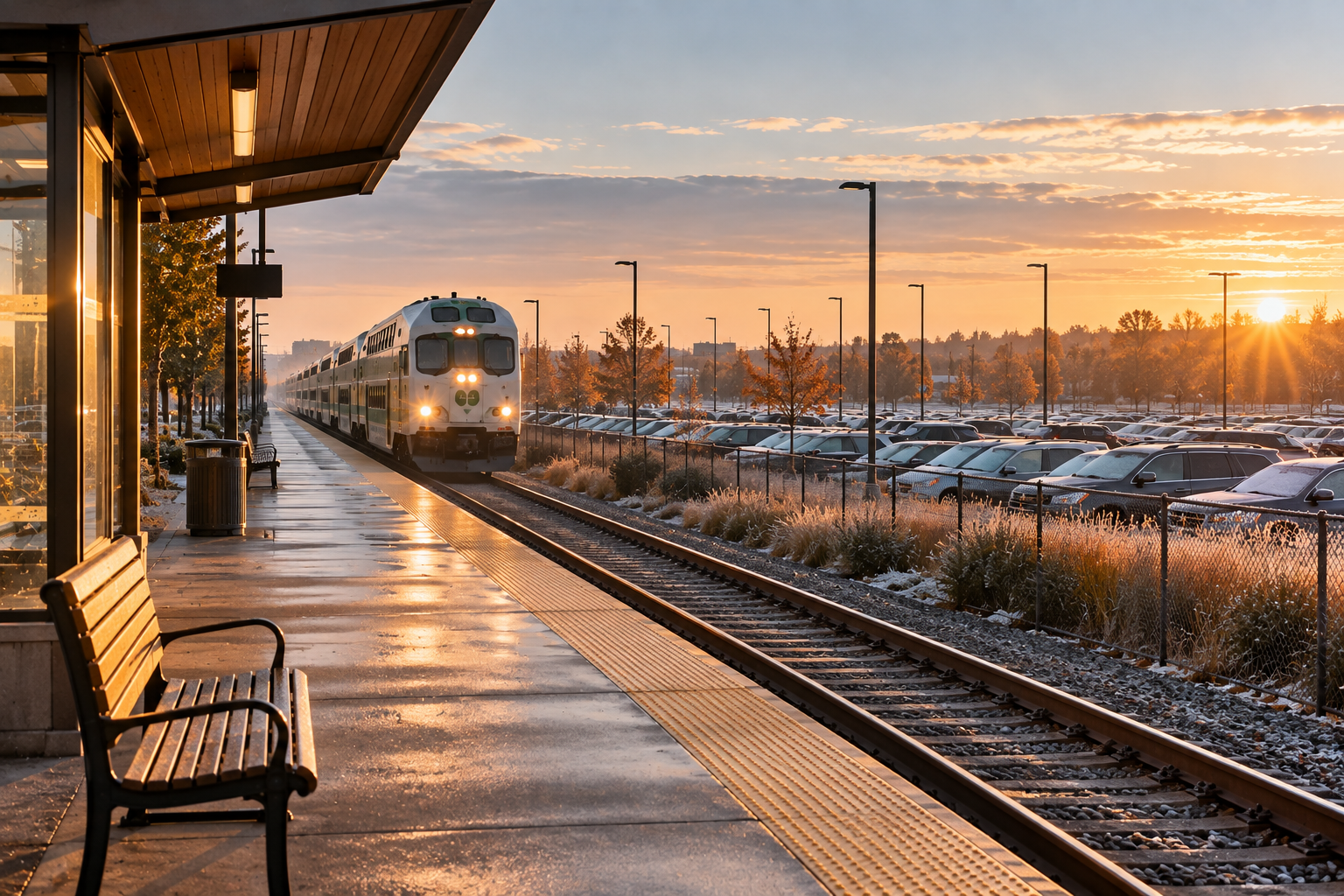
“Does the city have GO?” is the wrong question. Check the specific station and the specific service. Is it train or bus? What are the frequency, departure times, evening and weekend service, and transfers? How far is the station from the house, and can you walk, cycle or take local transit to it?
Parking deserves its own look. GO Transit offers free first-come, first-served parking at most stations, but a few, including Kitchener GO, offer paid parking only, and reserved parking is available at some stations for a monthly fee. If parking fills before your usual departure time, it can change your routine, so check the station’s parking options as part of your commute planning, and confirm current details on GO’s own site before you fall for a house that is “ten minutes from the train.”
Calculate the door-to-door commute, not the distance
Kilometres from Toronto tell you very little. What matters is the total time from your front door to your desk. Here is an illustrative example, not a real route:
Illustrative example only: 12 + 10 + 65 + 12 = 99 minutes door to door.
That 99-minute figure says far more than “the house is 85 km from Toronto.” Some buyers happily trade extra commuting time for more space at home, and knowing the real number lets you decide whether that trade works for you.
GO fare or fuel + parking + local transit + Highway 407 tolls where applicable + incremental vehicle costs
= your estimated monthly transportation cost
Add that figure to your Comfortable Home Budget. The goal isn’t to prove that living farther away costs more. It’s to compare two locations using the same numbers.
Think through your vehicles and your highways
If you are leaving a transit-oriented GTA neighbourhood, ask whether your household will need one vehicle or two. Groceries, childcare, school runs, GO access and local errands all pull on the answer, and so does EV charging if you plan to switch. If a second car is the answer, put it in the budget. It is part of planning, not a reason to stay put.
For drivers, distance to the highway can matter nearly as much as distance to Toronto. Check access to the routes you would use, whether that is the 401, 403, 407, QEW, Highway 6, Highway 8 or another regional road. A house that is closer on the map is not necessarily more convenient if it takes twenty minutes to reach the on-ramp. Search by travel time, not kilometres.
Run the Weekday Test
When you are serious about a house, drive to the GO station or highway at 7:00 to 8:00 a.m. on a weekday. Then test the trip home in the evening rush. A Sunday-afternoon drive tells you almost nothing. Enter the property’s address and your workplace into a mapping app for the time you would actually travel, and you will have a figure you can trust.
Look Beyond Toronto for Work
Leaving the GTA does not automatically mean working in Toronto forever. Many Southern Ontario communities have regional job markets of their own, and it is worth researching the ones near any place you are considering. As a starting point for your own research (confirm the current picture before relying on it), the Kitchener-Waterloo area is often associated with technology, education, professional services and manufacturing. Hamilton is often associated with healthcare, education, manufacturing and professional services, and Guelph with education, agri-food and manufacturing. The Cambridge and Brantford corridor includes manufacturing, logistics and healthcare employers.
Look at the major employers and sectors around each community, and ask a hopeful question: could my next job eventually be closer to my new home? That turns “100 km from Toronto” from a permanent commuting commitment into something that may be temporary, and for some buyers it is where the commute problem quietly solves itself.
Explore the Community, Not Just the House
You are buying a property and the routine that surrounds it. So visit. Get a coffee, buy groceries, walk the streets and drive from the house to the places you will go every week. Check the grocery stores and major shopping, restaurants, parks, trails, gyms, recreation centres, libraries and pharmacies.
If you work remotely or in a hybrid arrangement, also verify the internet and mobile service actually available at the address rather than assuming every property has the same options. It matters most on semi-rural properties.
Before you make an offer in a city you don’t know, spend half a day there. Drive from the house to the GO station, the grocery store, a coffee shop, a park, the shopping area and the highway. Have lunch. Visit at different times of day. Then ask yourself: could I see myself living here, not just owning this house?
The Saturday Test shows you the lifestyle, and the Weekday Test shows you the practicalities. Between them, you will know a lot more than a listing can tell you. Plenty of buyers come away from that half-day thinking, “I actually really like living here,” and that is exactly the feeling you want to confirm before you commit.
Saturday Test
Do I like living here?
- Coffee, groceries, parks and trails
- Different times of day
- The feel of the neighbourhood
Weekday Test
Does my routine work here?
- 7:00 to 8:00 a.m. drive to the GO station or highway
- The evening trip home
- Parking and the real door-to-door time
Schools, childcare and healthcare
Even if you don’t have children, it helps to understand the nearby elementary and secondary schools, school-board boundaries, school transportation, childcare availability and recreation programs. Schools help you judge whether a neighbourhood fits your current or future household, and the kinds of buyers it may appeal to later. They are not a guarantee of anything, least of all price growth. Do the same for health: map the nearest hospital and emergency department, urgent care, pharmacies, clinics and dentists before you move, along with any specialists you rely on.
Know What’s Under and Around the Roof
Water, sewer and heat
Properties on the edge of a city or in rural communities may use a private well and septic system instead of municipal water and sewer. That is not a drawback, just a different ownership routine. Where it applies, look into the well’s condition and water quality, the age and pumping records of the septic system, and have both inspected.
Also check how the house is heated: natural gas, heat pump, electric, propane, oil or something else. Ask for historical utility bills where the seller can share them, and look at our fall furnace tune-up checklist to understand what a healthy system needs. Two houses with the same purchase price can have very different monthly operating costs, which is why utilities sit in your Comfortable Home Budget.
Insurance: get a quote for the actual house
Rather than budgeting a generic monthly figure, get a preliminary quote once you are serious about a property. Insurers look at property-specific details: the age of the house, roof, heating, electrical, plumbing, basement, previous water issues and wood-burning appliances. Replace the placeholder in your budget with a real number.
Look beyond the property line
Knowing what you are buying includes the land around the house. Check conservation areas, flood mapping, nearby waterways, drainage, easements, hydro corridors, railways, highways, industrial uses and neighbouring land. The goal isn’t to look for reasons not to buy. It’s to understand the property and its surroundings before you make it yours.
That Empty Field Might Not Stay Empty
The field behind a house might become homes, shops, a school, a park, employment lands, a road or a community facility. Check the municipality’s Official Plan, zoning map, development applications and transportation plans. New development can bring more shopping, schools, roads, transit, restaurants and services, so the purpose is simply to understand the direction the area is heading.
Do the same for transportation. Research planned GO improvements, transit, highway projects and cycling infrastructure, and keep two categories separate: existing, approved and funded work on one side, and proposed or planned work on the other. Never count on a proposed project as guaranteed when you set your budget.
Resale or New Construction, and What You Are Actually Buying
Resale can offer
- An established neighbourhood
- Existing landscaping
- Observable property-tax history
- Known utility patterns
- A finished house you can inspect
New construction can offer
- Newer systems and modern layouts
- Energy-efficiency improvements
- Warranty protection
- Fewer immediate renovations
- Some choice of finishes, depending on stage
Moving farther from the GTA can also bring new construction back into the conversation. If that is part of your search, compare the finished monthly cost with resale, and check whether you qualify for the federal first-time buyer GST/HST rebate before you make that comparison.
Buying new? Check whether you qualify for the federal First-Time Home Buyers’ GST/HST rebate. Eligible first-time buyers purchasing qualifying new homes may receive relief on the federal GST portion (or the federal part of the HST), with the full rebate applying to qualifying homes up to $1 million and a reduced rebate between $1 million and $1.5 million, for savings of up to $50,000. Ontario has also announced relief on the provincial portion of the HST for first-time buyers. Eligibility, purchase-agreement dates and construction timing rules apply, so confirm the current federal requirements with the CRA, and the provincial ones with the Ontario government, before building any rebate into your budget.
If you go new, there is extra homework. Read the agreement of purchase and sale closely, including closing adjustments, HST implications, development-related charges where they apply, occupancy and closing terms, and the future property assessment. Also budget for landscaping, driveway, appliances and fencing, which are often not included. Ontario’s new-home warranty provides different protections during one-year, two-year and seven-year coverage periods, depending on the type of issue. Our explainer on Tarion registration and warranty enrollment covers the process, and the Tarion website has the official detail. A real estate lawyer is worth engaging early, and our piece on choosing a real estate lawyer for pre-construction shows what to look for.
Condo, freehold or POTL
Know exactly what you are purchasing. A condominium (see our Ontario condo market buyer’s guide) comes with monthly condo fees and shared responsibility for common property. Freehold generally means you carry direct responsibility for the property. And a property with a POTL (parcel of tied land) or common-elements arrangement can look like a regular freehold home while carrying ongoing fees for shared elements. Ask one question about any recurring fee: what does it cover, and who controls it?
Use the Inspection to Build Your Ownership Plan
A home inspection is more than a pass or fail on one house. It is the best look you will get at how the property is put together, including the roof, foundation, electrical, plumbing, heating and cooling, signs of moisture, attic and insulation, windows and exterior drainage. Read the report as the first draft of your ownership plan, which leads straight into the next step.
Plan Your First Five Years of Ownership
I don’t want to scare anyone with “the roof, the furnace, the windows, everything will break.” Treat it as planning instead. Record the approximate age and condition of the roof, furnace, air conditioner or heat pump, water heater, windows, driveway, deck and appliances. Then sort each item into one of three groups: good now, monitor, or potential future project. That gives you a five-year picture rather than a pile of anxieties. Our preventative home maintenance checklist is a good place to build the routine.
Think About the Next Five to Ten Years
Does this home give you room for the next stage of your life? Maybe you are a couple today, but later you might want children, a home office, space for visiting parents, pets, a backyard, hobbies, a second vehicle or room to entertain. Moving farther from the GTA can let you buy for where you are headed, not just where you are standing.
On resale, you don’t need to predict price growth, and nobody can. Ask a simpler question: would another buyer understand why this house is appealing? Practical layout, transportation access, schools, amenities, nearby employment, parking, usable outdoor space, community development and good condition all make a home easier to resell. You are assessing marketability, not forecasting appreciation.
Price per home isn’t everything. Compare what you’re receiving for that money.
The NestDigest First-Home Comparison Scorecard
The goal isn’t to decide whether Hamilton is better than Kitchener, or Brantford is better than Cambridge. Compare actual homes. A particular property, neighbourhood and commute can matter much more to your everyday life than a citywide average.
Here is the tool I would use. Fill in one column for each home you are seriously considering, and let the numbers and your notes do the comparing.

| Question | Home A | Home B | Home C |
|---|---|---|---|
| THE MONEY | |||
| Purchase price | |||
| Down payment | |||
| Mortgage payment | |||
| Property tax | |||
| Insurance | |||
| Utilities | |||
| Condo / POTL fee | |||
| Maintenance planning | |||
| Heating type | |||
| Water / sewer or well / septic | |||
| Roof / HVAC major-project outlook | |||
| THE HOME | |||
| Home size | |||
| Bedrooms | |||
| Garage | |||
| Backyard | |||
| GETTING AROUND | |||
| GO station distance | |||
| GO parking | |||
| Door-to-door commute | |||
| Monthly commute cost | |||
| Highway access | |||
| Second car needed | |||
| THE COMMUNITY | |||
| Grocery / shopping | |||
| Healthcare | |||
| Schools / childcare | |||
| Parks / recreation | |||
| Internet availability | |||
| Saturday Test feeling | |||
| Local employment | |||
| Future development | |||
| Estimated monthly home + location cost (including transportation) | |||
| Major five-year projects | |||
| Which home gives us the life we actually want? | |||
That last row is the real conclusion. Going farther can be a smart way to widen your home-buying options, and good research doesn’t hand you reasons not to buy. It gives you the confidence to pick where and what to buy. Once the keys are in your hand, our piece on turning a first house into a home and our guide on what matters when setting up your first home are natural next reads.
This article is general information, not financial, legal or tax advice. Program limits, tax rates, GO Transit service and parking, and municipal rules change, so confirm current details with the official sources linked above and with your lawyer, lender and municipality before making decisions. The land transfer tax figure is NestDigest’s own calculation from Ontario’s published rates. The commute example is illustrative.
A home is more than the address you buy. It’s the ordinary Tuesday you’re choosing to live.
— NestDigest