
The GTA Housing Market Just Turned a Corner
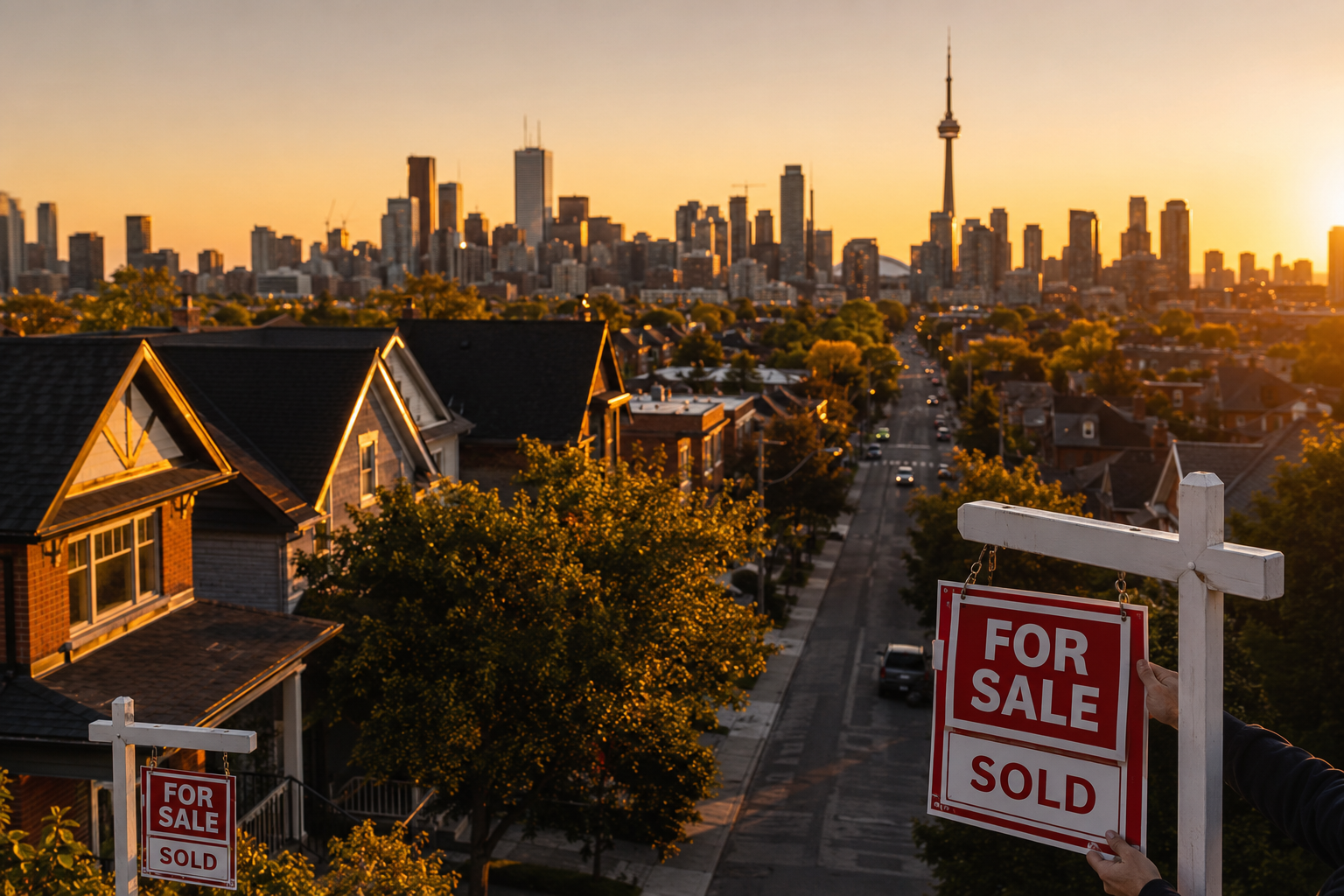
Six thousand seven hundred and seventy homes sold across the Greater Toronto Area in June — the strongest June in almost two years — and for the first time since this correction began, the data is telling a story sellers and buyers can both feel good about. This wasn’t a fluke month. It’s the third straight month of year-over-year sales growth, and it’s happening while the supply of homes coming to market keeps shrinking. That combination — more buyers showing up, fewer sellers listing — is exactly what turns a soft market into a tightening one.
Start with what a 98% sale-to-list ratio actually means on the ground: well-priced homes are selling within a couple percentage points of what sellers are asking. That’s not a fire sale market. That’s a market where realistic pricing gets rewarded quickly, which is a very different psychological environment than the one Toronto buyers and sellers have been living in for the past two years. Add to that the fact that active listings are down 13.5% year-over-year, and you get a supply picture that’s tightening faster than most people outside the industry have noticed.
The average GTA selling price still sits at $1,058,658, down 3.9% from June 2025 — so no, prices haven’t started climbing yet. But the number that matters more than the price itself is the trend in the decline. TRREB’s own Chief Information Officer, Jason Mercer, put it plainly: the annual rate of price decline has been shrinking for months, not widening. A market where losses are getting smaller every month is a market that’s running out of room to fall — and TRREB’s outlook for the second half of 2026 calls for exactly that: accelerating transactions, more competition among buyers, and a real shot at renewed price growth before year-end.
Here’s what most buyers scrolling listings don’t clock: the recovery isn’t even across property types, and that unevenness is actually good news if you know where to look. Detached homes are leading the charge, down just under 2% year-over-year to an average of $1.36 million — the smallest gap of any major category and a clear signal that the priciest, most rate-sensitive segment of the market has already absorbed the worst of the correction. Semi-detached and freehold townhouses are a step behind but moving the same direction. Condos are the interesting outlier: prices are still down close to 9%, but sales jumped over 14% year-over-year, which tells you first-time buyers have finally found a price point that works for them and are moving on it in real numbers, not just browsing.
| Property Type | Avg. Price | YoY Change |
|---|---|---|
| Detached | $1.36M | -2.0% |
| Semi-Detached | $1.04M | -4.7% |
| Freehold Townhouse | $912K | -5.5% |
| Condo Apartment | $631K | -9.4% |
Detached homes are recovering first, but condos are moving in volume. If you’re a first-time buyer, the softest prices and the strongest year-over-year sales growth are sitting in the exact same segment — a rare alignment that historically doesn’t last more than a couple of quarters once demand catches up.
There’s a policy tailwind here too, and it’s real money rather than a talking point. Ontario committed $1.5 billion to help the City of Toronto cut development charges, layered on top of an existing federal-provincial DC reduction program already underway. TRREB has flagged that development charges alone can add up to 20% to the cost of delivering a new home — so this isn’t a symbolic gesture, it’s an attempt to unstick new supply at the point where it’s actually getting stuck. It won’t move resale prices this quarter, but it’s a signal about where the next few years of housing policy are headed, and it matters for anyone weighing a resale purchase against a pre-construction one.
The honest caveat, because a market update that only tells you good news isn’t one you should trust: prices are still below where they were a year ago, and the “year of two halves” TRREB has been forecasting depends on borrowing costs holding steady through the back half of 2026. The Bank of Canada has held its overnight rate through five consecutive announcements, and the next decision will matter more than any single month of sales data. If that hold breaks in either direction, this recovery either accelerates or stalls out. Treat June as a genuine inflection point, not a finished story.

What’s changed isn’t the price you’ll pay today — it’s the ground underneath that price. Fewer homes are sitting unsold. Fewer sellers are panicking. And for the first time in two years, the momentum in the data and the momentum in TRREB’s own forecast are pointing the same direction. That’s the kind of quiet shift that doesn’t make headlines the way a price crash or a bidding war does, but it’s usually the one that matters most to the people actually deciding whether this is their year to move.
A market doesn’t turn all at once. It turns quietly, in the small numbers nobody’s watching, long before anyone agrees it happened.
— NestDigest