A Space of Your Own: What Matters When Setting Up Your First Home
First Space, Your Way · Part 1 of 5
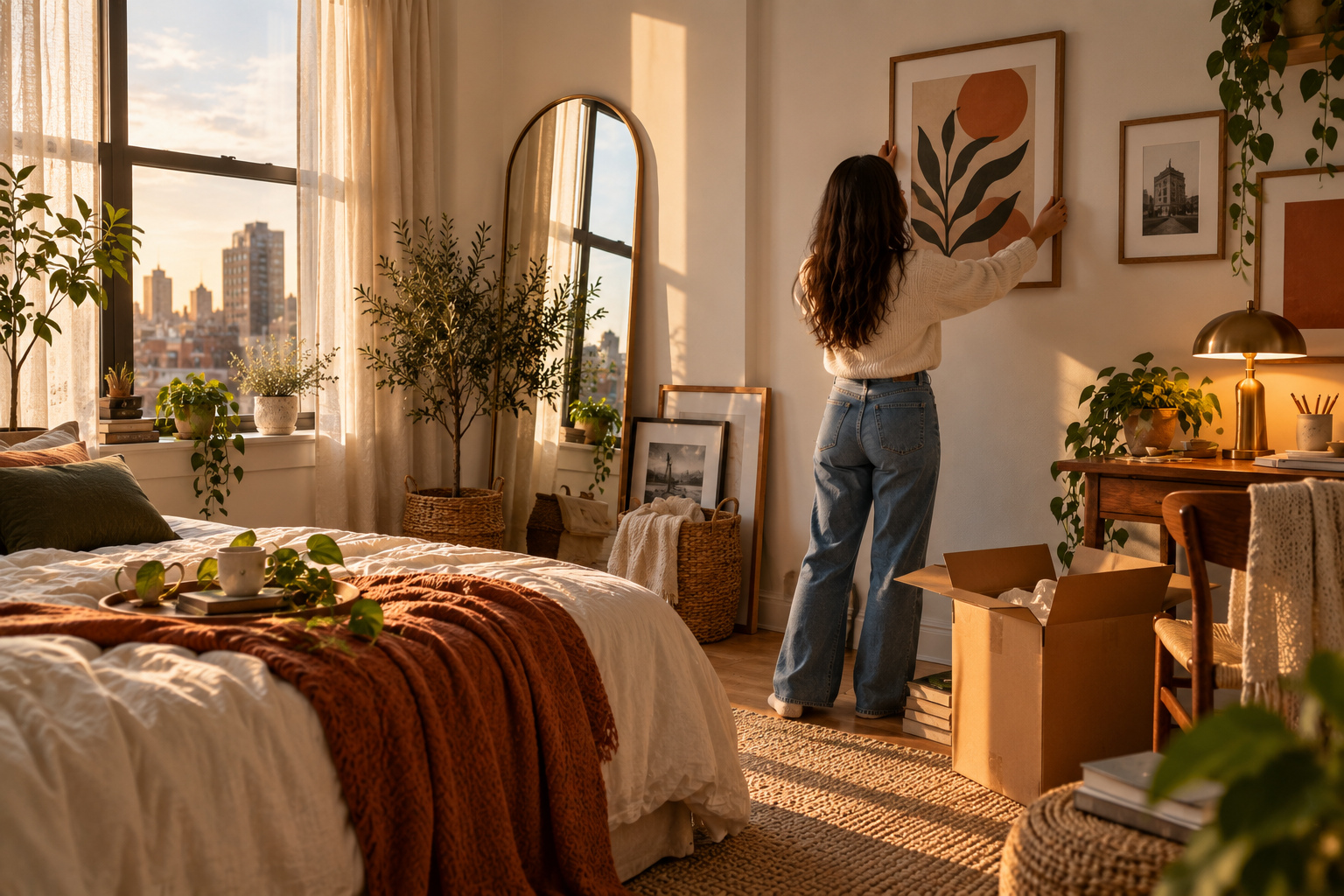
A first home can take many forms
The walls are blank, the boxes are half-unpacked, and for the first time, the choices in the room belong entirely to the person living there. It might be a bedroom carved out of a parent’s basement in Mississauga, a rental split three ways near Kitchener-Waterloo, or a first apartment leased entirely alone in Ottawa.
None of these counts more than the others. What matters when setting up a first home has surprisingly little to do with any single decorating trend, and much more to do with what the space is allowed to say about the person living in it.
According to Statistics Canada‘s 2021 Census, 35.1% of adults aged 20 to 34 were living with at least one parent that year, and 39.4% were living with a spouse, partner, or child. Another 14.8% shared a home with roommates or extended relatives, and about one in ten lived entirely alone.
- 35.1%
- With at least one parent
- 39.4%
- With a spouse, partner, and/or children
- 14.8%
- With roommates or extended relatives
- 10.7%
- Living alone
A first home, in other words, is just as likely to be one room as a full apartment. Housing circumstances, family structure, and where in the country someone lives all shape what “a first home” actually looks like. Psychologists sometimes call this general stretch of life emerging adulthood — a period, per the American Psychological Association, associated with more residential moves than any other life stage. The label matters less than what it points to: a lot of people setting up a first home aren’t settling in for good, and that shapes the choices that follow.
Rent takes up a larger share of income in some cities than others, and that changes what a first home tends to be. In places with high housing costs, it might mean one room with shared common areas for years; elsewhere, a full basement suite or a first purchased condo is more common. Income, culture, disability, and family circumstances all shape what “independent” means here too — a bedroom someone fully controls inside a multigenerational home counts as much as a studio apartment does.
Having a say in your space
What shows up consistently in the research isn’t a colour palette — it’s a sense of control. Choosing what stays visible on a shelf, which door stays shut, or when a space gets tidied gives someone a genuine say over their surroundings.
The IKEA Life at Home Report 2026 is based on research across dozens of countries. It names control, alongside comfort and security, as one of three needs people are chasing at home right now — the ability to plan ahead, keep a sense of order, and build a space that actually works for daily life.
For someone renting a first room, that need for order can matter more than any single design choice. It’s worth remembering before reaching for a paint chip.
Control doesn’t come from a colour palette. It comes from choosing, finally, what stays and what goes.
Making room for personal meaning
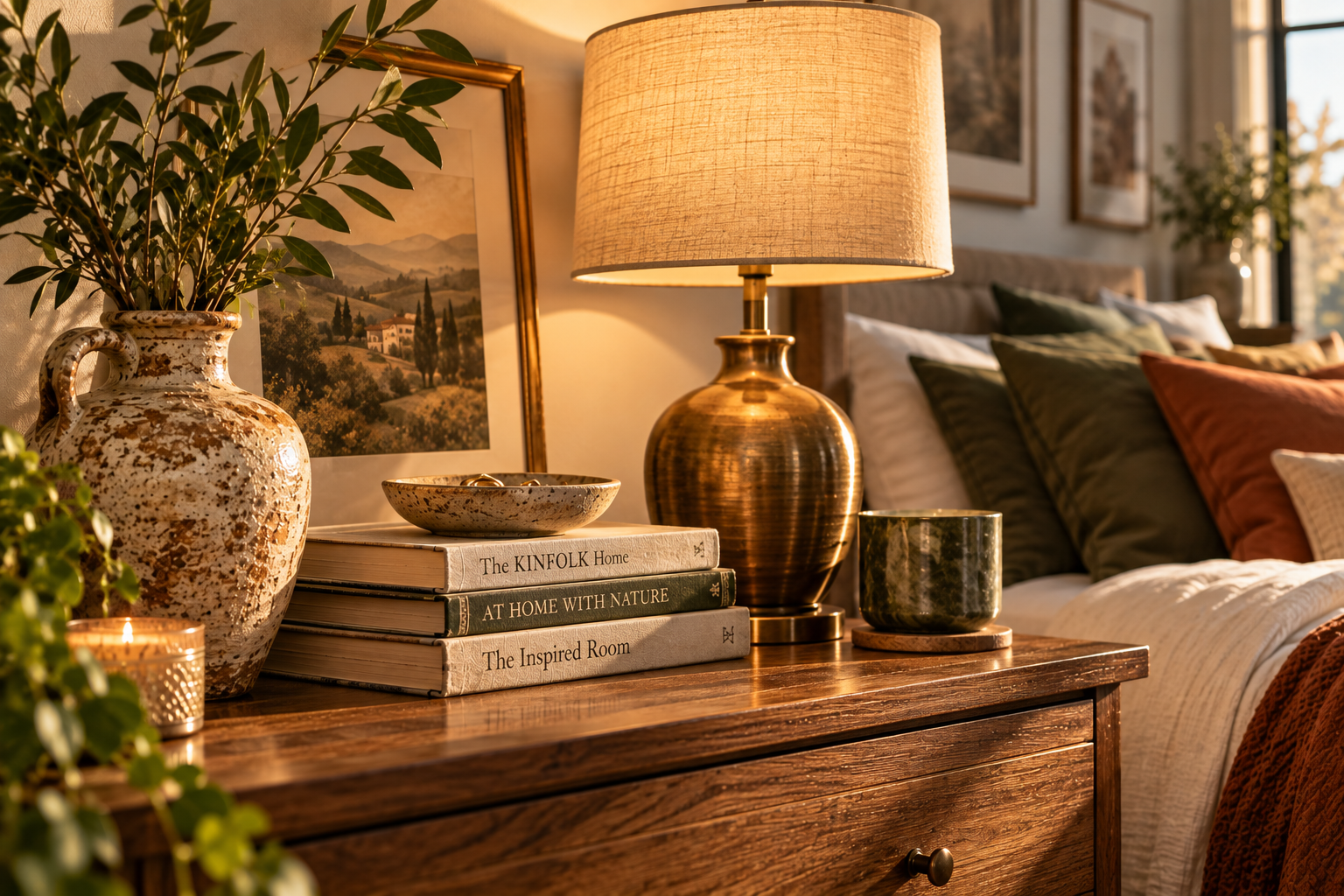
Rooms at this stage often don’t commit to one look, and that’s frequently by design rather than compromise. A family heirloom might sit next to a thrifted lamp and a print from an independent artist’s shop, gathered rather than purchased as a set.
Pinterest’s research into 2026 trend behaviour found that nearly a quarter of the Gen Z and Millennial consumers who actively engage with trends say they avoid “trend fatigue” by putting their own spin on things rather than adopting one look wholesale. That finding is about trend behaviour broadly, not interiors specifically, but it lines up with what shows up in a lot of first apartments.
Your room should look like you made a decision is a familiar idea at NestDigest, and it applies here: the goal isn’t a matching set from one collection, it’s a room that reflects real choices. For a walkthrough on building that kind of layered, personal-object-led room, our guide to artisan home decor ideas is worth a look before the next thrift-store trip.
Comfort that fits everyday life
Comfort does real work in these spaces. The IKEA research found that 86% of people say comfort matters at home, but only 66% say they experience it regularly.
Among adults aged 18 to 29 in that same research, 36% named mental health as a concern shaping how they live at home, and 32% named screen time. Those numbers read less like decorating notes and more like a wellbeing brief.
Warm, adjustable lighting changes how a room feels to sit in more than most single purchases at a similar price. Our guide to layering light through a Canadian winter goes deeper on this, which matters even more in a room with one window and a landlord who won’t approve new fixtures.
A single armchair angled away from a desk, reserved for nothing but reading, does real work in a room that otherwise runs on notifications.
Furniture that adapts as life changes
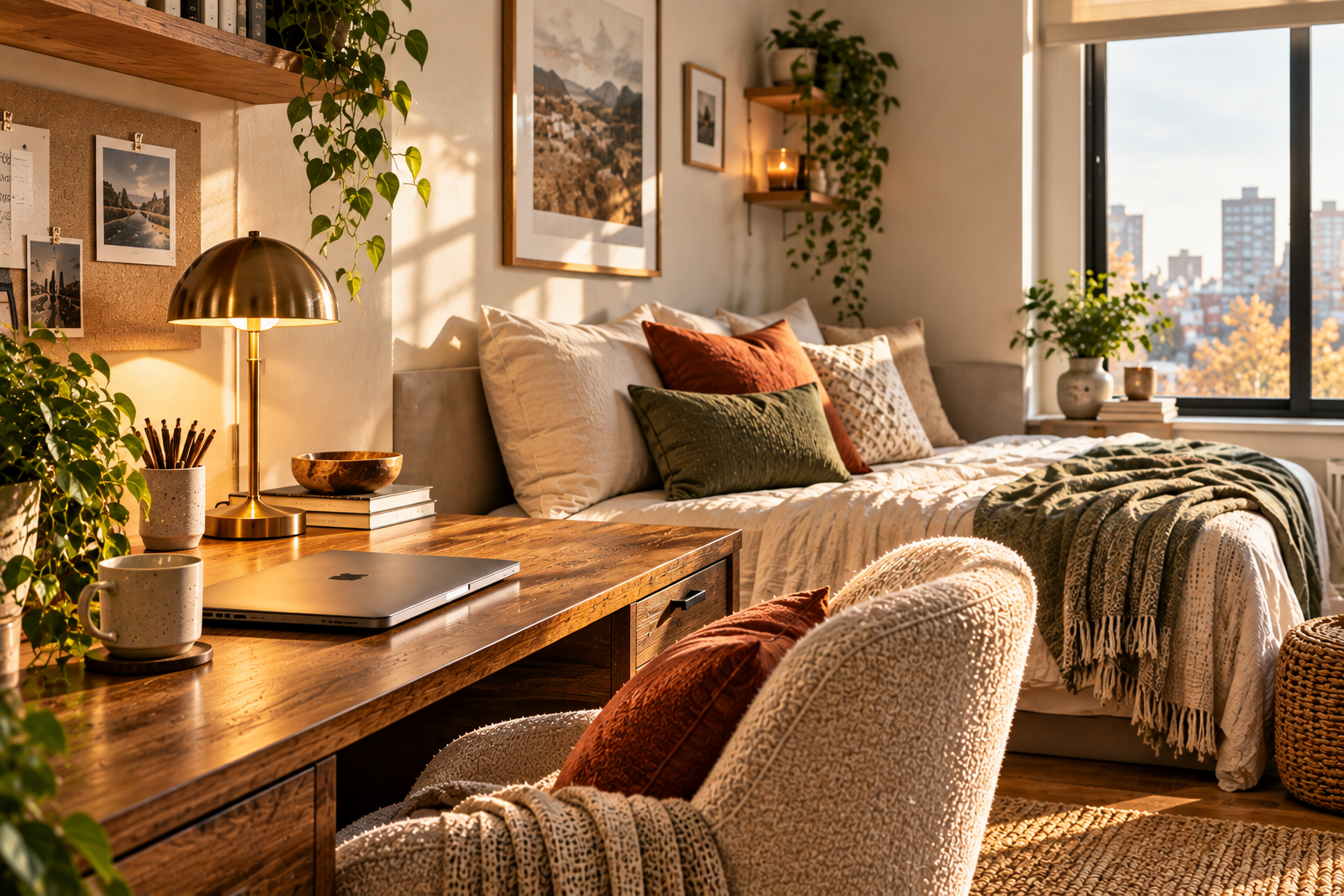
For many first homes, one room has to be bedroom, office, gym, and social space, sometimes within the same evening. That’s less a design problem than a scheduling one, and it rewards furniture that changes jobs — a daybed that works as seating until late, a desk that folds flat on weekends, a storage ottoman that holds a yoga mat between uses.
Our guide to carving a real home office nook covers how to build a genuine work zone out of a space that wasn’t originally meant to hold one. A closet, a landing corner, or a hallway nook can all do more than expected once they’re properly zoned.
Because many first homes aren’t meant to be permanent, the furniture inside them often needs to survive a move that hasn’t been scheduled yet. Modular shelving, a lightweight table, and lamps instead of anything hardwired show up often in what people choose for a first space — not necessarily because permanence isn’t wanted eventually, but because it hasn’t been decided yet.
This is also where a repaired lamp or a secondhand dresser tends to fit in naturally. In the same IKEA research, saving money was the most commonly reported motivation for climate-conscious choices at home, cited by 54% of respondents. That reported motivation lines up with what tends to fill a first apartment anyway — a grandparent’s dresser instead of flat-pack, a repaired lamp instead of a replaced one — even when the environmental upside is more of a bonus than the starting point.
Decorating gradually within your budget
Money shapes the pace more than it shapes the style. A first home is usually put together in stages, and that pattern can reflect a limited budget, a wait-and-see approach to a space that might not be permanent, or both at once.
Zillow and Thumbtack, in US research on rental listings, pointed to a handful of small, non-permanent updates — open shelving, paint, cabinet hardware, smart lighting — that renters gravitate toward because they’re reversible and don’t require a landlord’s sign-off for structural work. That’s US data describing US listings, not a Canadian price guide, but the underlying pattern — small, reversible updates over big ones — shows up here too.
Our breakdown of the economics of small decor upgrades looks at how that kind of gradual spending tends to play out and where the money is often best spent first.
Finding inspiration and making it your own
Social platforms are still where a lot of people start — pulling colours, layouts, and ideas from a mood board before anything gets bought. Pinterest’s 2026 research describes a shift among trend-engaged users toward remixing inspiration into something personal rather than copying a look wholesale.
That pattern isn’t universal, and plenty of first apartments still borrow closely from whatever’s trending that month — budget and housing circumstances probably explain as much of that as anything else. But treating inspiration as a starting point, rather than a finished blueprint, tends to make a space feel more like it belongs to the person living in it.
Before moving anything around, it’s worth sitting with a few questions: What needs to work better in your everyday routine? Which belongings already make this space feel personal? And what should move with you if your circumstances change?
There’s no fixed answer to any of them, and the answers will likely shift within the first year. Part 2 of this series looks at finding and building a personal style once the basics are in place — from mixing found pieces to choosing a handful of things worth spending more on.
A home doesn’t have to be finished to be real. It just has to be chosen.
— NestDigest