
Lighting for the Dark Months: How to Fix a House That Feels Grim by 4:30 PM
By the third week of November, the average Canadian living room goes bright-to-bureaucratic-grey in under fifteen minutes flat. Most of the country’s population lives between roughly 43°N and 49°N, and daylight drops fast at that latitude: from close to 15.5 hours in June to under 9 in December. That’s the real mechanism behind home lighting for dark winter months becoming an urgent question every single November: the light source the whole layout was built around, daylight through the windows, clocks out at 4:30 PM and doesn’t return until well past most people’s morning coffee.
The fix isn’t new light fixtures. It’s more individual light sources at different heights, a consistent warm colour temperature around 2700K, and at least one lamp placed at or below eye level instead of overhead. A house that reads as warm and finished in July can look flat and institutional in December, and swapping fixtures — the upgrade most homeowners reach for first — is usually the least useful item on this list.
Here’s the part almost nobody at the hardware store mentions: the single flush-mount ceiling fixture most Ontario builders install is built for even illumination, not for how a room actually gets used after dark. Light falling straight down from a fixed point six or seven feet up casts shadows downward — under brow bones, under chins, under cabinets. It’s the lighting an interrogation room and a poorly updated basement have in common. Overhead-only lighting also floods the whole room at one flat brightness, with no gradient between “there’s a corner made for reading” and “the rest of the room simply exists.” Add a low winter sun angle already stripping contrast off every surface, and a single overhead bulb starts to feel like fluorescent tube lighting in a strip mall. Swapping that fixture for a nicer one, without changing how many light sources the room has, just buys a better-looking version of the same flat light.
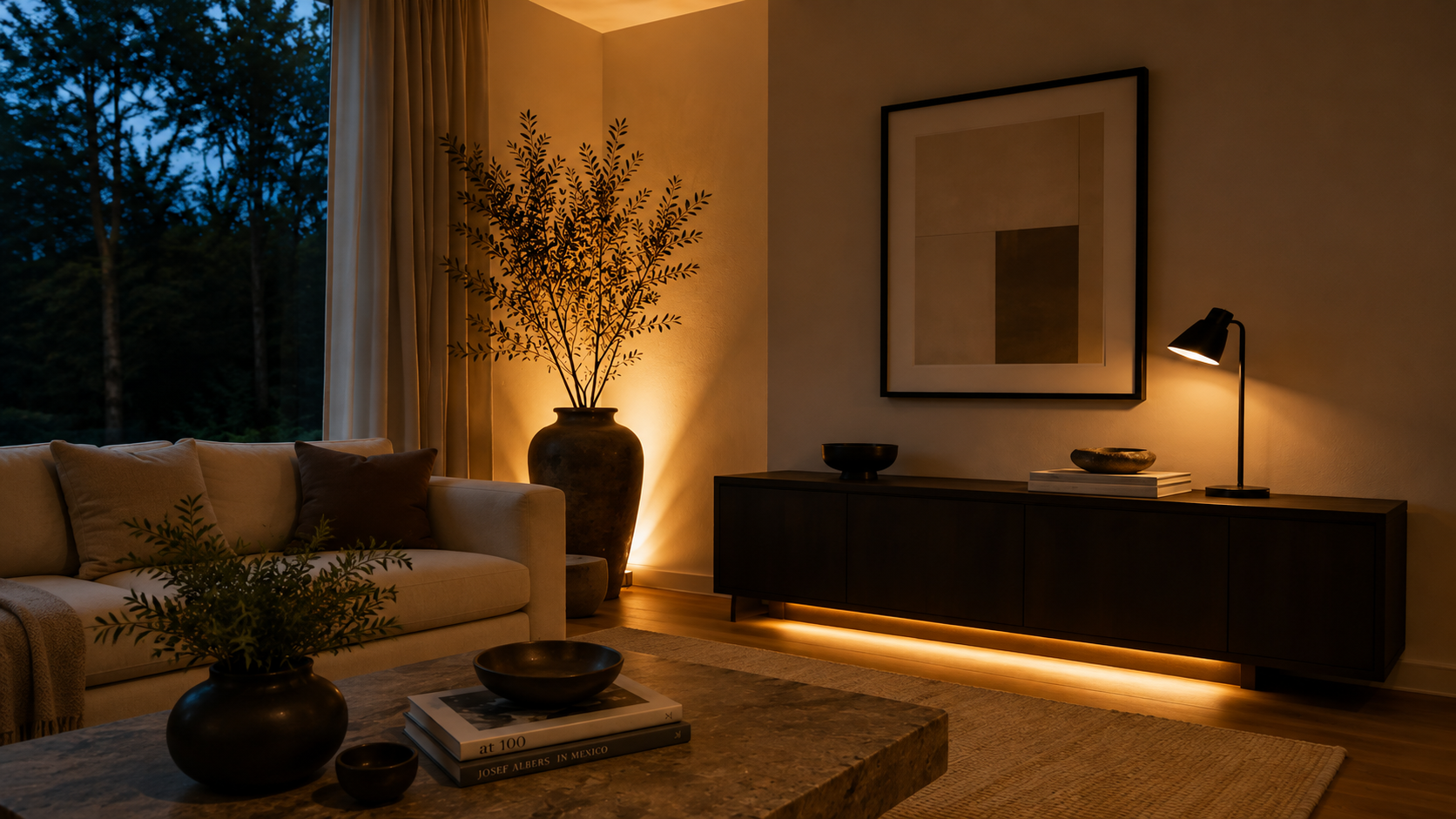
The professional term for what fixes this is layering, and it has nothing to do with buying lamps at random. Every well-lit room runs three distinct light sources: ambient (overhead, torchiere, or cove lighting that keeps you from walking into furniture), task (a reading lamp beside the armchair, an under-cabinet strip, a desk lamp over a keyboard), and accent (something small and warm highlighting a shelf or a corner with no job except looking good). Most Ontario living rooms run on one layer — ambient — and call it finished. A room with genuinely layered lighting ideas usually has four to six sources at different heights doing different jobs. It’s that count, not the wattage, that makes a room feel complete after dark — more, smaller, dimmer sources read as cozier than one large bright one, because the eye reads variation in light level as depth.
Light falling across a face reads as home. Light falling from the ceiling reads as an office.
Colour temperature is the piece homeowners get wrong even after buying the right number of lamps. It’s measured in kelvins, and — despite the name — a higher kelvin number is a cooler, bluer light, not a warmer one. The U.S. Energy Information Administration notes the Lighting Facts label on most bulb packaging lists this figure precisely so shoppers stop guessing. 2700K is the warm, amber tone of an old incandescent bulb, and the right call for almost any room used for relaxing after dark. 3000K sits a shade cooler and stays neutral enough for kitchens and bathrooms. 4000K and above reads as office light — crisp, faintly blue, useful over a desk and wrong almost everywhere else in a home meant to feel like a break from January. Comparing warm light bulbs colour temperature options before buying is worth the extra five minutes: the fastest way to make a room feel colder than it is stays mixing a 2700K lamp with a leftover 4000K bulb in the same sightline. The eye clocks the mismatch even when it can’t name why.
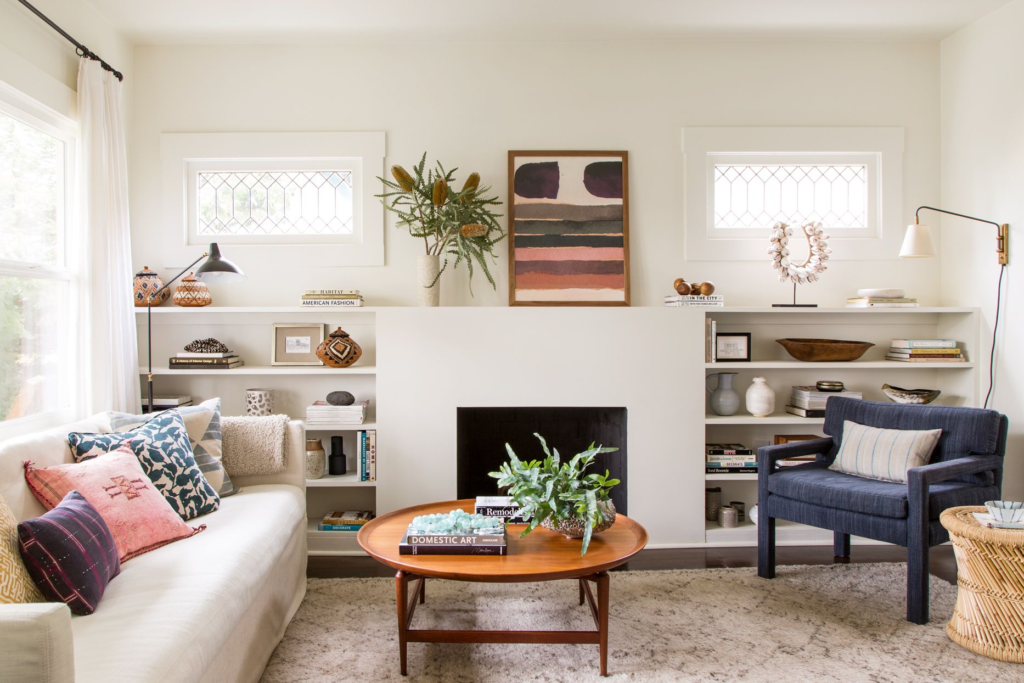
There’s a height rule most lighting guides skip entirely: sources at or below eye level read as warm and intimate almost regardless of colour temperature, while the same bulb at ceiling height reads as institutional. That’s why one floor lamp beside a sofa, at shoulder height, does more emotional work than the pot lights overhead — the light falls across faces at a human angle instead of straight down. It’s also why designers avoid recessed cans as a room’s only source. Good lamp placement living room layouts put at least one source at arm height beside every seat people actually use, and let the ceiling cans drop to a supporting role. A dimmer, covered below, makes that handoff effortless.
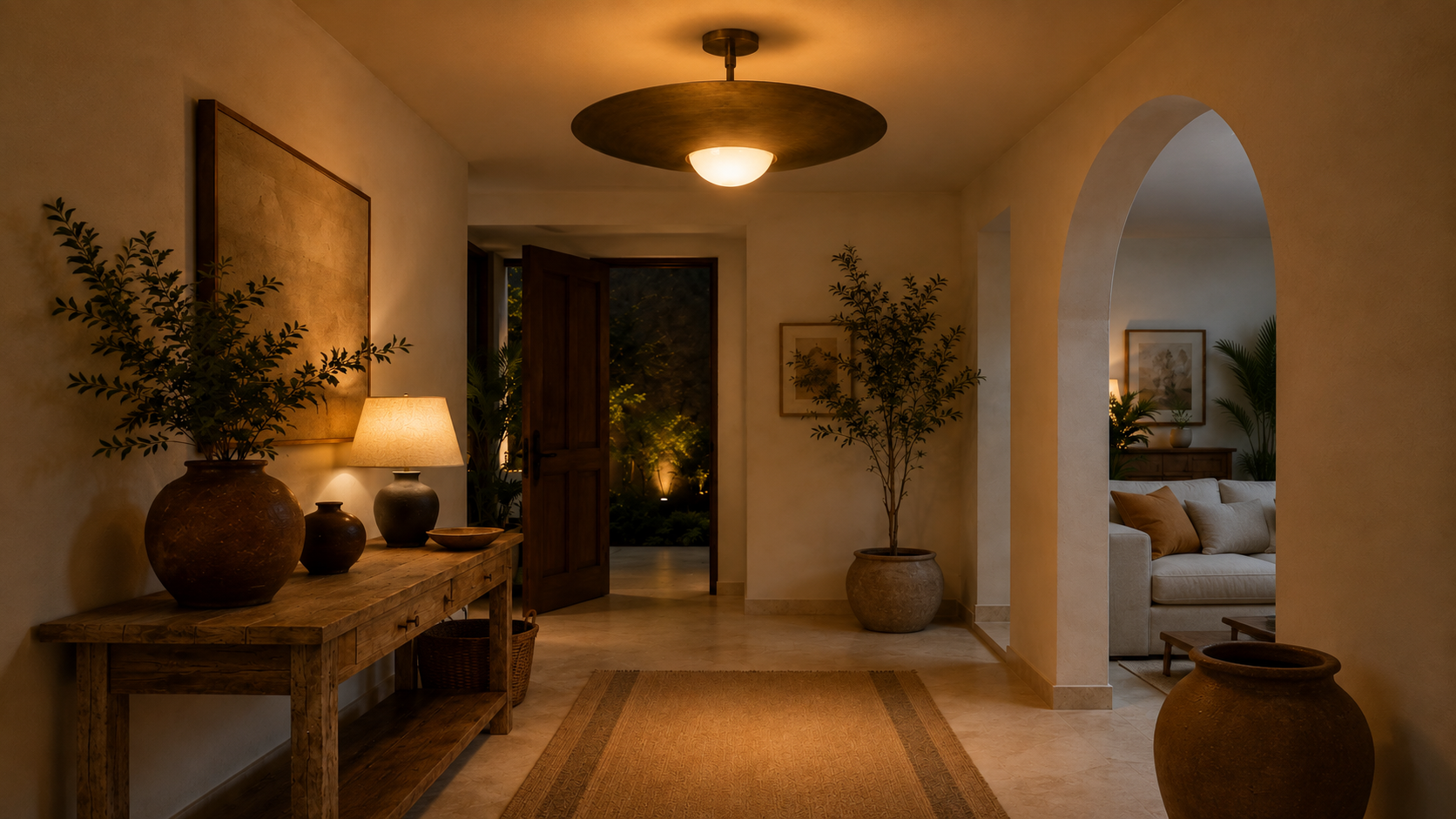
Older Ontario homes — anything built before the 1980s wiring standards — routinely have rooms with no ceiling fixture at all: a staircase landing, a powder room, a laundry room, an office nook carved from a hallway. These go darkest fastest come November, and none of them need an electrician before December. A plug-in wall sconce with a cord channel, a battery or plug-in puck light under a staircase handrail, and a slim LED strip along a laundry counter solve most no overhead light solutions problems for under $150 combined, without opening a wall. A powder room with one harsh vanity bar benefits from a warm plug-in sconce on the opposite wall, which breaks up the single-source shadow vanity bars are famous for. None of it needs a permit, and it’s the fastest improvement per dollar in this whole piece.
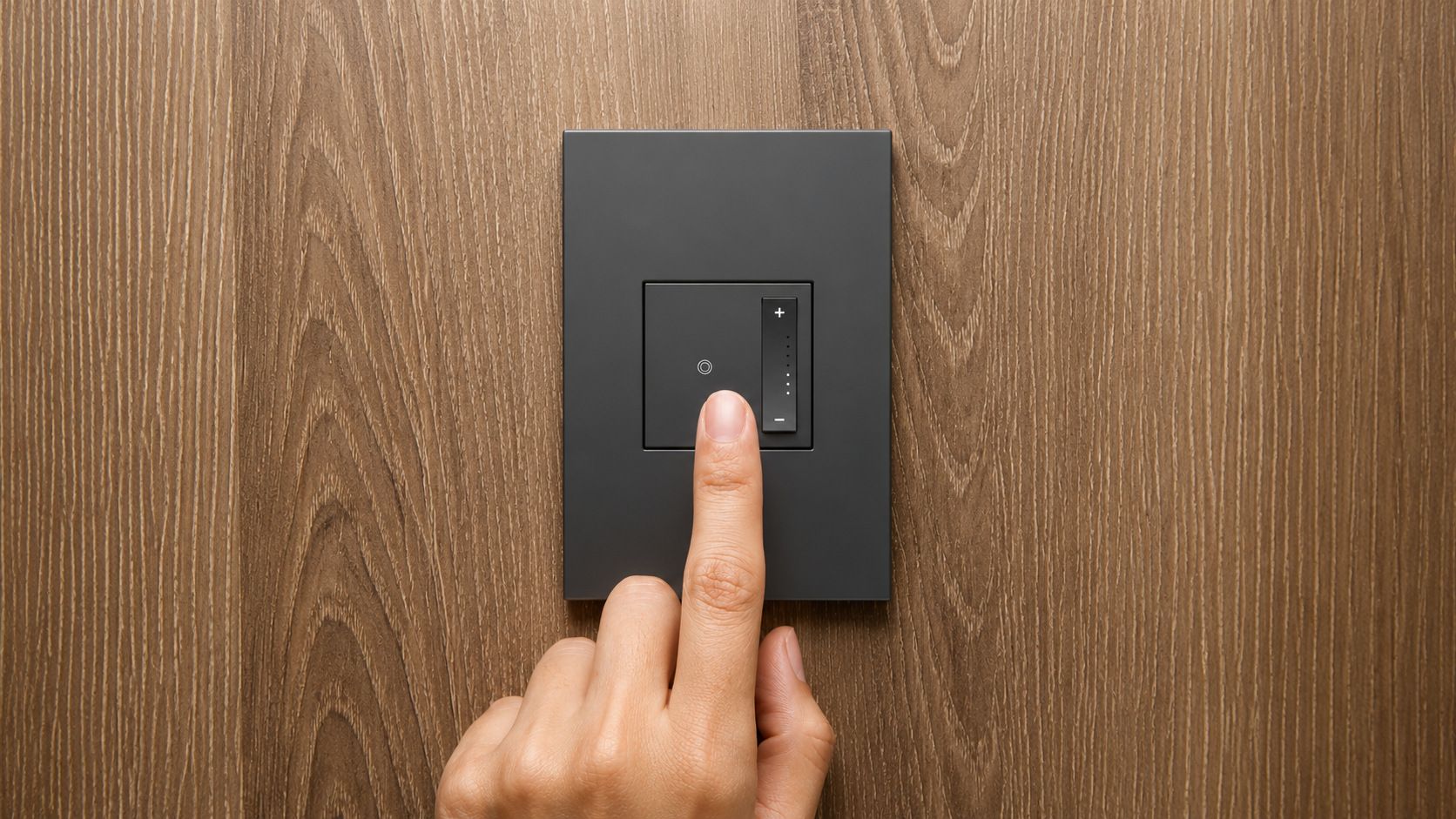
If one upgrade changes more of a room for less money than anything else here, it’s a dimmer. A basic in-wall dimmer runs $15–$35 for the hardware, and roughly $150–$250 installed if you’re paying an Ontario electrician. What that buys is the ability to drop a room from task-bright to ambient-only without touching a single bulb — the whole difference between a room that feels like an office and one that feels like a home, at the flick of a switch. The trade detail nobody mentions until the lights flicker: not every dimmer works with every LED. Older dimmers were built for incandescent wattage, and pairing one with low-wattage LEDs causes buzzing or a dimming range that quits below 20%. Ask for an ELV or trailing-edge dimmer rated for LED loads — a five-dollar difference in the part, and the difference between a smooth fix and a returned product.
Once the fixture and dimmer are sorted, the bulb itself has two numbers worth checking, and neither is wattage — that measures electricity draw, not brightness, and it’s nearly meaningless for comparing an LED to the incandescent it replaced. Lumens measure actual brightness: a living room lamp wants roughly 450–800; a kitchen ceiling fixture wants closer to 1,500–2,000 across the room. CRI, colour rendering index, measures how accurately a bulb shows true colour against daylight, scored 0–100. Anything under 80 makes skin tones look faintly grey — stop buying it. A CRI of 90-plus in the 2700K range is worth the extra two or three dollars a bulb, and it’s still the most under-marketed spec on any package in a Canadian hardware store.
A sunny winter day outdoors measures 50,000–100,000 lux; a well-lit living room lamp setup delivers only a few hundred. No amount of tasteful decorating substitutes for daylight or clinical light therapy when the problem is medical, not aesthetic.
Where the evidence gets more careful is the leap from better lighting to better mood. Mayo Clinic notes seasonal affective disorder responds well to therapeutic light boxes delivering roughly 10,000 lux — far beyond anything a living-room lamp collection produces. This isn’t a substitute for talking to a doctor if low winter mood is persistent, and anyone searching best lighting for winter depression hoping a floor lamp will do a light box’s job deserves that honesty upfront. What layered, warm home lighting genuinely does is remove a smaller daily friction of a Canadian winter: the flatness of walking into a poorly lit room at 5 PM, every day, for four months. That’s a real, fixable problem on its own terms, even if it isn’t clinical treatment.
Applied room by room, home lighting for dark winter months comes down to the same few principles, reordered by budget. In the living room, add one floor lamp and one table lamp, both 2700K and 450–800 lumens, with at least one on a dimmer — expect $120–$220 all in. In a home office nook built for calm, focused work, keep the overhead light neutral at 3000K–4000K but add a 4000K task lamp over the keyboard, so eye strain drives that fixture’s colour choice. On a staircase with no overhead run, a plug-in puck light under the handrail solves the darkness and a genuine fall-risk issue for under $60. In a laundry room, an LED under-cabinet strip over the folding counter, around $40, does more for usability than the overhead bulb ever will. In a powder room, one warm plug-in sconce opposite the vanity bar breaks the single-source shadow for about $45 — and if the room is part of a broader small-footprint renovation you’re already planning, it’s worth wiring in properly. A room leaning on greenery and texture, in the spirit of biophilic design principles, gets even more from warm accent light bouncing off leaves and wood grain. None of this needs the electrician visit a full fixture swap does — colour temperature, height, and layer count matter more than what the fixture costs.
Ordering a floor lamp, a pack of 2700K CRI 90+ bulbs, an LED under-cabinet strip, and a dimmer separately? Prime’s free two-day shipping means they land on your porch together, not spread across five deliveries over two weeks while the room stays dark.
Try Amazon Prime →This is a referral link — if you sign up, NestDigest may earn a small commission at no extra cost to you.
The living rooms that feel bright and expensive in December almost never got there through a fixture upgrade. They got there because someone counted the light sources, checked none of them fought each other on colour temperature, and put at least one lamp low enough to fall across a face instead of a scalp. A single well-placed $40 lamp, at the right height, at 2700K, does more for how a house feels at 4:30 PM in February than a $600 fixture ever will. Getting home lighting for dark winter months right means measuring a room by layer count and colour consistency before measuring it by fixture price — and the dark months stop being something to survive.
What’s the best light bulb colour temperature for a Canadian living room in winter?
2700K, paired with a CRI of 90 or higher — a warm, amber cast that reads as relaxed rather than clinical, without the faintly grey skin tones a low-CRI bulb produces.
How many lamps does a living room actually need?
Most professionally lit living rooms run four to six sources — ambient, task, and accent combined — rather than one central fixture. Layer count, not brightness, makes a room feel finished.
Can a dimmer switch work with any LED bulb?
Not automatically. Older dimmers are built for incandescent loads and can flicker or buzz with low-wattage LEDs — ask for an ELV or trailing-edge dimmer rated for LED loads instead.
Does better home lighting actually help with winter mood?
It eases the everyday flatness of dark rooms, but isn’t a substitute for clinical light therapy — SAD is typically treated with light boxes around 10,000 lux. Talk to a doctor if low winter mood is persistent, not just a decorating frustration.
What’s the cheapest fix for a room with no overhead light fixture?
A plug-in wall sconce or a battery-powered puck light, both under $50, solve most no-overhead rooms without an electrician visit.
A house doesn’t need more light in December. It needs the light it already has, standing in the right places.
— NestDigest