What’s Your Home Style? How to Build a Look That Feels Like You
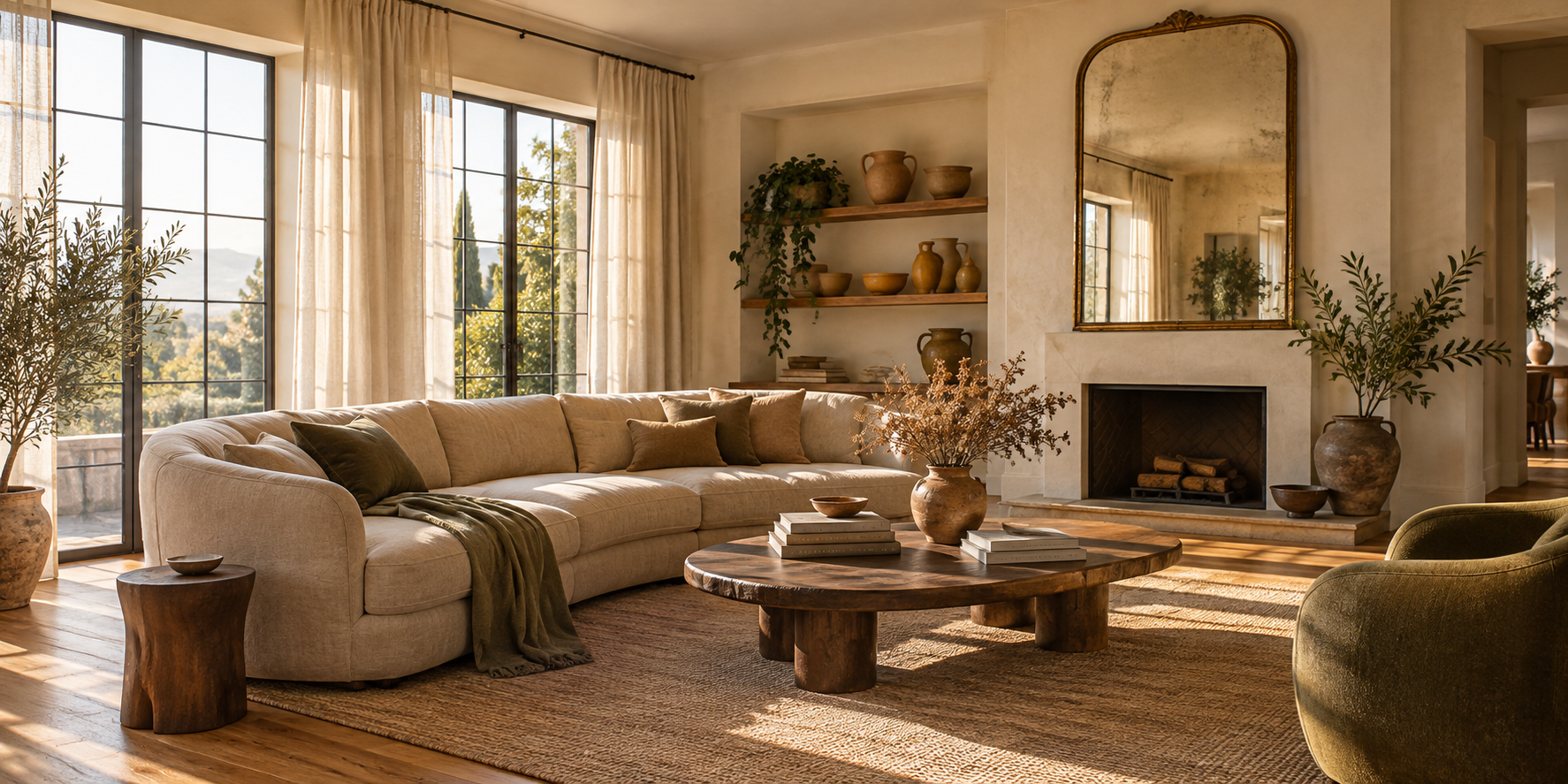
A living room with a Danish-modern sofa, a grandmother’s brass mirror and a shelf of dopamine-yellow ceramics shouldn’t work. On paper it reads like three different Pinterest boards colliding. In person, in the right hands, it reads like somebody who actually lives there. That’s the real secret behind how to find your interior design style in 2026: it’s rarely one thing. It’s a short list of feelings, colours and objects you keep circling back to, arranged with enough intention that the mix looks chosen rather than accidental.
Most decorating quizzes still sort people into a single bucket — farmhouse, coastal, mid-century, done. That worked when design media had four categories and a print deadline. It doesn’t work now, when someone can save a moody dark-academia bookshelf on Monday and a sun-bleached cottagecore kitchen on Tuesday and mean both. Even CBC Life’s coverage of this year’s Interior Design Show pointed to floral prints, dark wood and handmade objects returning alongside restrained maximalism — proof that the room-by-room single-label era is already loosening its grip in favour of spaces built from several influences layered with a steady hand. The goal of this piece isn’t to hand you a new label. It’s to teach you the method professional designers actually use — reading feeling before furniture, finding the pattern in what you already love, then combining it on purpose.
Start before you shop, and start with a feeling rather than a photo. Sit in the room you’re decorating and ask what you want it to do to your body when you walk in: slow you down, wake you up, make you nostalgic, make you feel clever and well-read, make you want to invite people over. Calm, warm, energetic, nostalgic, creative, sophisticated — pick the two that matter most. Everything downstream, the colours, the materials, the amount of visual noise you can tolerate, gets easier to choose once you know which feeling you’re building toward. A room aiming for calm and a room aiming for energetic can use the exact same green, in wildly different amounts.
With a feeling in mind, it helps to know the vocabulary the internet is currently using, because most of today’s popular aesthetics are really just different routes to the same handful of feelings. Warm minimalism keeps the restraint of true minimalism but swaps cold whites for oatmeal, clay and honey-toned wood. Try a linen sofa, one sculptural ceramic, unlined wood shelving. The mistake is stopping at “empty” instead of “edited,” which just reads bare. Eclectic or collected interiors run on one disciplined colour thread pulling together mismatched eras — a vintage rug, a contemporary lamp, inherited brass. Skip the colour thread and the room turns chaotic instead of curated. Dopamine décor is maximalism with a mood-boosting mandate: saturated colour, playful pattern, nothing beige on purpose. Without a repeating material to anchor the colour, it reads loud instead of joyful.
Vintage and ’70s-inspired style leans into curved silhouettes, burnt orange and walnut veneer — mix in one or two period pieces rather than going full theme park. Cottagecore wants gingham, dried florals and a kettle that’s actually used, styled like a kitchen someone cooks in rather than a film set. Dark academia is moody, literary and brass-lit — leather, dark wood, stacked books as decor rather than props — but push it too far and the room loses all daylight function. Biophilic or nature-led design leans on real plants, natural fibre and unfinished wood grain; faux greenery undoes the whole point. Grandmillennial revives chintz, scalloped edges and needlepoint pillows with a straight face, no irony, so it has to read as genuine warmth rather than costume. Contemporary organic softens modern lines with curved furniture and plaster-toned walls, and needs to stop short of showroom polish. And Y2K and playful nostalgia brings back chrome, bubble shapes and a wink of humour — best kept to one or two accent moments rather than a full commitment that dates fast.
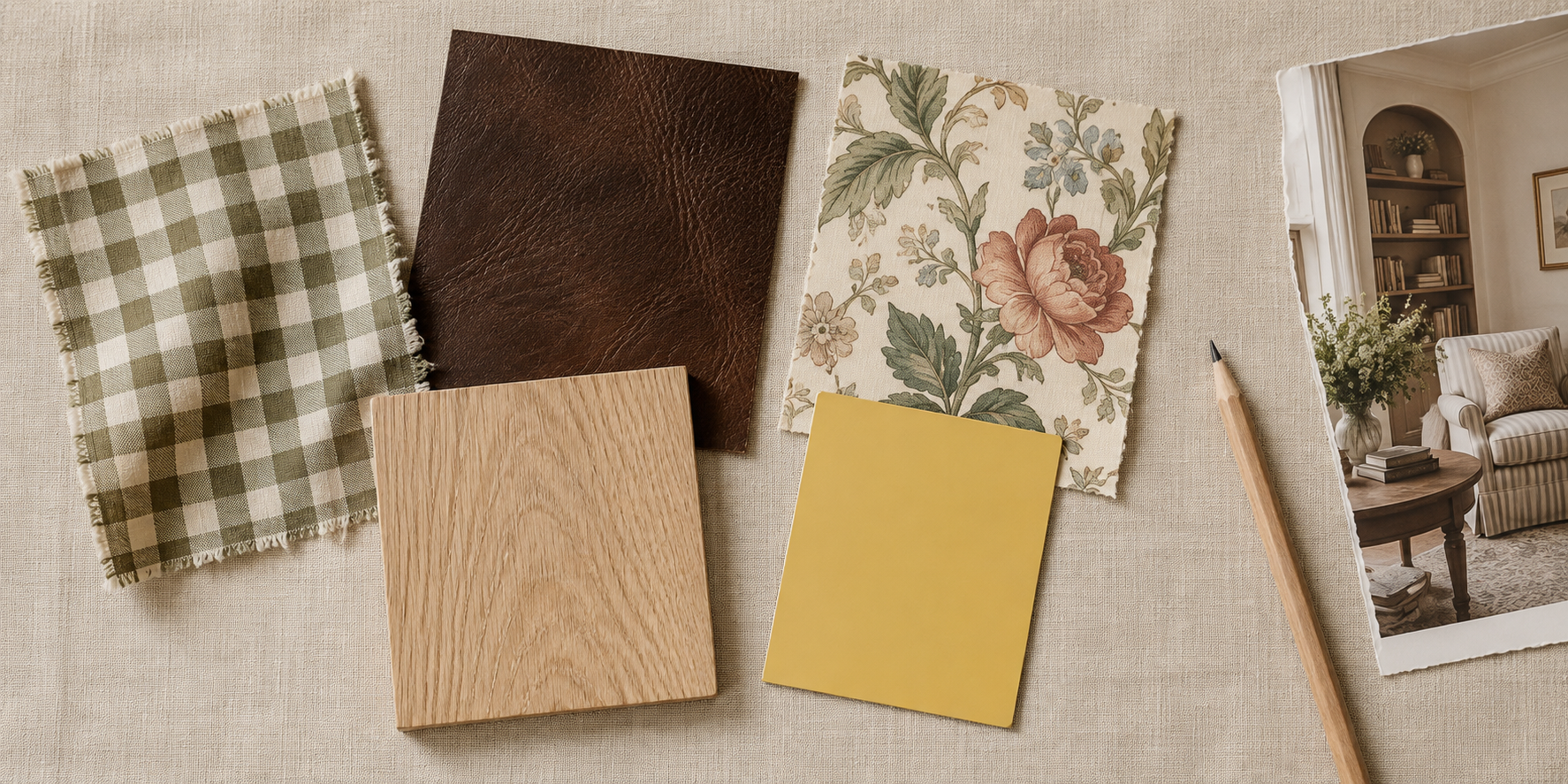
Here’s the part most decorating advice skips entirely: you likely already have the data you need to find your interior design style, and it isn’t on a quiz. It’s in your saved folders. Even IKEA Canada’s own style guide tells shoppers to dig through their closet before their living room, because personal taste usually shows up in wardrobe choices long before it shows up in furniture. Open your Pinterest boards or Instagram saves next and stop looking at whole rooms — look for what repeats. Is it always a particular green? Curved furniture legs? Brass over chrome? Bare floors instead of wall-to-wall rugs? Late-afternoon light instead of bright overhead lighting? People typically save two to three times more images than they ever act on, which means the pattern in the saves is closer to the truth than whatever single style they’d tell a quiz they “are.” A professional designer does this exact audit in the first client meeting, usually before a single paint swatch comes out — reading the pattern in what a person already loves tells them more than any style label would.
Once you can see the pattern, name it in three words. Not a Pinterest board title — three adjectives that could describe a person as easily as a room. Warm, collected, relaxed. Calm, natural, uncluttered. Colourful, playful, nostalgic. Moody, literary, intimate. Those three words become your filter for every purchase from here forward: does this rug fit “warm, collected, relaxed,” or is it just something you liked in isolation. This is the whole exercise of finding your interior design style in miniature — trading a single label for a short, honest list of words that actually describes how you want to live.
From your three words, build what amounts to a personal style formula: one foundational style that does most of the visual work, one supporting influence that adds texture, and one unexpected personal element that stops the room from reading as a catalogue page. Warm minimalism as the foundation, a few vintage details as the supporting layer, and a shelf of colourful handmade ceramics as the unexpected element is a formula that would work equally well in a character semi in Toronto’s west end or a new-build condo in Kitchener-Waterloo — the proportions do the work, not the square footage.
A Personal Style Formula
- Foundation — the aesthetic that shapes 60% of the room: furniture silhouettes, wall colour, flooring
- Supporting influence — roughly 30%: a second style layered in through textiles, art or one furniture piece
- Unexpected element — the final 10%: the one object that’s unmistakably, personally yours
That 60/30/10 split isn’t arbitrary — it’s the same ratio professional colourists use to keep a bold palette from tipping into chaos, and it works just as well applied to styles as it does to paint. It also explains why so many eclectic rooms fail: people give the supporting influence and the unexpected element equal weight to the foundation, and the room stops reading as “collected” and starts reading as “undecided.”
Before you commit real money, test the formula in low-stakes layers: cushions, a lamp, a piece of art, new bedding, one secondhand find from a shop like a local Habitat ReStore or Facebook Marketplace. Live with it for a few weeks before you order the expensive sofa. This is where a lot of first apartments and first houses go sideways — someone falls for a fully styled showroom look, buys the whole set in one weekend, and finds within a season that half of it was never actually “them,” just convincingly staged. Testing costs a fraction of the return-shipping fee on a couch that doesn’t feel like home.
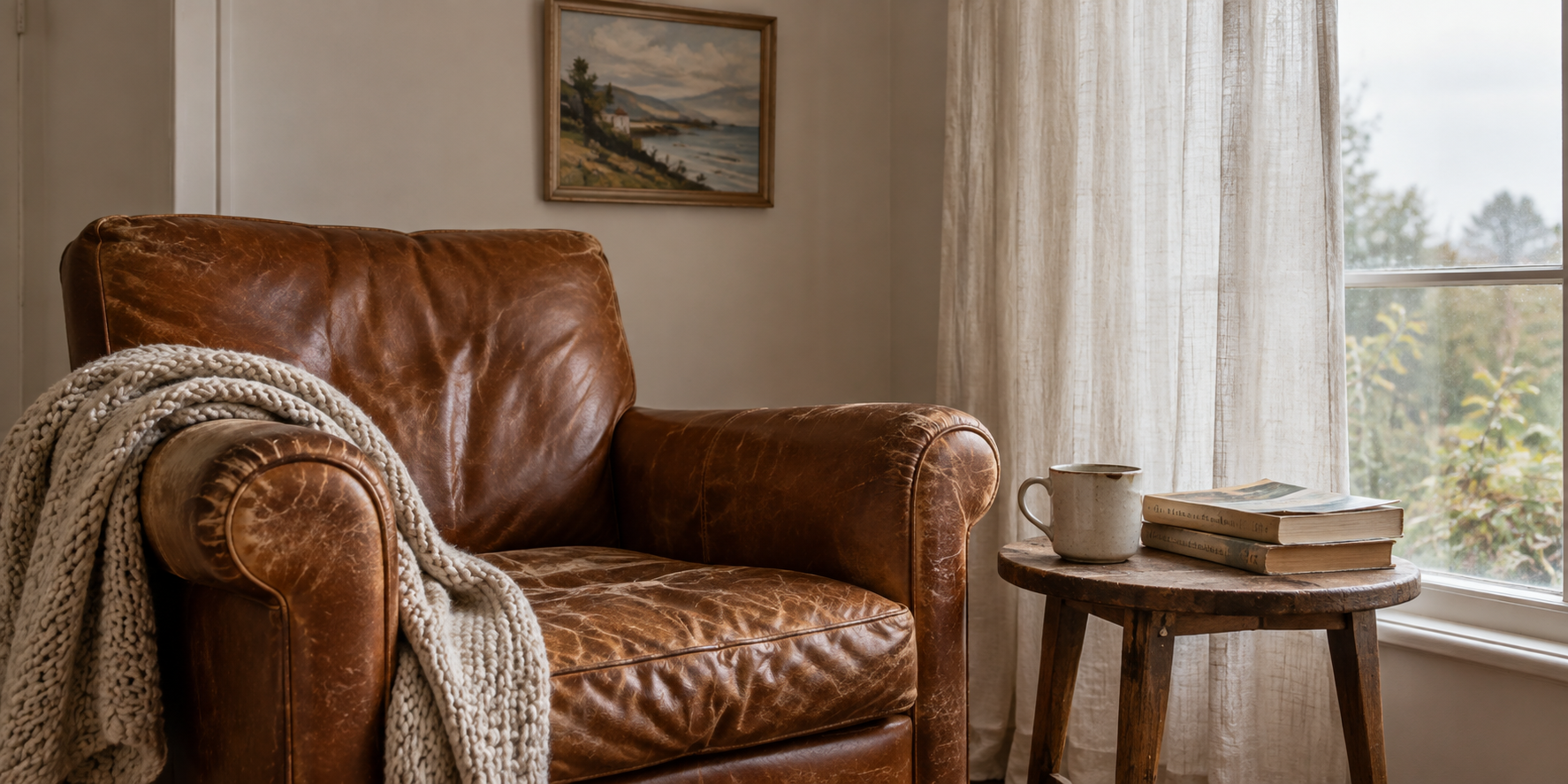
You’ll know it’s working when the room stops feeling like a theme and starts feeling like a life. The tells are consistent: there’s at least one genuinely meaningful, unpolished object in the room — a chipped mug you kept anyway, a piece of art a friend made — sitting next to things that are new. Furniture ages come from more than one decade. Objects earn their place by being useful, not just photogenic. And there’s some visual breathing room left, because a room that’s been fully, perfectly styled usually has nowhere left for a life to happen in it.
If you want to test your own instincts before you buy anything, work through the six questions below honestly. You’ll land closer to your real style than any 40-question quiz, because the answers are built from what you actually love rather than what a set of stock photos assumes you should.
Find Your Home Style: A Quick Exercise
- What feeling do you want when you enter the room?
- Which three colours keep showing up in your saved images?
- Do you gravitate toward clean surfaces or visible collections?
- Are you drawn to new furniture, vintage, or a mix?
- Which material feels most like home — wood, metal, glass, stone or soft textiles?
- What’s the one personal object that has to stay in the finished room, no matter what?
None of this expires the way a single trend does. Warm minimalism will eventually feel dated. Dopamine décor will have its moment and pass. But a home built from your own three words — the feeling, the colours, the objects you kept circling back to — doesn’t need a rebrand every time the algorithm decides on a new aesthetic. It just needs you to keep noticing what you’re drawn to, and enough restraint to let those things share a room. That, more than any quiz result, is how you find your interior design style and keep it — one honest choice at a time.
Have nothing in your houses that you do not know to be useful, or believe to be beautiful.
— William Morris