
How to Deep-Clean Your Range Hood and Kitchen Exhaust Fan Before Holiday Cooking
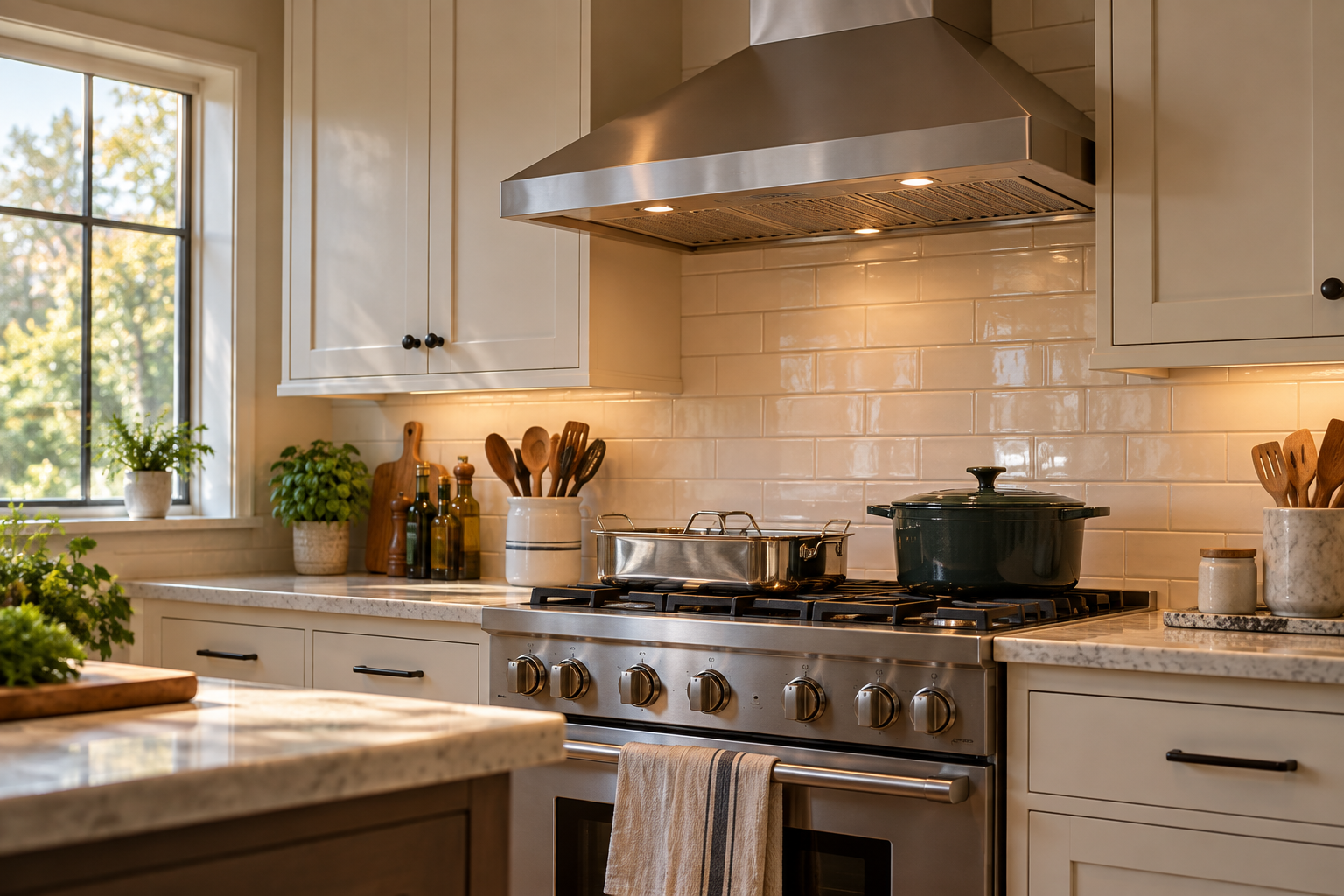
Holiday cooking puts your range hood through one of its busiest stretches of the year. Before the roasting, frying and stovetop cooking begin, clean the grease filters, hood surfaces and accessible kitchen exhaust fan areas so the system can move smoke, steam and cooking odours. Knowing how to clean a range hood comes down to three decisions: which parts are safe to wash, which should be replaced, and which belong to a professional. Canadian Thanksgiving falls on Monday, October 12, American Thanksgiving follows on November 26, and Christmas is close behind. If you are working through a
kitchen reset, deep-clean the refrigerator before the grocery rush first, then come back here.
Quick Answer: Time, Supplies and What You Can Safely Clean
To clean a range hood, switch it off, let it cool, and remove the grease filters. Soak washable metal filters in warm water with dish detergent for 15 to 20 minutes per side, scrub gently, rinse, and dry them completely before reinstalling. Degrease the underside and exterior with a damp cloth, wiping stainless steel with the grain. Most standard carbon (charcoal) filters are replaced rather than washed; check your manual, because some specialty filters are designed to be cleaned or regenerated. For the kitchen exhaust fan, wipe only the surfaces you can reach, leave the motor and wiring alone, and call a professional if the duct itself is greasy. Check your owner’s manual before removing parts or using any cleaner, because models differ. Most hoods need about 30 to 60 minutes, plus drying time, and a quick monthly check keeps the job easy. If you cook mostly with the fan on high, or fry often, plan on cleaning the filters more frequently than that.
How long it takes
What you’ll need
Why Clean Your Range Hood Before Holiday Cooking?
A holiday meal is the hardest shift your range hood works all year. Roasting, searing, deep-frying and long simmers put fat and steam into the air, and the filter catches most of it. A clogged hood still runs, but it moves less air, drips onto the
and leaves smoke and odours in the room as guests arrive. In a Canadian winter, when windows stay shut, that steam also adds to the moisture you are already managing, as our guide to humidity levels in your home explains.
Grease is also a safety question, though it is worth keeping in proportion. Ontario fire officials still rank cooking as the leading cause of home fires, and London’s deputy fire chief names unattended cooking as the leading trigger. A clean hood doesn’t replace staying with the pan. It does remove one more thing that can burn, and RepairClinic makes the same point about grease buildup in the vent leading outside.
Do the job a few days before the big meal, not that morning. Filters need time to dry, and a carbon replacement may need to be ordered.
Before You Start: Know Your Range Hood and Filter Type
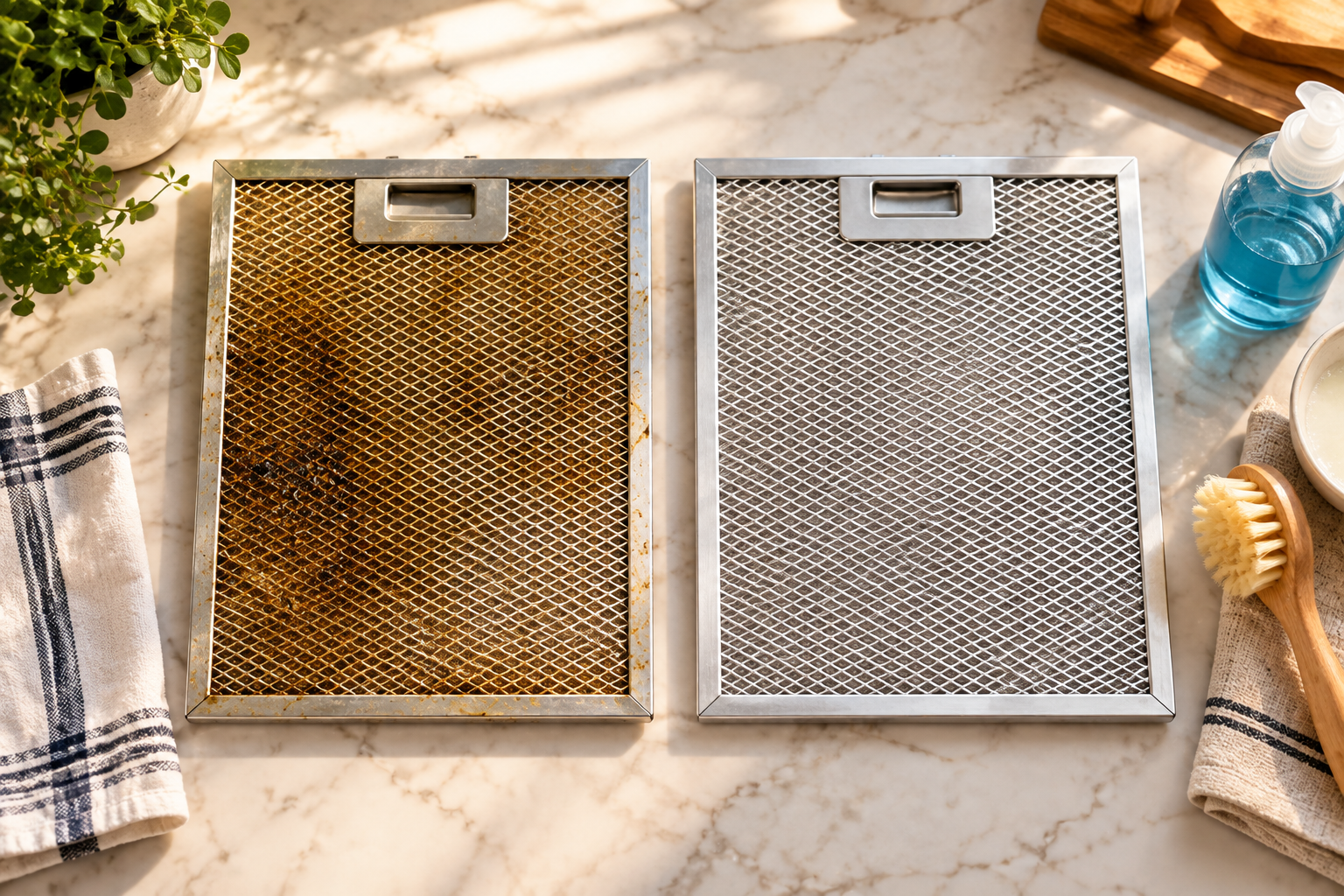
Most online guides jump straight to soaking the filter, which is how people ruin a carbon filter that was never meant to get wet. Spend two minutes identifying what is in your hood. Pull one filter out and compare it with the table below. The label inside the hood, usually near the filter opening, lists the model number you need to order a replacement.
| Filter typeWhat it looks likeClean or replace? | Aluminum meshLayered metallic mesh in a frameUsually washableStainless baffleStainless steel panels with channelsUsually washableCharcoal / carbonDark or black material, often a pad or cartridgeUsually replace; check your manual before washingCombination systemMetal grease filter plus a carbon filterClean the metal; replace the carbon on schedule |
|---|
The distinction is backed by the manufacturers. Broan-NuTone says its non-ducted carbon filters cannot be washed and must be replaced, and Whirlpool says the same about its recirculating filter. Some specialty carbon filters are designed to be cleaned or regenerated, so your manual has the final word. A ducted hood, which vents to the outside, usually has only the metal grease filter. A ductless or recirculating hood needs both.
How Dirty Is Too Dirty?
A quick look at the filter answers the question most readers have: do I need to do this right now?
| What you seeWhat to do | Light grease, slightly tacky filterNormal washHeavy grease, dark or sticky meshSoak before scrubbingGrease dripping from the filterClean immediatelyBent or damaged filterConsider replacing itCharcoal filter, persistent odoursCheck the replacement schedule |
|---|
How to Deep-Clean a Range Hood
Step 1 — Turn off and protect the cooking area
Switch off the fan and light and let the hood and
cool completely. Whirlpool’s instructions are plain: controls off, hood cool, and follow the label on any cleaning product. If the hood plugs in, unplug it; if it is hardwired, switch it off at the breaker before reaching near the fan. Lay old towels over the
so nothing drips or drops onto it, and use a step stool rather than stretching from the floor.
Step 2 — Remove the grease filters
Wipe loose dust and surface grease with a dry cloth or paper towel first. Wetting thick, dusty grease turns it into a sticky paste that spreads. Then find the latch, tab or spring handle on each filter. Many slide back and drop down; others lift out. Support the filter with your free hand as it releases. If yours resists, stop and check the manual rather than forcing it.
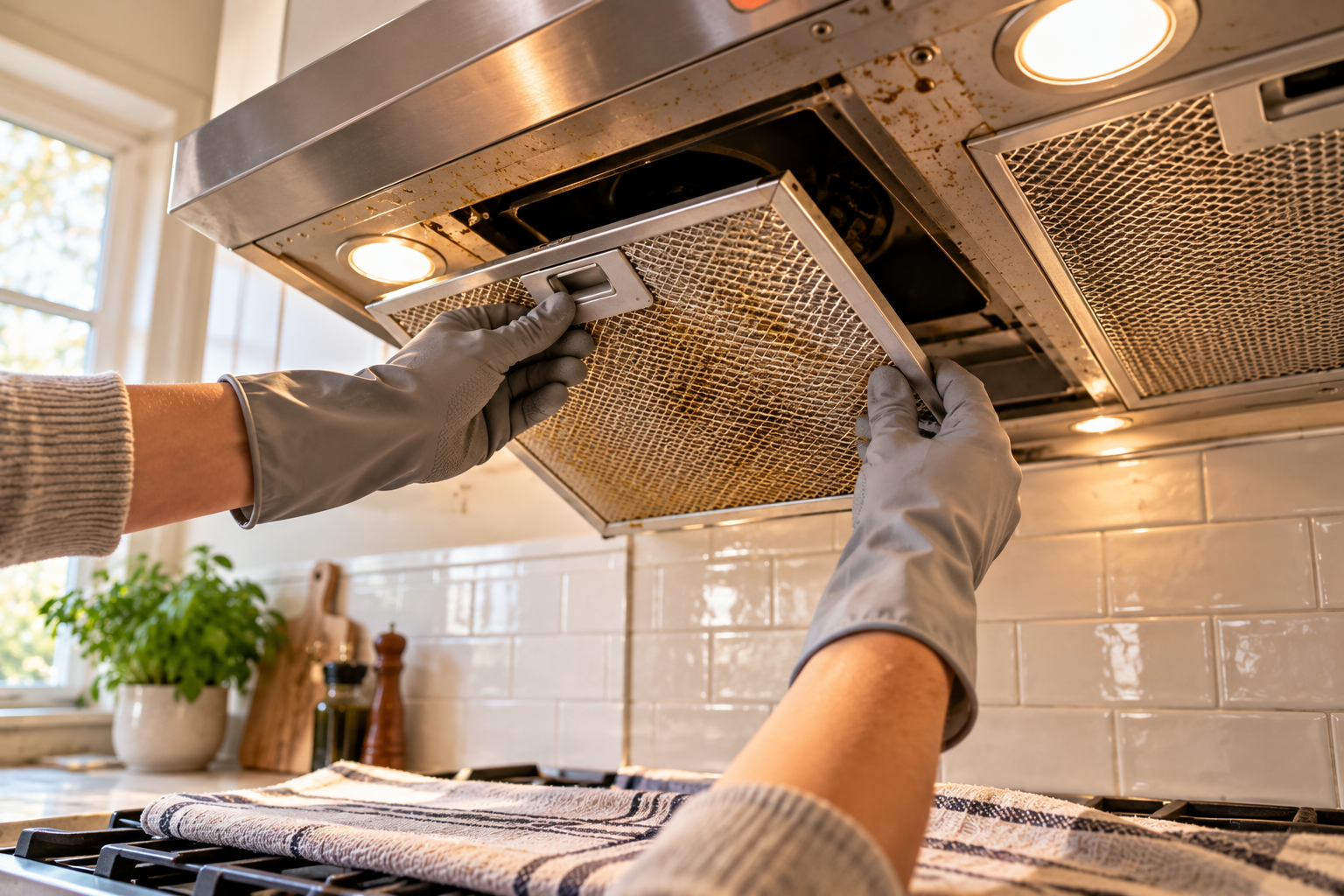
Step 3 — Soak and degrease metal filters
This is the step most readers came for. Fill the sink or a large basin with hot tap water and a good squeeze of grease-cutting dish soap, then submerge the filter. Broan-NuTone recommends soaking in warm water with a mild detergent for 15 to 20 minutes per side. A filter untouched for a year can sit longer.
I would start with dish soap alone. Guides that stack boiling water, baking soda, vinegar, dishwasher tablets and commercial degreaser are mixing chemistry nobody has tested on your filter. Hot tap water is enough, and boiling water can warp plastic handles and frames. Never use bleach or a caustic oven cleaner on aluminum.
Step 4 — Scrub, rinse and dry
Work a soft brush along the mesh in the direction of the weave, using gentle pressure. Aluminum mesh bends and tears more easily than it looks. Rinse under hot water until no suds remain, then towel-dry and let the filter air dry completely. A damp filter drips onto the
and holds moisture against the housing.
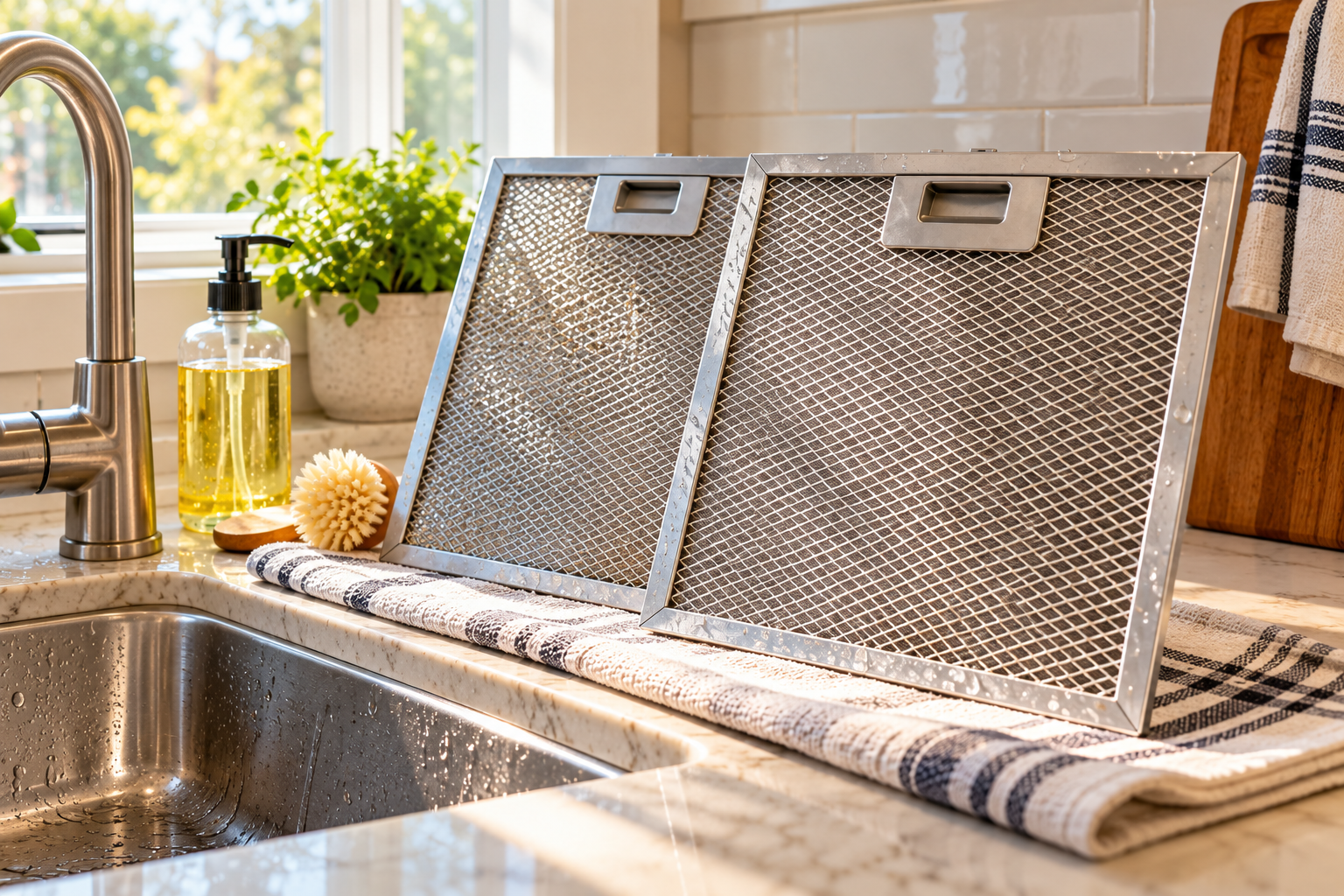
Step 5 — Clean underneath the hood
With the filters out, the underside is often worse than the visible exterior. Wipe the grease around the filter openings, the seams, the light cover, the control area and the underside edges. Use a mild degreasing solution that is compatible with your hood, applied to the cloth rather than sprayed. Keep liquid away from switches, bulbs and the motor opening, and skip abrasive scrubbers, which scratch the finish.
Step 6 — Clean the exterior
For most finishes, warm water and a little dish soap on a
cloth does the job, followed by a dry cloth. Stainless steel has its own rules, covered below. Painted, glass and black stainless finishes vary, so follow the manufacturer’s instructions.
Step 7 — Clean the accessible kitchen exhaust fan areas
With the filters out and the power off, you can usually see the fan housing or blower. Some guides encourage readers to dismantle the whole hood. Stick to what you can clean without taking anything apart.
- Safe to clean: the accessible housing, the grille, visible grease around the blower opening, and any removable part the manual says is washable.
- Leave alone: the motor, electrical connections, internal wiring, a blower assembly that needs tools to reach, and the ductwork.
Use a damp, wrung-out cloth, never a spray. Grease, heat and humidity can also stiffen a motor’s bearings over time, as RepairClinic points out, and no amount of wiping fixes that.
Step 8 — Reinstall and test
Seat each filter fully until it clicks or sits flush, remove the towels, and restore power. Run the fan on every speed and listen for rattling or a change in pitch. Then put a pot of water on a front burner, bring it to a boil, and watch whether the steam rises cleanly into the hood.
Can Range Hood Filters Go in the Dishwasher?
Some can, but not all, and the manual is the only reliable answer. Whirlpool lists the dishwasher as an option for its removable grease filters, while Broan-NuTone says some filters are dishwasher safe and tells owners to confirm in their manual.
The detail most guides leave out is
. Broan-NuTone advises a non-phosphate detergent for metal filters and says phosphate detergents or local water conditions can discolour them without affecting performance. To minimize it, Broan-NuTone suggests washing the filters separately in the sink with a mild detergent. If you do use the dishwasher, I would soak and brush a heavily loaded filter first so a month of grease doesn’t end up coating the interior, and I would run the filters on their own.
How to Clean a Stainless Steel Range Hood
Stainless steel streaks when you wipe against its grain, so find the direction of the fine lines first. Bosch’s care instructions call for a soft cloth and mild soapy water, wiped in the direction of the grain and then dried. Bosch also sells a stainless steel conditioner, but warns against applying it to logos, control labels or black stainless steel. Black stainless is cleaned with mild soapy water and a soft cloth.
Avoid steel wool and abrasive pads, which scratch the surface. I would also keep chlorine bleach away from stainless steel, since it can pit the finish. For glass or painted hoods, a standard glass cleaner or mild soap is usually enough, but the manual has the last word.
What About Charcoal Filters?
If your hood recirculates air instead of venting outside, it has a carbon filter, usually tucked behind or above the metal grease filter. RepairClinic says charcoal filters cannot be cleaned or renewed, which holds for most standard carbon filters; a few specialty types are designed to be regenerated, so check your manual. Otherwise replace it, and write the date inside the hood.
The replacement interval varies more than most guides admit. Whirlpool says its charcoal filter lasts up to six months with normal use. Bosch’s consumer page suggests every three to four months, and a Bosch installation sheet says four to six. Some hoods have a saturation indicator. Follow your own manual. Replacement cost varies significantly by hood model, so use the model number inside the hood to find the correct filter, and order a few days ahead of the holiday week.
Should You Clean Inside the Exhaust Duct?
This is where the DIY guide should stop. If you have a ducted hood, the duct carries air from the hood to the outdoors, usually through an exterior wall or roof cap. You can inspect what is safely visible: step outside and look at the cap, check that the damper flap moves freely, and look for greasy staining around it. RepairClinic advises regular checks of the vent to the outside, and if grease is building up inside, it recommends a vent-cleaning or heating and cooling professional rather than a DIY attempt.
Clean filters keep the duct in far better shape.
5 Signs Your Range Hood Needs Cleaning
- The filter feels sticky or looks dark.
- Grease drips or collects underneath the hood.
- Smoke or steam doesn’t clear as quickly as it used to.
- Cooking odours linger for hours.
- The fan sounds different, or seems to be working harder.
A spotless filter does not guarantee a hood that performs. Cleaning won’t repair a failing motor, a blocked duct or a hood that was undersized for the
to begin with. Treat cleaning as the first step in diagnosis, not the whole cure.
What If Your Range Hood Still Doesn’t Pull Smoke?
If the hood still struggles after a proper clean, work through the likely causes from simplest to most involved:
- A dirty or restricted filter. Re-check that every filter is seated and clear.
- A charcoal filter past its life. Compare its age with the manufacturer’s schedule.
- A blocked duct or stuck exterior damper. Check the outside cap while the fan runs.
- The wrong fan speed. Heavy searing needs the higher settings.
- No make-up air. In a tightly sealed home, a strong hood can struggle to pull air out when none can get in. Crack a window while the fan runs; if performance jumps, that’s the problem. Homes that have been draft-proofed before winter are more likely to hit it.
- A fan or blower problem. Rattling, grinding or a weak motor needs a technician.
- Insufficient capacity. If the hood was never strong enough for your range, the real fix is replacement, one of the kitchen upgrades that add value without adding space.
Call a professional when the duct looks greasy, the motor is noisy or weak, or airflow stays poor after the filters and carbon are sorted.
How Often Should You Clean Your Range Hood?
There is no single number, and the manufacturers don’t agree on one. Broan-NuTone suggests roughly monthly for aluminum mesh filters, depending on use, and more often for frying or wok cooking. A Bosch manual says at least every two months. Treat the table as a starting point, then let your manual and the filter itself decide.
| Cooking habitsSuggested approach | Frequent frying or searingInspect often; clean as soon as grease accumulatesCooking dailyRoughly monthly is a useful starting pointLight cookingEvery two months or so; clean sooner if the filter looks dark or stickyBefore major holiday cookingInspect the filters and hood a few days beforehandBaffle filtersWash with soap and water when the surfaces look unsightly (Broan-NuTone)Charcoal filterReplace on the manufacturer’s schedule, roughly three to six months |
|---|
If you keep a preventative home maintenance checklist, add the hood to it. It is the kind of job that never feels urgent until it is.
Range Hood Cleaning Mistakes to Avoid
- Don’t wash a standard charcoal filter unless the manufacturer specifically says it can be washed or regenerated.
- Don’t reinstall a wet filter.
- Don’t spray liquid into switches, lights or the motor.
- Don’t use steel wool on stainless steel.
- Don’t assume every metal filter is dishwasher safe.
- Don’t reach for oven cleaner just because the hood sits above the oven. Caustic oven cleaners are too aggressive for aluminum filters and many hood finishes; use dish soap or a degreaser the manual allows.
10-Minute Pre-Holiday Range Hood Check
A few days before Thanksgiving or Christmas, run through this short list:
- Filter: is it greasy, dark or sticky?
- Fan: does it sound normal on every speed?
- Airflow: does steam from a boiling pot rise into the hood?
- Light: does the hood light work?
- Underside: any grease buildup or drips?
- Exterior: clean and guest-ready?
- Charcoal filter: is it overdue for replacement?
Do this before the day you are cooking for guests, not while the turkey is already in the oven.
Frequently Asked Questions
Can I put my range hood filter in the dishwasher?Some metal filters can, but not all. Whirlpool lists the dishwasher as an option for its removable grease filters, while Broan-NuTone says to confirm in your owner’s manual. Check the manual, use a non-phosphate detergent, and some
is possible depending on your detergent and water.
Can I clean a range hood filter with baking soda?Dish soap and warm water are what the manufacturers I checked recommend, so start there. Baking soda is mild, but alkaline solutions can dull bare aluminum mesh. If your manual doesn’t mention it, skip the soak and use baking soda only as a paste on stubborn spots of the stainless exterior.
Can you wash a charcoal range hood filter?Usually not. Broan-NuTone, Whirlpool and Bosch all say their standard carbon (charcoal) filters are replaced, not washed, and soaking one only clogs it with water. Some specialty filters are designed to be cleaned or regenerated, so check your manual. Otherwise replace on the manufacturer’s schedule, roughly three to six months.
How often should range hood filters be cleaned?Broan-NuTone suggests about monthly for aluminum mesh filters, more often with frying or wok cooking. A Bosch manual says at least every two months. Start monthly if you cook daily, stretch it if you cook lightly, and always clean one that looks dark, sticky or dripping.
Why does my range hood still smell after cleaning?Usually grease is still sitting somewhere you didn’t reach: the underside, the filter openings, the damper or the duct. A filter reinstalled while damp, a saturated charcoal filter or leftover cleaner residue can also cause it. Rinse thoroughly, dry the filters fully and check the carbon filter’s age.
Why isn’t my range hood pulling smoke properly?Start with the filter, then work outward: a charcoal filter past its life, a blocked duct or stuck exterior damper, the wrong fan speed, a tightly sealed house with no make-up air, or a hood that is simply undersized for the
. If a clean filter doesn’t help, book an inspection.
The best holiday kitchens aren’t the ones with the most polished counters. They are the ones where the air is clear, the stove behaves and nobody is fanning a smoke alarm while the gravy finishes. Treat the reset as a sequence: the refrigerator and freezer, then the range hood, then a pantry that’s ready for meal prep, with the oven and dishwasher to follow. Do the hood this week, and cook like someone with nothing left to worry about.
The work nobody sees is what lets everyone else linger at the table.
— NestDigest