
How to Find Your Home Decor Style: Discover What Feels Like You
First Space, Your Way · Part 2 of 5
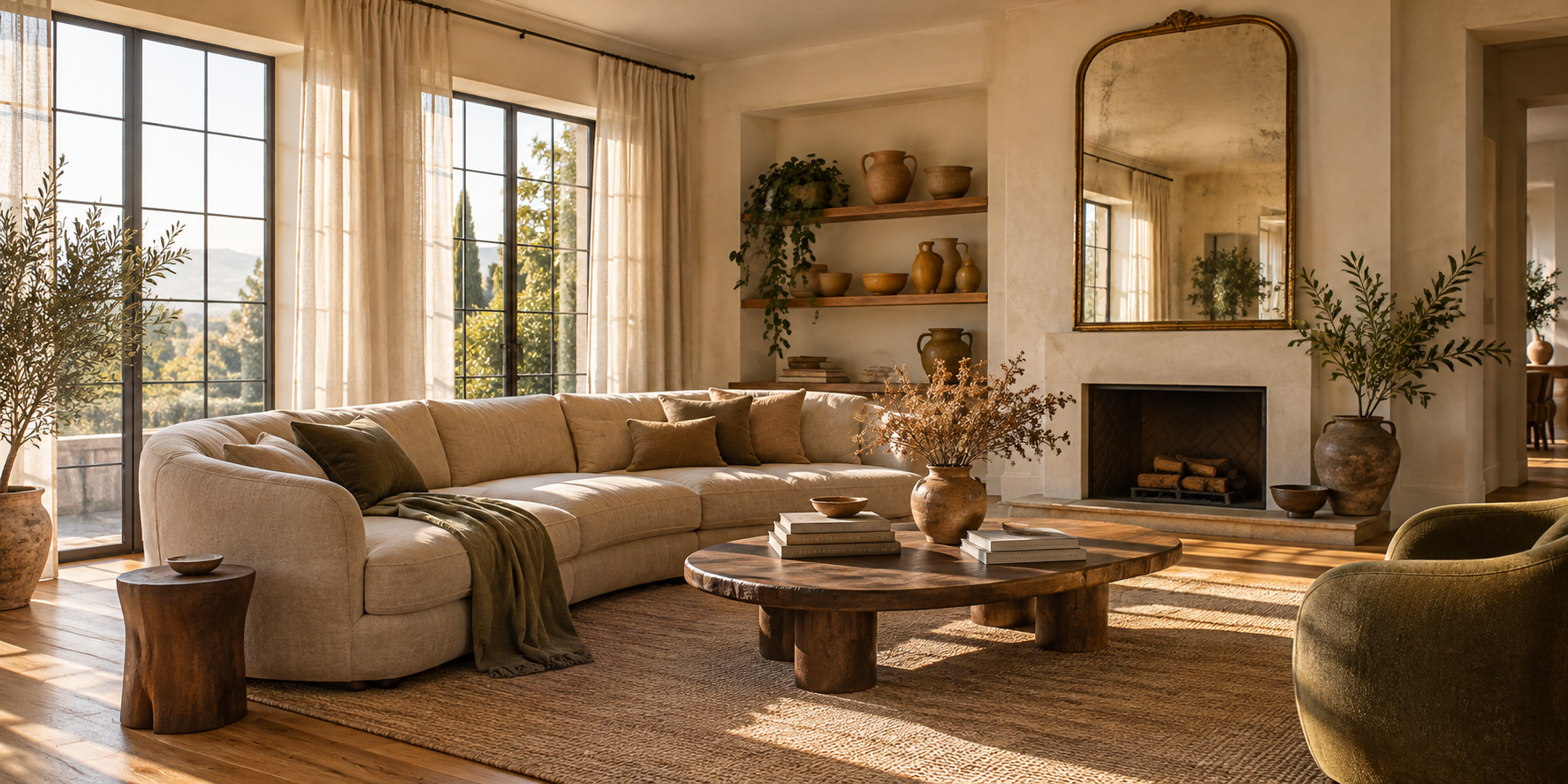
A living room with a Danish-modern sofa, a grandmother’s brass mirror and a shelf of dopamine-yellow ceramics shouldn’t work. On paper it reads like three different Pinterest boards colliding. In person, in the right hands, it reads like somebody who actually lives there. That’s the real secret behind how to find your home decor style: it’s rarely one thing. It’s a short list of feelings, colours, materials and objects you keep circling back to.
This guide is for anyone who has typed “what is my decorating style” into a search bar and come away with a single label that didn’t quite fit. Whether you’re setting up your first home or starting over, you’ll name the atmosphere you want, spot the colours, materials and shapes you keep choosing, explore today’s popular aesthetics, find patterns in the inspiration you’ve already saved, describe your personal decorating style in three words, and finish with a simple six-question exercise.
Start With How You Want Your Home to Feel
Start before you shop, and start with a feeling rather than a photo. Sit in the room you’re decorating and ask what you want it to do to your body when you walk in: slow you down, wake you up, make you nostalgic, make you feel clever and well-read, make you want to invite people over.
Calm, warm, energetic, nostalgic, creative, sophisticated — pick the two that matter most. Everything downstream, the colours, the materials, the amount of visual noise you can tolerate, gets easier to choose once you know which feeling you’re building toward. A room aiming for calm and a room aiming for energetic can use the exact same green, in wildly different amounts.
Explore Popular Home Decor Styles
With a feeling in mind, it helps to know the vocabulary the internet is currently using. Many of today’s popular aesthetics can be read as different routes to the same handful of feelings, and a label is a useful search term rather than a verdict. Someone can save a moody dark-academia bookshelf on Monday and a sun-bleached cottagecore kitchen on Tuesday and mean both. Even IKEA Canada’s 2026 style guide sets calming “lagom living” beside playful, colour-forward “joycore” decor.
Treat the descriptions below as starting points. Notice which ones you lean toward, and which make you wince.
Warm minimalism
Warm minimalism keeps the restraint of true minimalism but swaps cold whites for oatmeal, clay and honey-toned wood. Think a linen sofa, one sculptural ceramic, unlined wood shelving. The difference between “edited” and “empty” is warmth: stop at bare and the room just reads bare.
Eclectic or collected
Eclectic or collected interiors gather pieces from different eras and sources — a vintage rug, a contemporary lamp, inherited brass — so the room feels gathered over time rather than bought in one go.
Dopamine décor
Dopamine décor is maximalism with a mood-boosting mandate: saturated colour, playful pattern, nothing beige on purpose. If a bright cushion makes you smile, you may be leaning this way.
Vintage and ’70s-inspired
Vintage and ’70s-inspired style leans into curved silhouettes, burnt orange and walnut veneer. One or two period pieces can carry the whole mood, without going full theme park.
Cottagecore
Cottagecore wants gingham, dried florals and a kettle that’s actually used, styled like a kitchen someone cooks in rather than a film set.
Dark academia
Dark academia is moody, literary and brass-lit — leather, dark wood, stacked books as decor rather than props. Make sure there’s enough task lighting for reading, whatever the wall colour.
Biophilic or nature-led design
Biophilic or nature-led design leans on plants, natural fibre and unfinished wood grain. Real greenery is the classic route, but daylight, outdoor views and natural textures count too.
Grandmillennial
Grandmillennial revives chintz, scalloped edges and needlepoint pillows with a straight face, no irony, so it works best when it reads as genuine warmth rather than costume.
Contemporary organic
Contemporary organic softens modern lines with curved furniture and plaster-toned walls, and stops short of showroom polish.
Y2K and playful nostalgia
Y2K and playful nostalgia brings back chrome, bubble shapes and a wink of humour. It’s often easiest to try in one or two accent moments before committing to more.
Look for Patterns in What You Already Love
Here’s the part most decorating advice skips: you likely already have much of the information you need, and it isn’t on a quiz. It’s in what you’ve saved, bought and kept. Start with your clothes, favourite objects and saved room photographs. IKEA Canada’s style guide suggests digging through your closet for clues to your aesthetic, though what you enjoy wearing may differ from what you want around you at home.
Then stop looking at whole rooms and look for what repeats. Is it always a particular green? Curved furniture legs? Brass over chrome? Bare floors instead of wall-to-wall rugs? Late-afternoon light instead of bright overhead lighting? The pattern across your saves and favourite things is often closer to your real taste than any single style label.
Describe Your Personal Style in Three Words
Once you can see the pattern, name it in three words. Not a Pinterest board title — three adjectives that could describe a person as easily as a room.
- Warm, collected, relaxed.
- Calm, natural, uncluttered.
- Colourful, playful, nostalgic.
- Moody, literary, intimate.
Then put your three words to work. Hold them up against your saved images: which still fit, and which are simply pretty? Notice which colours, materials and shapes keep matching them — those are your recurring preferences. And let the words filter future choices: does this rug fit “warm, collected, relaxed,” or is it just something you liked in isolation? This is the whole exercise of finding your personal decorating style in miniature — trading a single label for a short, honest list of words that describes how you want to live.
Those three words are the first step: they tell you what you like. Turning them into a cohesive room is the next one, and we’ll get there at the end.
Create a Mood Board That Reflects Your Taste
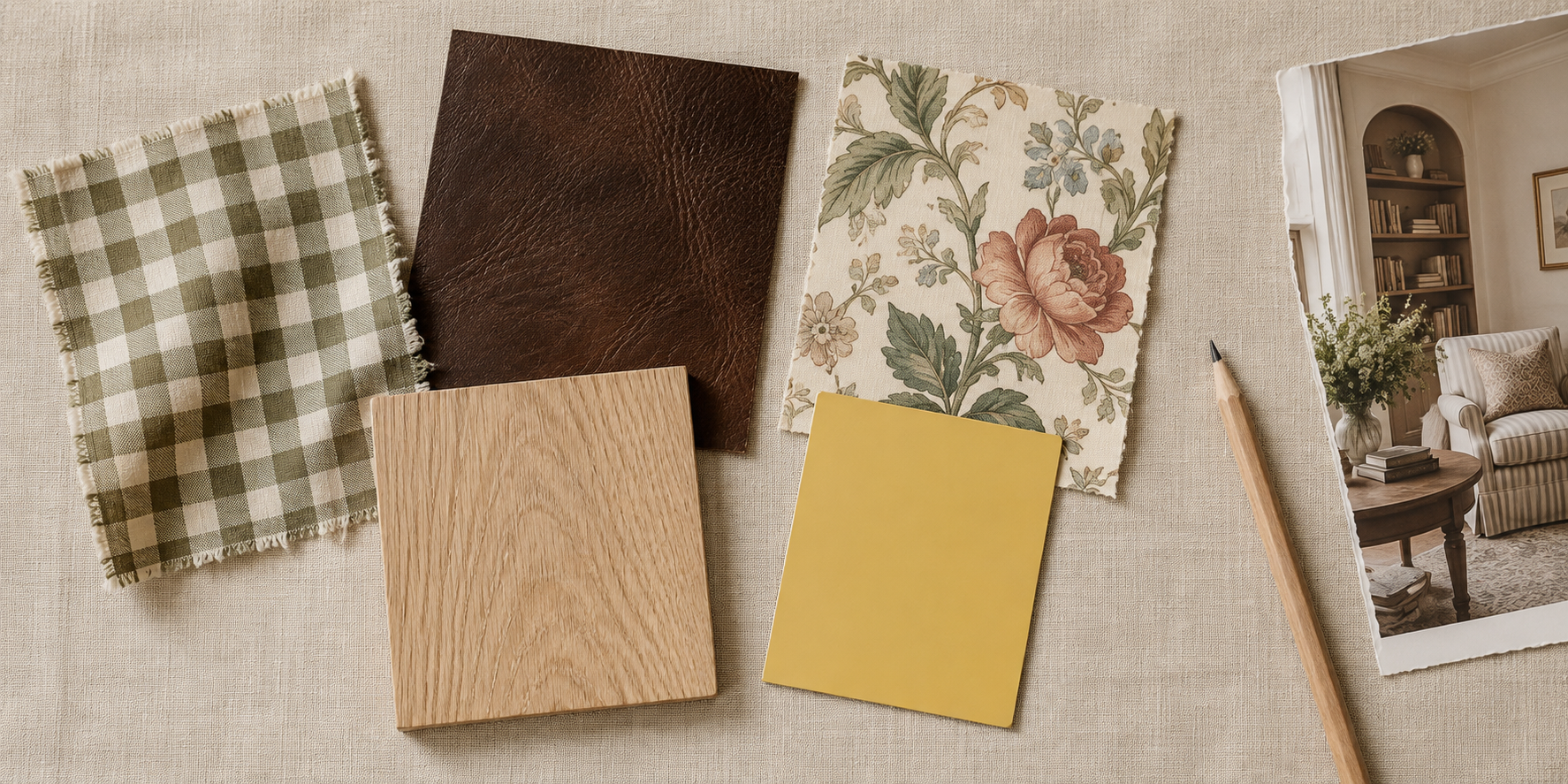
A mood board is simply a way to make your scattered saves readable. Use a Pinterest board, an Instagram collection, a folder on your phone or a pile of printouts.
- Collect 10–15 images that make you stop scrolling. They can be rooms, but also a fabric, a ceramic, a coat, a photograph or a favourite café.
- Note what repeats. Beside each image, write the colour, material, shape or texture that caught your eye.
- Remove the outliers. Delete images that are attractive but don’t match the atmosphere you chose earlier. A room you admire isn’t always one you’d want to live in.
- Keep a smaller group of images you keep returning to.
- Write three words describing what’s left, and compare them with your first three.
Find Your Home Style With Six Simple Questions
If you want to test your instincts before you buy anything, work through the six questions below honestly. The answers come from what you actually love rather than what a set of stock photos assumes you should.
Find Your Home Style: A Quick Exercise
- What feeling do you want when you enter the room?
- Which three colours keep showing up in your saved images?
- Do you gravitate toward clean surfaces or visible collections?
- Are you drawn to new furniture, vintage, or a mix?
- Which material feels most like home — wood, metal, glass, stone or soft textiles?
- What’s the one personal object that has to stay in the finished room, no matter what?
Here’s what your answers might suggest. Read this as a set of possible influences, not a personality classification — most people land on a blend, and that’s a good sign rather than a problem.
What Your Answers May Suggest
- Light wood, neutral colours and uncluttered surfaces may point to Scandinavian or warm minimalist influences.
- Vintage objects, layered textures and personal collections may point to eclectic or collected interiors.
- Curved silhouettes, walnut tones and nostalgic colour may point to vintage or ’70s-inspired style.
- Dark wood, books and warm lighting may point to dark academia.
- Natural materials, greenery and organic shapes may point to nature-led or contemporary organic design.
- Bright colours and playful objects may point to dopamine décor.
Your takeaway: write down your top one or two influences next to your three words. Together they’re your starting brief.
What to Do After Discovering Your Style
Keep your results somewhere you’ll see them: your three words, your strongest influences and the handful of images you kept. They’re a filter for every future purchase.
Before you commit real money, test what you’ve learned in low-stakes ways: a cushion, a lamp, a piece of art, new bedding, one secondhand find from a shop like a local Habitat ReStore or Facebook Marketplace. Live with it for a few weeks before you order the expensive sofa. It’s easy to fall for a fully styled showroom look, buy the whole set in one weekend, and find within a season that half of it was never really “you.” If you rent, our renter-friendly decorating ideas cover inexpensive, reversible ways to experiment.
Your preferences also have to work inside the room you actually have. A style you love still needs clear walking routes, storage and good light, which our small-space layout ideas help you plan.
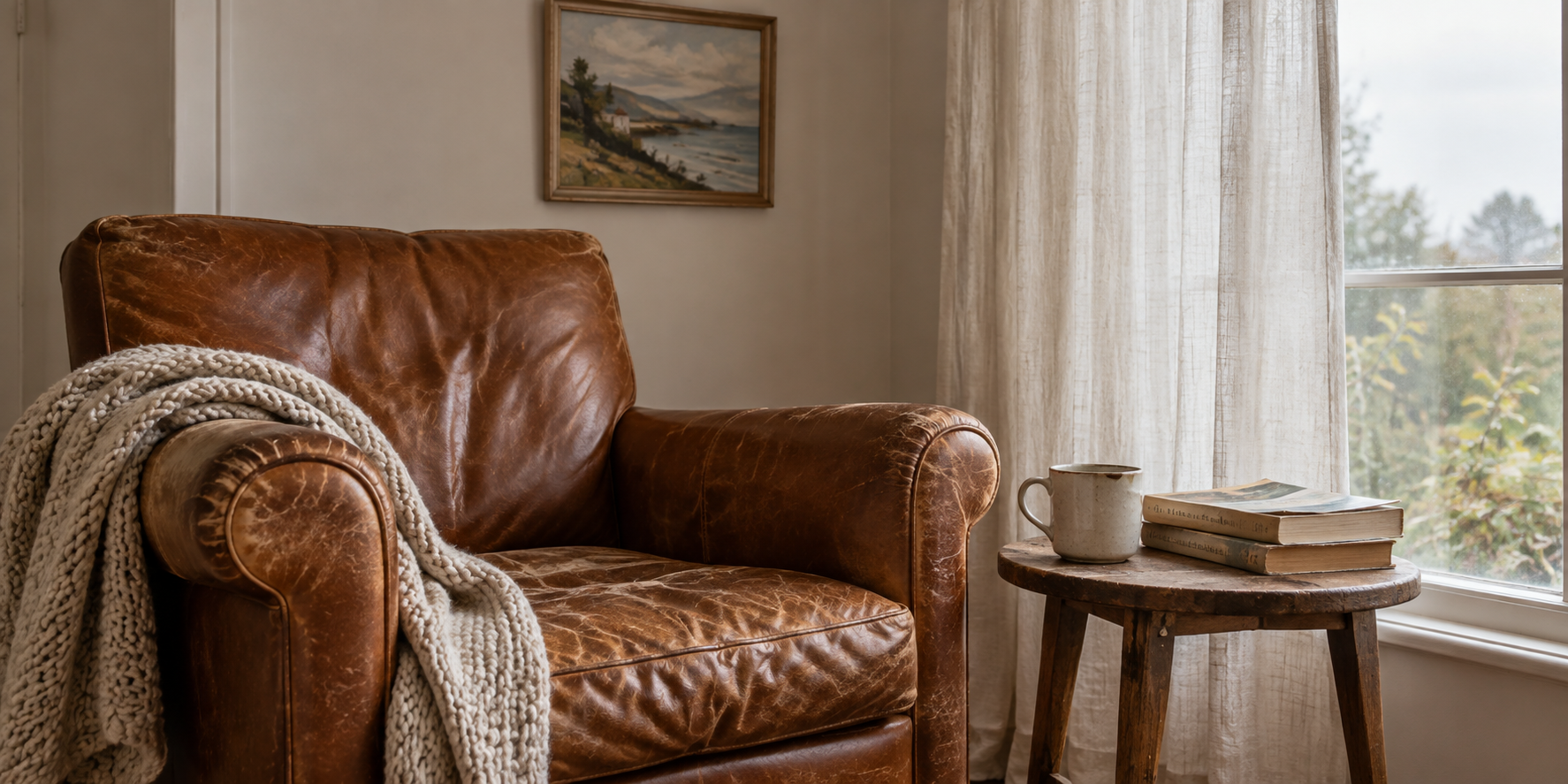
You’ll know your style is working when the room stops feeling like a theme and starts feeling like a life. There’s usually at least one genuinely meaningful, unpolished object — a chipped mug you kept anyway, a piece of art a friend made. Objects earn their place by being useful, not just photogenic, and there’s some visual breathing room left, because a room that’s been fully, perfectly styled has nowhere left for a life to happen in it.
By now you should know the atmosphere you want and the colours, materials, shapes and decorating influences you keep returning to. Trends will keep shifting: warm minimalism and dopamine décor are useful shorthand today, but a personal style should reflect what you actually love rather than what’s currently popular. That, more than any quiz result, is how you find your home decor style and keep it — one honest choice at a time.
Next in First Space, Your Way: once you know what you like, the next step is mixing different interior design styles into a room that feels cohesive rather than collected by accident.
Have nothing in your houses that you do not know to be useful, or believe to be beautiful.
— William Morris