
Small Mudroom Ideas That Actually Survive Boots, Salt and Slush
You don’t have a mudroom. You have a back door. Most of what gets published about mudrooms assumes a dedicated room with a bench built into an alcove — an assumption that describes almost no house built before 1990 and very few built after. These are drop zone ideas for what you’re actually working with: 1.2 metres of wall and a floor that sees road salt six months a year. The fix is four layers, not a renovation: salt-resistant flooring, wall hooks instead of a closet, a bench only if the clearance math allows it, and somewhere for wet gear to actually dry. Below: what floor material survives deicer, a beginner-level weekend bench build, and three real Canadian budget tiers from under $300 to under $2,500.
NestDigest is a participant in the Amazon Associates program. If you sign up for Amazon Prime through the link below, we may earn a commission at no extra cost to you — it helps fund the guides on this site.
Try Amazon Prime →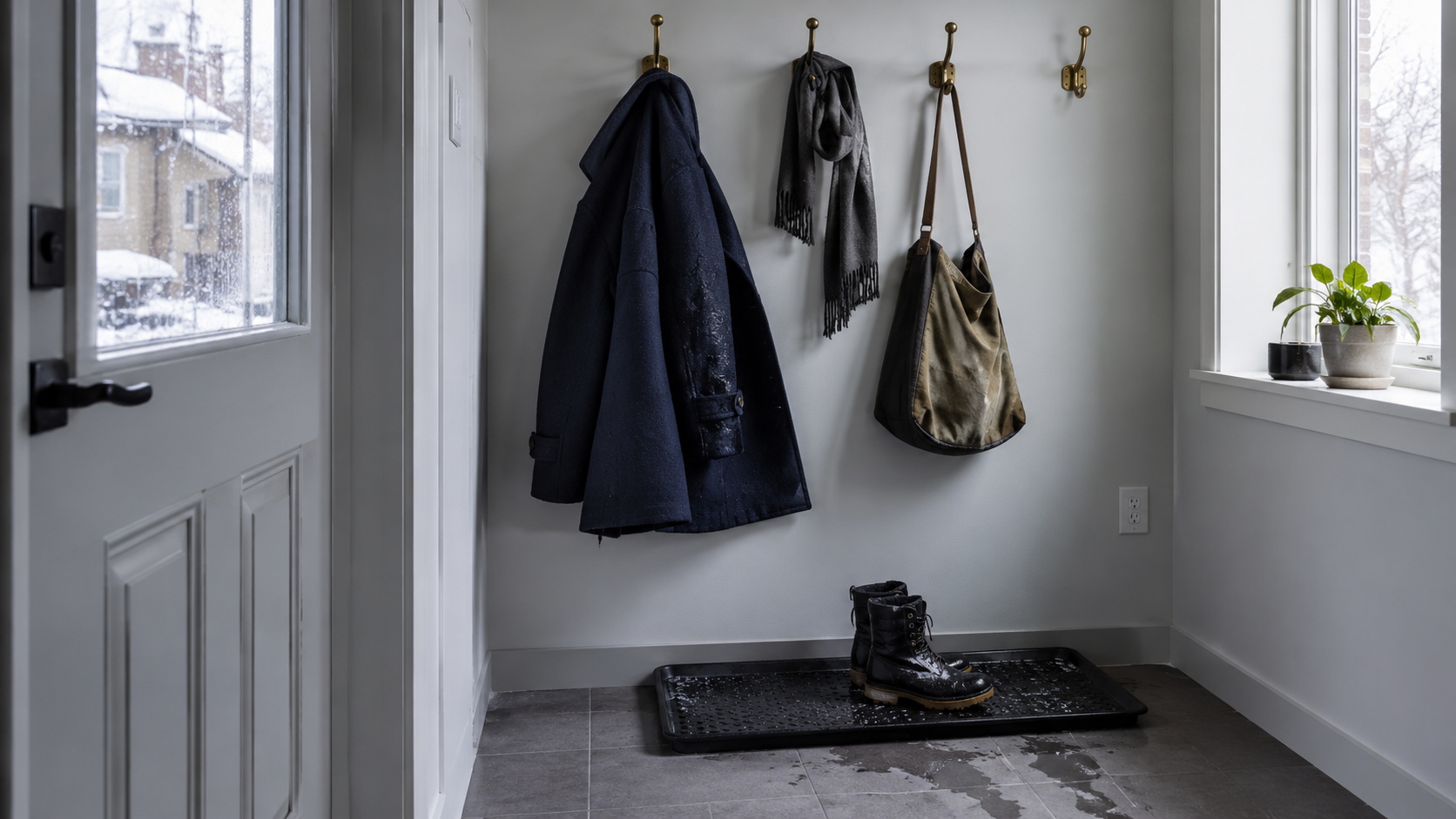
This is the second piece in our indoor season playbook — the full month-by-month renovation sequence starts here, with the entryway, in September.
The Mudroom Problem Nobody Designs For: Salt, Meltwater and Six Pairs of Boots
The photos that circulate under “mudroom ideas” are almost all American, almost all built-in, and photographed before a single boot has tracked through them. A Canadian entryway between November and April is harder: calcium and magnesium chloride deicer on every sole, meltwater that keeps arriving after the snow stops, and a footwear rotation with one pair always too wet to put away.
Deicer is the part most storage advice ignores. Calcium chloride “is not known to chemically attack stone under typical application conditions,” according to manufacturer OxyChem — most of the damage people blame on salt is actually meltwater freezing and thawing inside a porous surface. On wood, though, OxyChem is direct: residue “can potentially soak into untreated and some treated wood surfaces, resulting in damp spots.” That single fact rules out more flooring choices than anything else here.
If You Don’t Have a Mudroom: Building a Drop Zone in 1.2 Metres
Do the math before you shop for a bench. Furniture guidance from LOOMLAN’s entryway sizing guide recommends 36″ of walking clearance in front of any bench, plus 14–16″ of bench depth. A 1.2-metre (48″) zone minus that clearance leaves about a foot of usable space — arithmetic that rules out a bench entirely.
This is why hooks beat furniture in a tight entry. This Old House notes open wall hooks were the standard entryway solution long before built-in closets — a hook costs an inch of depth where a closet costs two feet. Of all the no mudroom solutions available for a true 4-foot zone, this is the one that works: hooks at coat height, a floating shelf above for keys, a slim boot tray on the floor. No bench, no closet, no contractor — and if your entry is really a porch that never became a proper foyer, our porch-to-foyer breakdown covers that version of the problem.
The Four Layers of a Mudroom That Works (Floor, Wall, Bench, Air)
Every mudroom that functions, regardless of size, does four jobs: the floor survives standing water and salt, the wall holds outerwear off the floor, a bench (where there’s room) turns boot removal into a seat instead of a balancing act, and air moves through wet gear before it goes anywhere enclosed — the layer almost every mudroom skips. Get those four right in whatever square footage you have and the room works. Get the air layer wrong and the other three stop mattering.
Flooring That Handles Salt Without Staining
Skip anything porous. Trade press on stone and terrazzo describes deicing salt wicking into pores and recrystallizing as the surface dries — subflorescence, which flakes and spalls the finish from inside out. Sodium chloride is the worst offender; calcium and magnesium chloride aren’t far behind. Unsealed grout and natural stone are exactly the wrong material here.
Porcelain tile and luxury vinyl plank shrug this off — both waterproof, neither porous enough for salt to work in. Hardwood is worth ruling out entirely: it can’t tolerate standing water, deicer soaks in directly, and the damage is below the surface before staining shows.
The mat matters as much as the floor under it. Coir traps grit better than rubber but holds moisture and degrades if soaked repeatedly — it belongs under a covered porch, not exposed to snow. Rubber is the better call anywhere with no overhead cover: waterproof, with drainage channels that move meltwater instead of holding it against the floor.
The Bench: Buy, Build or Hack
Buying is fastest. A mudroom bench with storage — IKEA’s TJUSIG at $89.99 or KALLSÖ at $99 — comes with a shoe cubby doubling as boot storage. Hacking beats both: a $150 HEMNES bench plus five $9.99 KÄMPIG hooks above it gets most of a custom mudroom’s function for under $250 and an hour’s work.
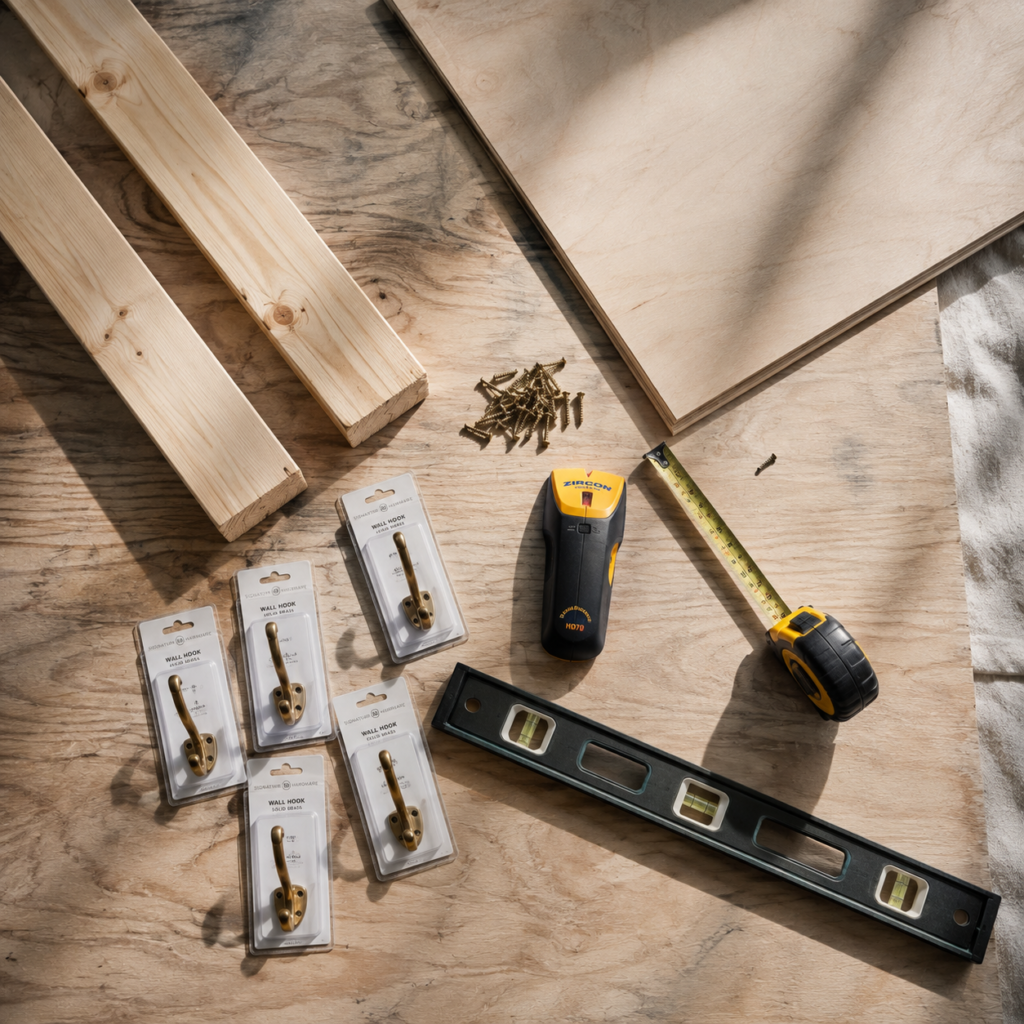
Building costs less again. Current Canadian lumber pricing puts an 8-foot 2×4 at $3.30–$4 and a 3/4″ plywood sheet at $48–$89 — enough for a bench top and shelf with material to spare.
Drywall anchors alone won’t hold a loaded bench. Mark a level line 18 inches from the floor.
Cut 2×4s to width — two side supports and a front rail is enough for wall-mounted.
Cut to depth — 14 to 16 inches — and screw from underneath so no fasteners show.
L-bracket or French cleat into the studs, then secure the frame. Check level before final tightening.
Hooks 24 to 30 inches above the seat, 10 to 12 apart. Fill, sand, stain or paint.
Budget six to ten hours across a weekend — a fraction of what custom locker millwork runs per linear foot. For the fully custom version, see our honest entryway budget breakdown.
Vertical Storage — Hooks Beat Closets in a Canadian Winter
For winter mudroom storage specifically: hooks at 60–65″ for adults, 36–42″ for young kids, 48–54″ for pre-teens, spaced 10–12″ apart — 12–15″ for bulky gear. Above a bench, 24–30″ above the seat is the workable range. None of that is code, just practical guidance specific enough to plan around.
Closets have a real counter-argument: a rod handles a bulky coat better than a single hook, and a drop zone sized for two fails fast for a household of five. Use the closet for coats that hang flat. But for wet, in-and-out gear — boots, snow pants, a toque that’s damp by 4pm — hooks win, because they cost almost no depth and let things dry in the open, which a closet door doesn’t.
Drying: The Step Everyone Skips
Wet gear that goes straight into an enclosed closet is the single most common mudroom failure, invisible until it’s a smell. North Dakota State University extension research notes a closet against an exterior wall often runs cooler and more humid than the rest of the house in winter — exactly the condition mold needs. Their advice: leave doors open in cold weather, and never store something damp enclosed.
The fix costs under $50. An IKEA MULIG folding drying rack is $44.99 and gives wet coats somewhere to hang first. A rubber boot tray with a wicking mat — Home Depot Canada has one for $24.98 — catches meltwater instead of letting it puddle. Both fit inside the twelve inches a hook-only zone still has to spare.
Three Budget Tiers: Under $300, Under $900, Under $2,500
What changes between these tiers isn’t function — an under-$300 mudroom micro renovation handles boots and salt as well as a $2,500 one. What changes is capacity, finish, and how much of the work is yours.
Hooks, a Tray and a Small Bench
- TJUSIG or KALLSÖ bench with shoe storage — $90–$100
- Five KÄMPIG brass hooks — $50
- Rubber boot tray — $25
- MULIG drying rack — $45
- Rubber entry mat and hardware — remainder
Off-the-shelf, mounts in an afternoon. Right for a rental, a condo entry, or a genuine 4-foot drop zone.
The DIY Build or a Hall-Tree Combo
- DIY 2×4-and-plywood bench with hooks — $150–$250 in materials
- Porcelain tile or LVP for the zone, if you’re replacing what’s there
- Coir mat outside, rubber tray and drying rack inside
- Or a retail coat-rack-and-bench combo at a comparable price, if you’d rather buy than build
The tier where flooring usually enters the budget, and where a weekend of labour buys noticeably more than the entry tier.
Built-In Lockers or a Custom Run
- Semi-custom or fully custom locker millwork, priced per linear foot
- Full flooring replacement, built-in bench, hooks above
- Professional installation
Cost guides put custom benches at $165–$500/linear ft and lockers at $500–$1,500 — U.S. figures, directional only. Worth it when the entry is an architectural feature, not just a functional one.
Weekend Timeline
Saturday morning: clear the space and assess what you’re actually keeping — most failures start with too much gear for the storage, not too little. Saturday afternoon: mount hooks and, if building, hang the bench frame. Sunday morning: install the mat, tray or flooring swap, and hang the drying rack. Sunday afternoon: load it, live with it a week, adjust hook spacing. Nothing here needs a permit — it’s cabinetry and fixtures, exempt under Ontario’s building code. Next on the schedule: draft-proofing the doors you just built storage around — the two projects share a toolkit.
Every price in this guide is checked against a live source at time of writing — current IKEA Canada and Home Depot Canada retail pricing, Canadian lumber pricing, and manufacturer technical data on deicer chemistry from OxyChem. Where a claim couldn’t be verified for the Canadian market — including two retailers whose prices only render via JavaScript, and a U.S.-only boot tray price — we left it out rather than estimate it.
Frequently Asked Questions
What are the best small mudroom ideas if I don’t have a mudroom at all?
Treat the wall beside your back or front door as the mudroom. Hooks at coat height, a floating shelf above for keys and mail, and a slim boot tray on the floor cover the same jobs a full mudroom does, in as little as four feet of wall.
What flooring handles road salt best in an entryway?
Porcelain tile and luxury vinyl plank resist salt damage — both effectively waterproof and non-porous, so deicer can’t wick in and recrystallize. Avoid natural stone, unsealed grout and hardwood in a room where salt tracks in daily.
Are hooks really better than a closet for winter gear?
For wet, in-and-out gear, yes — hooks cost almost no depth and let things dry in open air, where a closet traps moisture against cold exterior walls. Closets still make sense for coats that need to hang flat, or households with more gear than a hook wall can hold.
How much does a small mudroom renovation cost in Canada?
A functional setup starts under $300 with off-the-shelf hooks, a bench and a boot tray. A DIY-built bench with new flooring lands under $900. Built-in locker millwork with professional installation runs $1,500 to $2,500 or more.
Why does wet winter gear need a drying step at all?
Gear stored damp in an enclosed closet creates the humid, cool conditions mold needs. A $45 drying rack and a boot tray that wicks moisture away solve this for under $70 combined.