
News & Market Analysis
Carney’s $2.7-Billion Toronto Housing Deal: What’s Actually Getting Built, and What It Won’t Fix
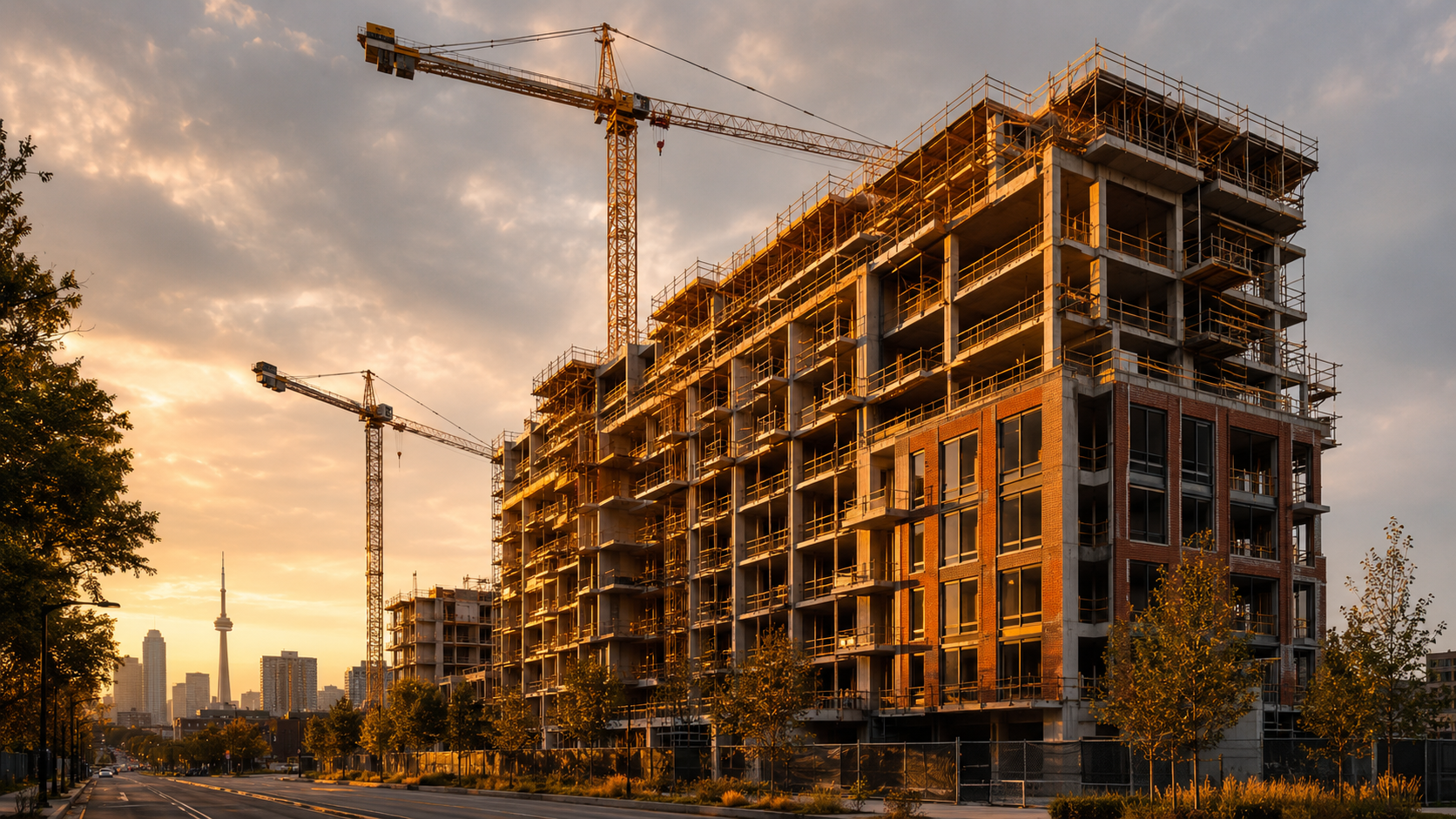
Prime Minister Mark Carney and Toronto Mayor Olivia Chow announced a $2.7-billion federal commitment on August 6, 2026, to finance 18 previously approved but stalled rental housing projects across Toronto. The plan targets more than 5,600 new rental homes, with roughly a third designated as deeply affordable, supportive, or rent-geared units. The money splits into two channels. About $310 million flows through Build Canada Homes for 1,900 non-profit units on city-owned land. Another $1.8 billion moves through low-cost CMHC construction loans for 3,700 units built by private developers. The city is adding more than $700 million of its own funding and incentives. Roughly 80 percent of the 5,600 units are expected to break ground before the end of 2026. Tenant groups are already questioning whether “affordable” will hold up once Ontario’s rent-control exemption applies.
Eighteen apartment buildings that Toronto had already approved, permitted, and then watched sit untouched for years are finally moving, because Carney and Chow put $2.7 billion behind them. The Carney Toronto affordable housing announcement, unveiled alongside federal Housing and Infrastructure Minister Gregor Robertson, targets more than 5,600 rental homes across the city. It’s the largest single federal housing commitment Toronto has received in years. And it says something uncomfortable about the state of housing finance that all eighteen projects were sitting fully approved with nothing standing between them and construction except money.
That’s the detail worth sitting with before the celebration starts. These weren’t proposals stuck in community consultations or fighting zoning appeals. Carney was blunt about it, telling CBC News: “All of these projects had been approved in the past … all of them were stalled for want of financing, until today.” In a city where the planning process itself usually takes the blame for slow housing delivery, this deal is a quiet admission that the bigger obstacle, at least for now, is the cost of capital.
How Does the $2.7 Billion Actually Break Down?
The money splits into two distinct channels, and understanding the split matters more than the headline number. Here’s how it’s allocated.
| Funding Channel | Amount | Units | Goes To |
|---|---|---|---|
| Build Canada Homes | $310M+ | ~1,900 | Non-profit housing, city-owned land |
| CMHC Apartment Construction Loan Program | $1.8B | ~3,700 | Private-sector developers |
| City of Toronto | $700M+* | — | Additional funding & incentives |
*The city’s exact contribution is reported inconsistently across outlets as this deal’s coverage develops; figures are still being reconciled publicly. About 4,500 of the 5,600 total units — nearly 80 percent — are targeted to break ground before the end of 2026.
Here’s the trade insight most coverage, including Canadian Mortgage Professional’s own breakdown of the funding split, glosses over: a CMHC construction loan isn’t a subsidy in the way people picture government housing money. It’s cheaper debt, not free money. Developers still have to repay it, but at rates well below what a bank would offer for the same construction risk right now. That lower cost of capital is what turns a project’s numbers from “doesn’t pencil out” to “buildable.” It’s exactly the mechanism CMHC pointed to when it called these loans “necessary” for restarting stalled rental construction across undersupplied markets. It’s a financing fix, not a rent fix — and that distinction matters a lot to the renters this deal is supposedly for.
Which Buildings Are Actually Getting Built?
A handful of named sites, reported by Toronto Life following the announcement, give the number some texture. A 425-unit tower is planned for 158 Borough Drive at Scarborough Town Centre. The Toronto Coach Terminal downtown is part of the redevelopment package. And Toronto Community Housing Corporation has a residence coming at 150 Queen’s Wharf Road in CityPlace. These aren’t scattered infill lots. They’re concentrated, sizeable sites. That means the visible impact will show up as a handful of large buildings finishing over the next two to three years, not a citywide wave of smaller projects landing everywhere at once. If you’re renting in a neighbourhood without one of these sites nearby, this announcement changes the citywide supply picture eventually, but it doesn’t change your block anytime soon.
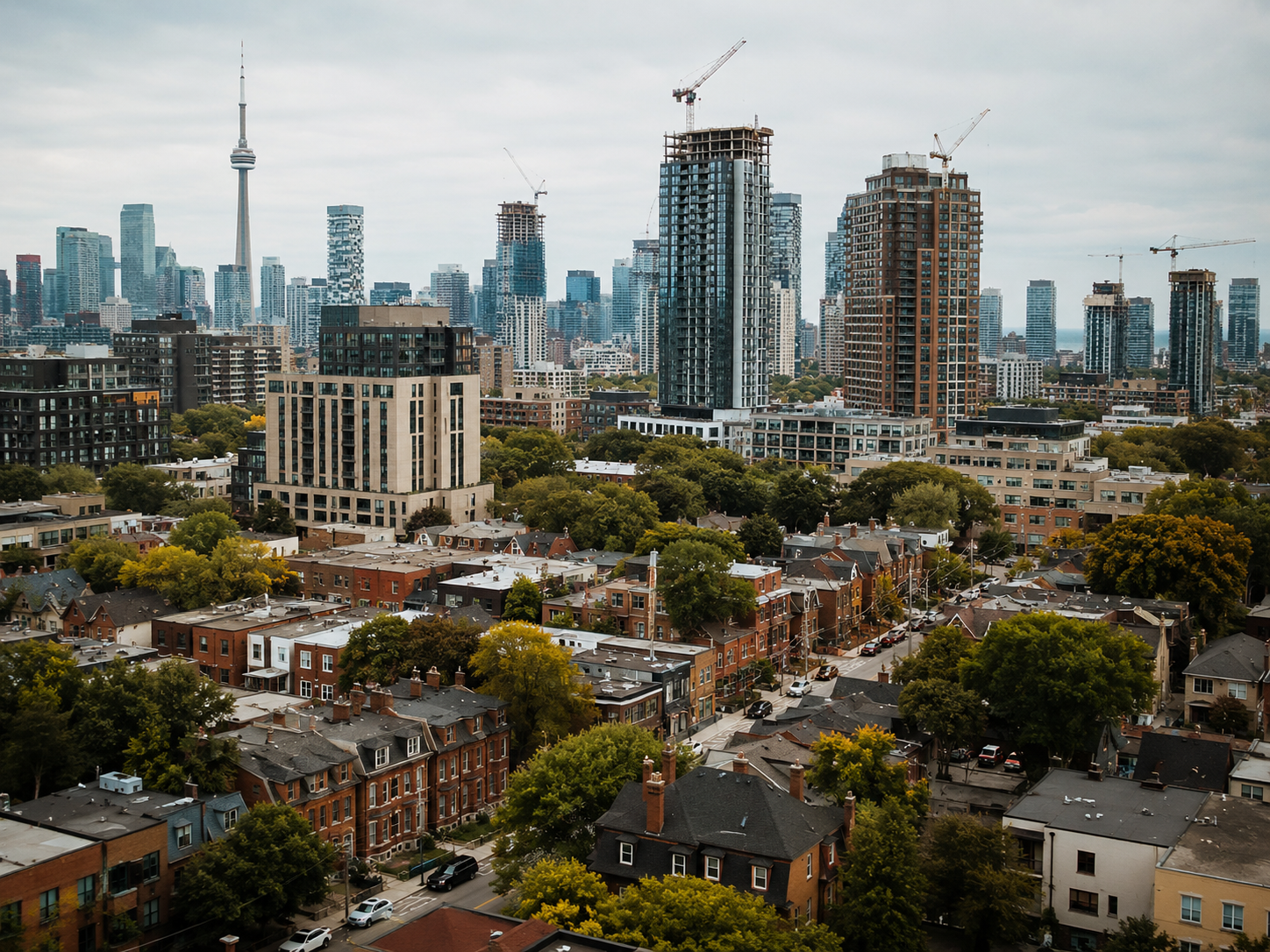
“Not luxury condos, but homes that people can afford” — Carney’s framing for the deal, and the line tenant advocates are already testing against the fine print.
Why Are Tenant Groups Pushing Back?
And the fine print is where the pushback lives. As BNN Bloomberg reported in the days after the announcement, the Toronto Tenants Union and ACORN Canada have been blunt about the $1.8-billion private-developer loan channel. ACORN co-chair Bruno Dobrusin called it “a bailout for the private developers who led us into this housing crisis.” Their sharpest objection isn’t philosophical — it’s a specific regulatory gap. Under Ontario’s rules, any private rental unit first occupied after November 15, 2018 is exempt from the province’s annual rent-increase guideline. That exemption applies regardless of whether a unit is labelled affordable at move-in, which means a “deeply affordable” designation today doesn’t guarantee rent control tomorrow. Tenant advocates point out that even in these new, publicly financed buildings, a one-bedroom can still run close to $1,800 a month. That’s a number worth remembering the next time a housing announcement leads with “affordable” in the headline.
This is the part most readers miss when a number like $2.7 billion leads the story. Affordable housing financing and rent protection are two separate policy levers, and this deal pulls hard on one while leaving the other almost untouched. Financing gets a building built. It doesn’t, on its own, keep the rent on that building predictable five or ten years out. That’s a function of provincial rent control law, which Queen’s Park hasn’t moved on despite years of advocacy pressure. Real estate and mortgage professionals see the upside differently, and reasonably so. More supply, even market-rate supply, eases pressure across the whole rental stock over time. Restarting eighteen stalled projects also puts thousands of construction jobs and units back in motion that had otherwise been frozen by financing costs. Both things are true. The deal is a genuine unlock for supply, and it is not, by itself, an affordability guarantee for the renters signing leases in these buildings.
What Does This Mean If You Rent, Buy, or Invest Here?
For Toronto renters, the practical takeaway is patience with a caveat. Watch which of these eighteen sites is closest to you — that’s where new inventory, and possibly softer asking rents, will show up first. Expect that around 2027 and 2028, as the 80-percent-by-2026 groundbreakings work through construction timelines.
For investors and landlords tracking the rental market, the CMHC Apartment Construction Loan Program is worth watching on its own, separate from this specific announcement. It’s the financing vehicle behind a growing share of new purpose-built rental across Canada’s largest cities, which matters especially for anyone weighing a pre-construction purchase in Toronto right now. Understanding its terms tells you more about where new supply is actually headed than any single press conference does. And for anyone renting in one of these eighteen buildings once it opens, the smart move is simple: read the lease’s rent-increase terms line by line. Don’t just trust the word “affordable” on the announcement slide. In Ontario, after 2018, that word carries less legal weight than it sounds like it should.
Toronto has made big federal housing promises before: a $471-million deal in 2017, a $2.55-billion low-cost loan package more recently. Each one moved the needle. None solved the underlying math of a city where construction costs, land prices, and interest rates tied to Canada’s own mortgage bond market all rose faster than incomes. This deal doesn’t pretend to be different in kind, only in scale. What makes it worth watching isn’t the number on the cheque. It’s whether “80 percent breaking ground by year-end” actually happens on schedule, and whether the province closes the rent-control gap tenant groups are pointing at before these units fill up. Both are answerable within the next eighteen months. Neither is answered yet.
Cities have the capability of providing something for everybody, only because, and only when, they are created by everybody.
— Jane Jacobs