
Why Townhomes Are Taking Over — and Condos Are Losing Ground
A structural reset is reshaping what gets built, what sells, and where Canadians are choosing to put down roots — and the condo isn’t winning.
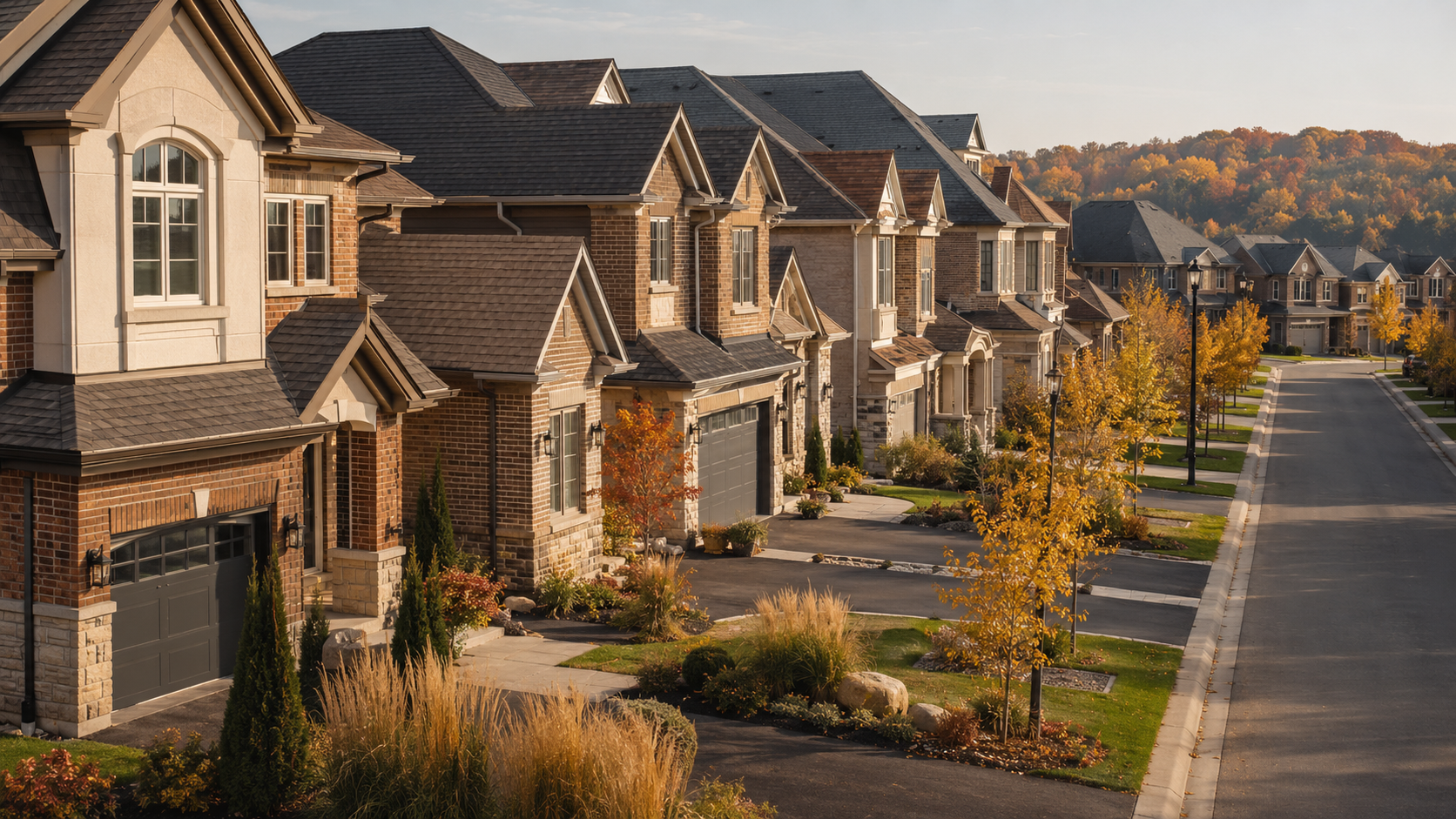
There’s a shift underway in Canadian housing that’s bigger than a price correction. The condo — which for more than a decade served as the default entry point into homeownership in cities like Toronto and Vancouver — is losing its grip on the market. And the townhome, long treated as the practical alternative for buyers who couldn’t afford a detached house, is stepping into that gap with unexpected momentum.
The numbers out of the Greater Toronto Area tell the story bluntly. According to TRREB, GTA condo apartment sales fell 14.7 per cent year-over-year in 2025, with prices slipping 5.1 per cent over the same period. In Q4 2025 alone, there were 3,880 condo apartment transactions — down 15 per cent from Q4 2024. Active condo listings climbed as sales fell, handing buyers a level of negotiating leverage the market hasn’t seen in years. By May 2026, condo apartments in the GTA were averaging $639,468 — off 6.4 per cent from a year earlier, according to WOWA data. Condo townhomes fared slightly better at $729,081, but still sat 4.5 per cent below their May 2025 average.
The collapse of investor demand is the biggest driver of this correction. For years, the GTA condo market ran on presale activity funded by investors betting on appreciation — a model that worked as long as rates were low and rents were rising. When rates climbed, that calculus reversed sharply. A 2023 CIBC/Urbanation report found that investors who closed on newly completed condo units that year were facing average negative cash flow of $597 per month. By mid-2024, GTA condo sales had hit a 27-year low. Unsold inventory reached a record 25,893 units. The pipeline, once reliably stocked by presale demand, began to dry up — Urbanation has projected condo completions will drop 25 per cent in 2026 and fall again in 2027, with some analysts suggesting that by 2029, virtually no new condo inventory will be delivered in Toronto.
According to Urbanation, a record 33% of new condo sales in 2025 occurred at occupancy or registration — up from 9% in 2024 and just 2% in 2023. Buyers are increasingly unwilling to commit to pre-construction timelines. The project that can be seen, touched, and moved into quickly has become the product that sells.

Into that vacuum has walked the townhome — or more precisely, the end-user buyer who wants ground-oriented living and has the data to prove it. A condo townhome in the GTA was the only property type to post a year-over-year sales gain in February 2026, with 329 transactions — an 11.1 per cent increase from February 2025, per TRREB. Freehold townhomes, averaging $930,779 in the same period, are drawing buyers who want proximity to urban centres without condo-tower carrying costs or management fees. The appeal is structural, not cosmetic: a garage, private outdoor space, and floor plans designed for how people actually live.
| Property Type | Avg. Price (May 2026) | YoY Price Change | Sales Trend |
|---|---|---|---|
| Detached | $1,358,131 | −4.7% | +7.9% YoY |
| Freehold Townhome | $916,474 | −8.0% | +2.0% YoY |
| Condo Townhome | $729,081 | −4.5% | +7.1% YoY |
| Condo Apartment | $639,468 | −6.4% | +3.6% YoY |
CMHC’s 2026 Housing Market Outlook flagged this pivot explicitly, noting that builders are expected to shift toward smaller ground-oriented units — including townhomes — to meet affordability-driven demand. The agency specifically called out Cambridge and South Kitchener as markets likely to see increased townhome starts, a signal that the Waterloo Region is emerging as a proving ground for this shift. The Kitchener-Waterloo corridor offers buyers a townhome at prices that, just a few years ago, would have bought a mid-range Toronto condo — with a backyard and a garage added at no extra cost.
“The combination of abundant condo supply and cautious buyers has created a fundamental shift in market dynamics — not just a correction.”
Ontario’s HST rebate, which took effect April 1, 2026, has further accelerated this realignment. The Ford government, in partnership with the federal government, introduced a full rebate of the 13 per cent HST on new home purchases, with a maximum rebate of $130,000 for homes priced up to $1.5 million. Purchase agreements must be signed between April 1, 2026 and March 31, 2027, with construction required to begin no later than December 31, 2028. The policy was designed in part to clear unsold condo inventory, but in practice, it has disproportionately energized the townhome segment. One developer reported selling 120 townhomes in Milton and Mississauga in the weeks following the rebate’s launch — versus just 20 condos in Oakville over the same stretch. Dave Wilkes, president of BILD (Building Industry and Land Development Association), described it as “a jolt to the industry.” And while some builders have been cautious — given that enabling legislation had not yet been ratified as of late April — the rebate’s effective date has been enough to prompt action.
What’s becoming clear is that the condo market’s problems are not simply a pricing story. They are a product story. Toronto’s investor-era condo towers were optimized for yield extraction, not for living — narrow layouts, no storage, balconies that face other balconies. As end-users replace investors as the dominant buyer pool, the mismatch between what’s being sold and what people actually want to live in is becoming impossible to ignore. The townhome, by contrast, was always built for the end-user. It scales with a family. It has a front door. It doesn’t come with $1,000-a-month maintenance fees eating into already-stretched budgets.
The city of Toronto itself is caught in a difficult position in this dynamic. Land constraints and entrenched highrise zoning make it structurally difficult to deliver townhomes at scale within the 416. The supply is materializing in Brampton, Caledon, Burlington, and the Waterloo corridor — a continuation of the outward migration that researchers at TMU have been tracking for years. From 2020 to 2024, roughly 80,000 residents left the GTA annually, most of them in search of space and affordability. If townhome supply continues to concentrate beyond the city’s borders, that trend will not reverse.
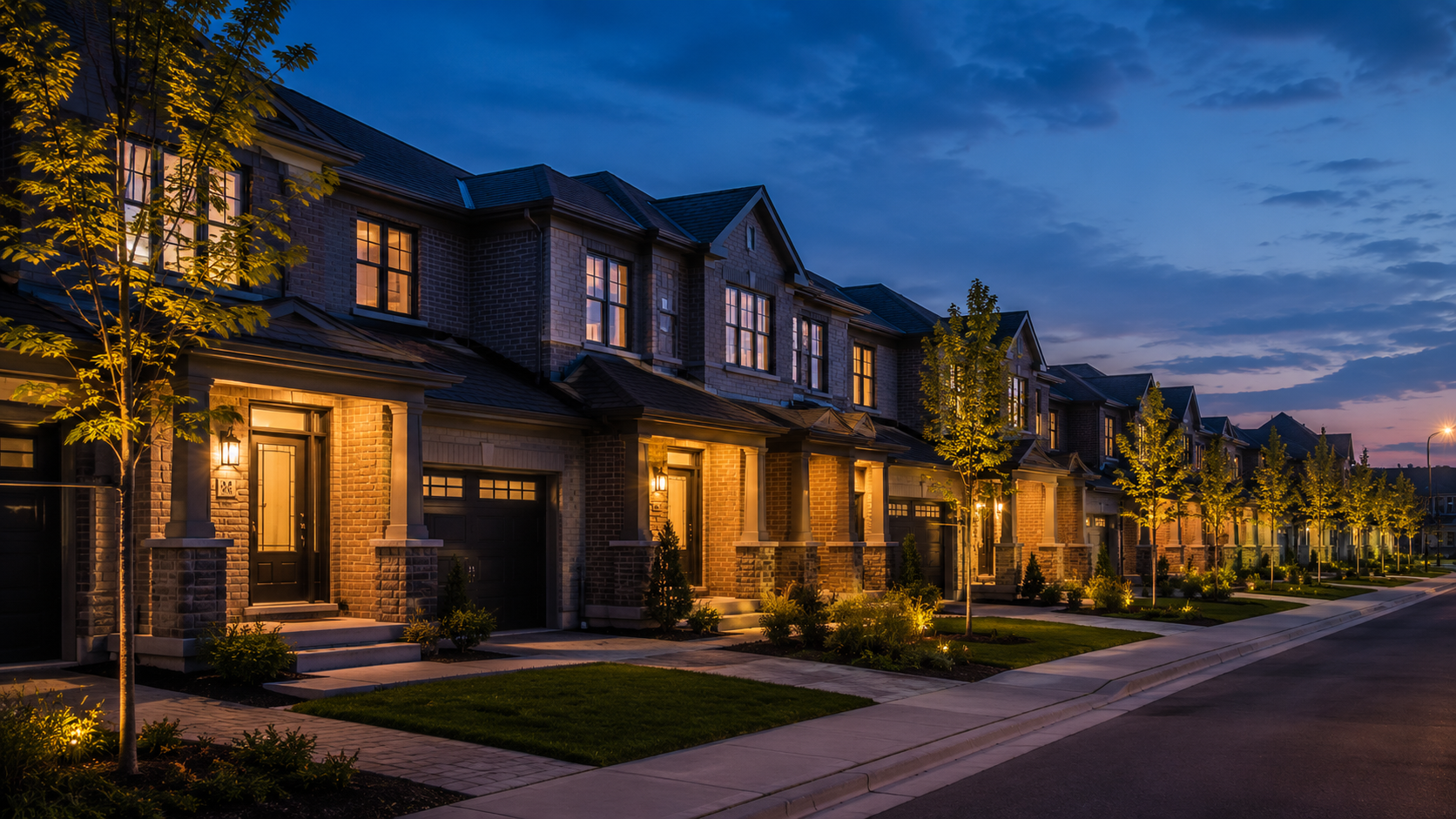
The condo is not finished. CMHC and Re/Max both project a gradual recovery beginning in the second half of 2026 and into 2027, as the inventory overhang is absorbed and buyer confidence rebuilds. But the reset underway is more structural than cyclical. For the first time in years, the home that the market is building and the home that buyers actually want are starting to align — and that alignment is centred squarely on the townhome. For buyers willing to look past the 416, and for developers willing to build for people rather than for investors, the opportunity is clear.
The home should be the treasure chest of living.
— Le Corbusier