Backyard & Garden
Your Patio Is a Room Now: How to Style an Outdoor Living Space Like an Interior Designer
The best outdoor spaces in 2026 aren’t decorated — they’re designed. Here’s how to bring the principles of interior design outside, and make your patio the room you actually live in all summer.
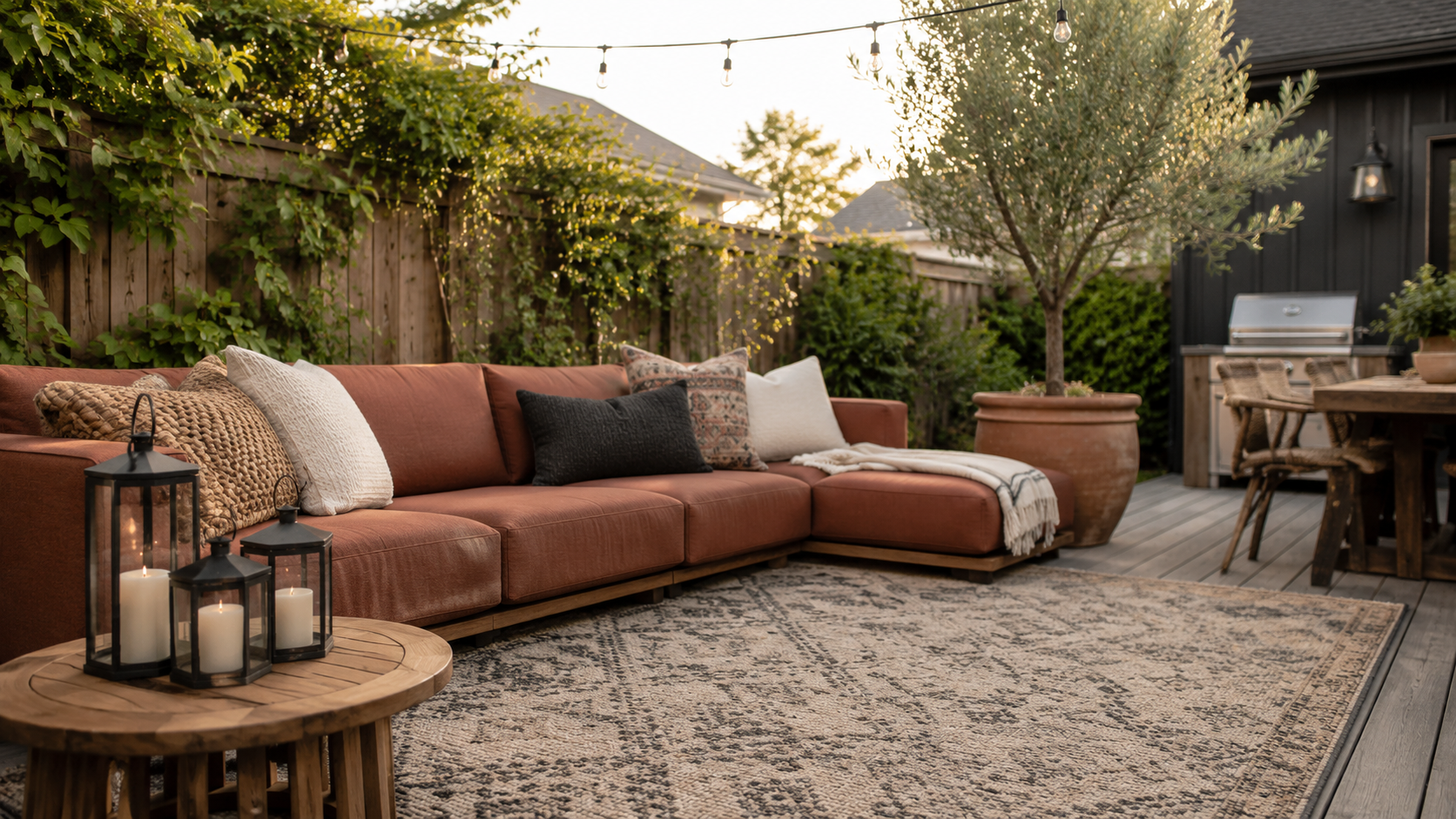
At some point between the pandemic and now, Canadians stopped treating their outdoor spaces as afterthoughts. The patio that once held a plastic table, two mismatched chairs, and an optimistic string of lights — used three times a summer and folded up by September — has been replaced by something more deliberate. More permanent. More like a room. And the design thinking that goes into those outdoor spaces has quietly caught up to everything happening on the inside of the house.
The shift is real and measurable. Searches for outdoor living room ideas have climbed consistently across Canadian markets for the past three summers, and the product category has expanded dramatically to match: outdoor sofas with genuine cushion depth, side tables in powder-coated steel and teak, weather-resistant rugs in patterns you’d actually want inside. The outdoor furniture industry has stopped designing for durability alone and started designing for beauty. That changes everything about what’s possible on a patio.
The foundational principle that interior designers apply to outdoor spaces is the same one they use inside: zone first, then furnish. A patio without clear zones reads as a single undifferentiated space regardless of how many pieces you put in it. A patio with a defined seating area, a distinct dining zone, and even a small transitional corner for a single chair and a side table reads as multiple rooms — layered, considered, generous. The physical boundaries don’t need to be walls. An outdoor rug anchors a seating zone just as effectively as a painted floor. A pergola or a large umbrella defines a dining area without enclosing it. Planters used as room dividers separate zones while adding greenery at the same time. These are interior design tools. They just happen to work outside too.
The patio that gets used every day isn’t the one with the most furniture. It’s the one that feels like somewhere.
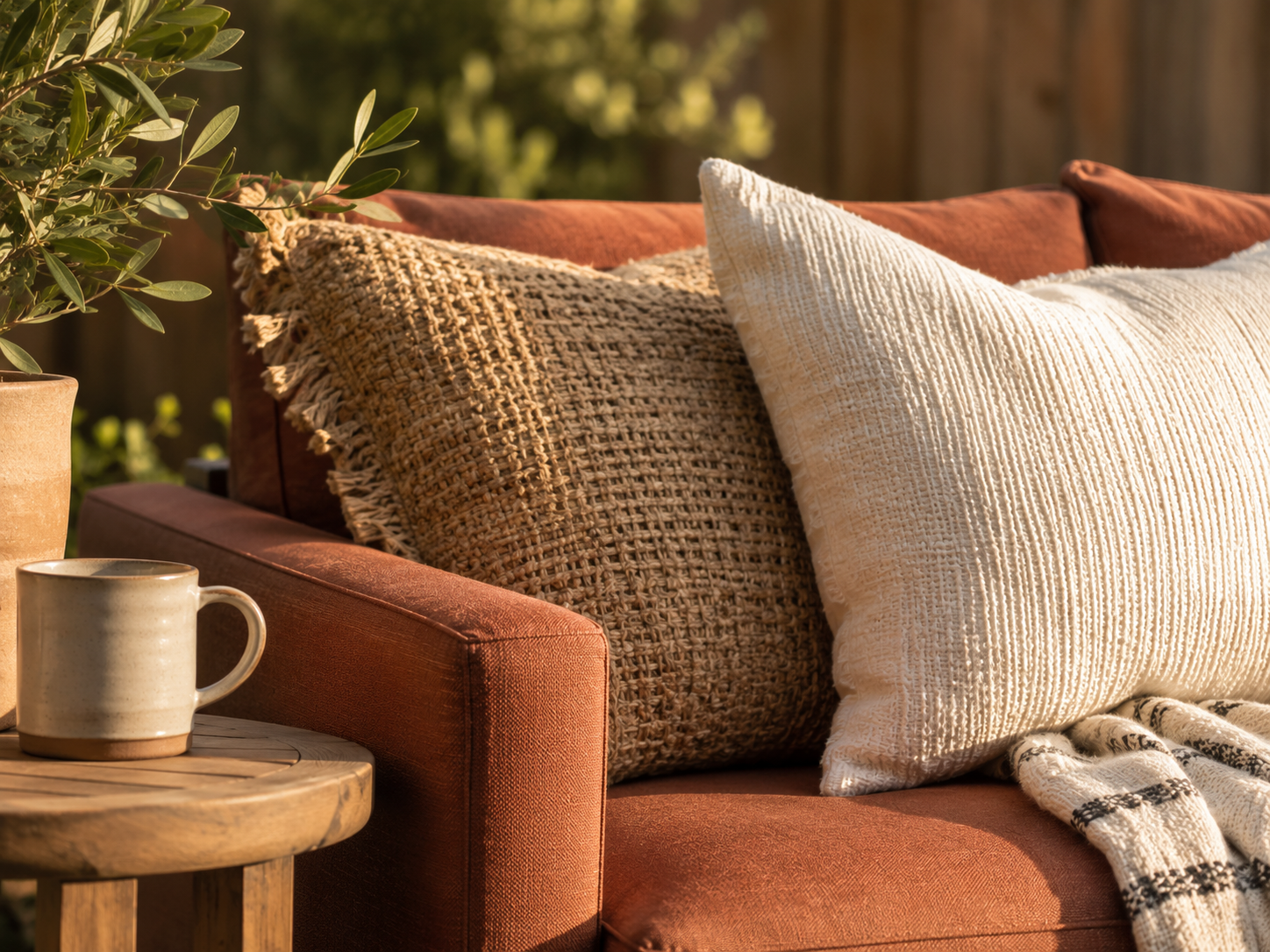
Fabric is where most outdoor spaces either come together or fall apart. The temptation is to default to the hard, scratchy, quick-dry mesh that passes for outdoor upholstery in most big-box retailers — it’s practical, it’s affordable, and it makes a patio feel exactly like a waiting area. The better choice takes marginally more effort to source and makes an enormous difference in how the space feels to sit in. Solution-dyed acrylic fabrics — Sunbrella is the best-known brand, but there are strong Canadian and independent alternatives — are genuinely weather-resistant, soft to the touch, and available in the same warm, muted tones that are driving the indoor palette this season: dusty terracotta, pistachio, aged white, warm charcoal. Pair these with outdoor throw pillows in a contrasting texture — jute-weave, woven cotton, even indoor-outdoor linen blends — and the seating starts to feel like somewhere you’d choose to spend an evening rather than somewhere you happen to be sitting.
Lighting is the element most consistently underestimated in outdoor spaces and most consistently responsible for the difference between a patio that gets used after 7pm and one that gets abandoned at dusk. String lights have become so ubiquitous that they’ve lost some of their effect, but the principle behind them is still correct: outdoor spaces need ambient light at low levels, not overhead fixtures that flatten everything and draw insects. Solar-powered lanterns in clusters of three or five, battery-operated pillar candles in storm glasses, low-voltage path lighting along the perimeter, a single pendant over the dining table on a weather-rated cord — these layers of warm light do what string lights once did before everyone had them. For a Canadian summer with daylight until 9pm or later, outdoor lighting barely registers until August. But when September arrives and the evenings shorten suddenly, a well-lit patio extends the season by weeks.
Plants on a patio deserve the same thought as plants inside. The default is a pair of urns flanking a door with red geraniums — cheerful, seasonal, and completely forgettable. The more interesting approach treats container planting as a design element: tall grasses and architectural succulents in matte black or terracotta pots for vertical interest, trailing herbs in a planter box along the railing that scents the air and doubles as a kitchen resource, a single large olive or fig tree in a generous pot that becomes the visual anchor of the whole space. Scale matters outside even more than it does inside — a small planter on a large patio disappears. Go bigger than feels comfortable and the space will reward it.
The final consideration is the one that most outdoor styling guides skip entirely: storage. A beautifully designed patio that requires twenty minutes of setup and teardown before every use is a patio that stops getting used by mid-July. Built-in bench storage, a weatherproof ottoman that doubles as a cushion chest, a slim storage unit that doubles as a bar cart — these pieces keep the space functional without making it look like a utility area. The outdoor room you actually live in all summer is the one that’s ready to use when you walk outside. Everything else is just furniture waiting to be put away.
To sit in the shade on a fine day and look upon verdure is the most perfect refreshment.
— Jane Austen