How to Keep Your Home Cool This Summer (Without Running Up Your Hydro Bill)
The AC doesn’t have to carry all the weight. A few targeted moves — sealing gaps, managing light, and rethinking airflow — can drop the indoor temperature by several degrees before you ever touch the thermostat.

The moment summer arrives, most of us do the same thing: crank the air conditioning and brace for the electricity bill. It works, obviously, but it also costs more than it should — and it misses a bigger opportunity. A home that’s been set up properly for summer warmth doesn’t need to work nearly as hard to stay comfortable. The fixes aren’t complicated, and most of them don’t require a contractor or a renovation budget.
Knowing how to cool your home without air conditioning doing all the heavy lifting starts with understanding where the heat is actually coming from. For most homes, it enters through windows (especially south- and west-facing ones), through the attic, and through gaps and cracks that let humid outdoor air seep in. Address those entry points, and the indoor temperature drops noticeably — before you’ve changed a single setting on the thermostat.
Start with your windows. Direct sunlight pouring through unshaded glass is one of the single most significant contributors to indoor heat gain in summer. Thermal or blackout curtains on the west-facing windows, kept closed during the hottest stretch of the afternoon, can reduce heat gain through those windows by up to 40 percent. Solar window film is another option — it’s an afternoon project, costs around $30–$50 per window for decent quality, and cuts both heat and glare without blocking natural light completely. Neither solution is glamorous, but both are genuinely effective.
A home set up for the season doesn’t need to work nearly as hard to stay comfortable.
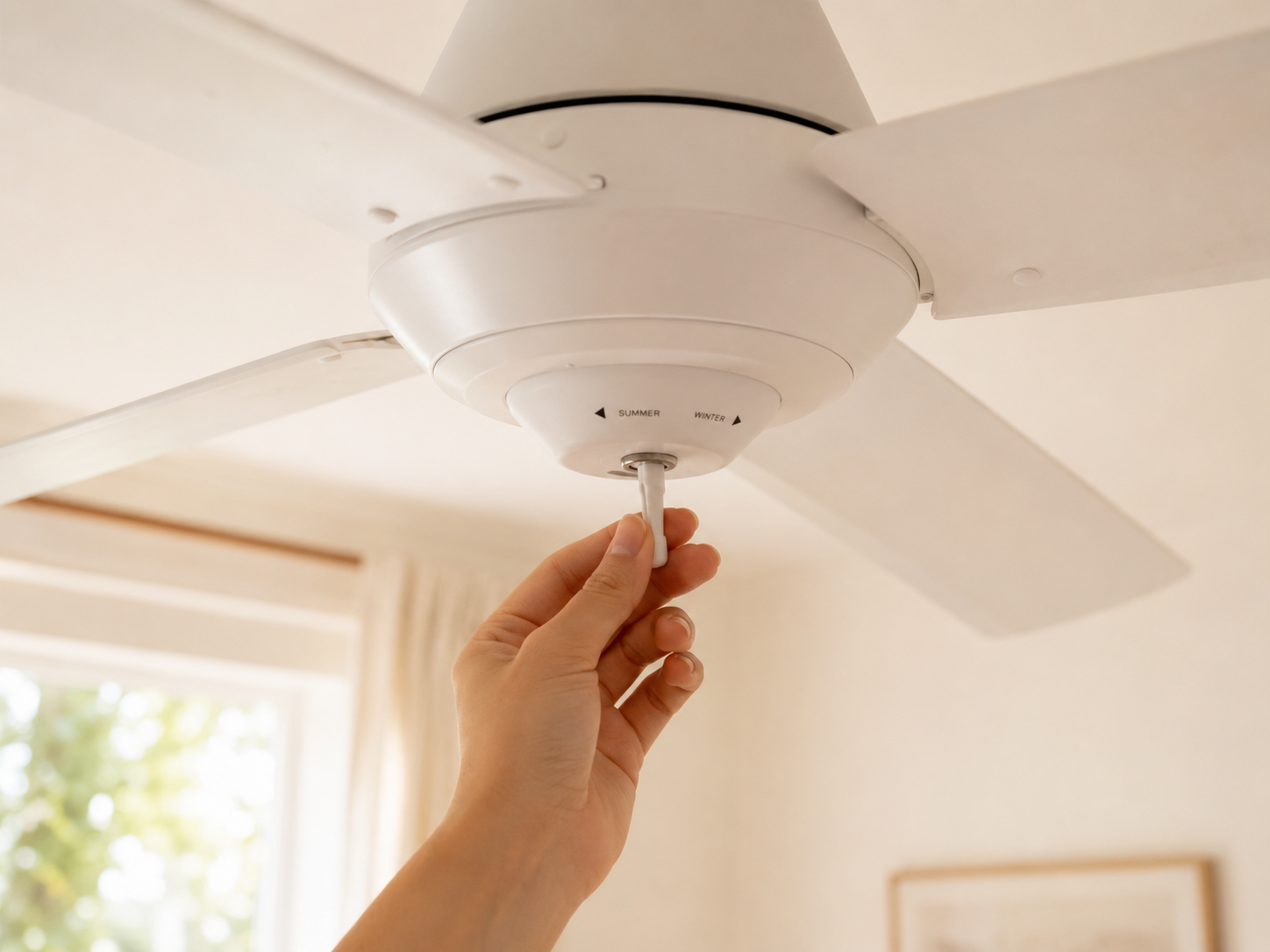
Ceiling fans are one of the most underused tools in a home during summer, and they’re misused almost as often as they’re ignored. The direction matters: counterclockwise rotation in summer creates a downdraft that produces a wind-chill effect, making a room feel roughly four to six degrees cooler than it actually is. That’s significant — enough to let you bump the thermostat up a few degrees without noticing. The important caveat is that fans cool people, not rooms. Leaving them running in an empty room wastes electricity and adds a small amount of heat from the motor.
Natural ventilation, done strategically, is one of the most effective ways to cool your home without air conditioning — but it requires some discipline about timing. The basic principle is to flush warm interior air out during the cooler hours (typically early morning and after sunset) and seal the house up during the heat of the day. Open windows on opposite ends of the home to create cross ventilation, and if you have an attic hatch or a whole-house fan, those can pull significant volumes of warm air out quickly. The mistake most people make is leaving windows open all day, which works beautifully until mid-morning and then works against you entirely.
The steps below cover the most impactful interventions, roughly in order of ease and cost. None require a renovation — just an afternoon and a reasonable tolerance for standing on a step ladder.
Install thermal curtains or solar film on west- and south-facing windows. Keep curtains closed between noon and 5 PM. This alone can reduce the temperature in sun-exposed rooms by 5–8°F on a hot day.
Look for the small directional switch on the motor housing — flip it to counterclockwise for summer. Run fans only when the room is occupied. The energy savings from bumping the thermostat up 2–3°F more than offset the fan’s electricity use.
Air leaks let hot, humid outdoor air replace the cooled indoor air constantly — making your AC work far harder than necessary. A tube of weatherstrip caulk and a package of foam door seals costs under $20 and takes an hour. Check the seals around window AC units especially — they’re often poorly fitted.
Open windows in the early morning and after 9 PM to flush cool air through. Create cross ventilation by opening windows on opposite sides of the home. Close everything up when the outdoor temperature exceeds your indoor temperature — usually mid-morning on hot days.
Ovens, dryers, and even incandescent bulbs add meaningful heat to the interior. Run the dishwasher and laundry in the evening. Switch to LED bulbs if you haven’t yet — they use 75–90% less energy and produce a fraction of the heat. Cook outdoors or use a microwave or air fryer instead of the oven on the hottest days.
A clogged filter makes your cooling system work significantly harder — and it costs you on both electricity and system longevity. Check it monthly in summer; replace it if it’s grey or visibly restricted. A clean filter improves airflow and can noticeably improve how evenly the home cools.
Exterior shading — awnings, pergolas, or even mature trees on the west and south sides — stops heat before it reaches the glass. This is a longer-term play, but even a basic retractable awning over a west-facing window or patio door makes a real difference. Exterior shading outperforms interior window treatments for raw heat reduction.
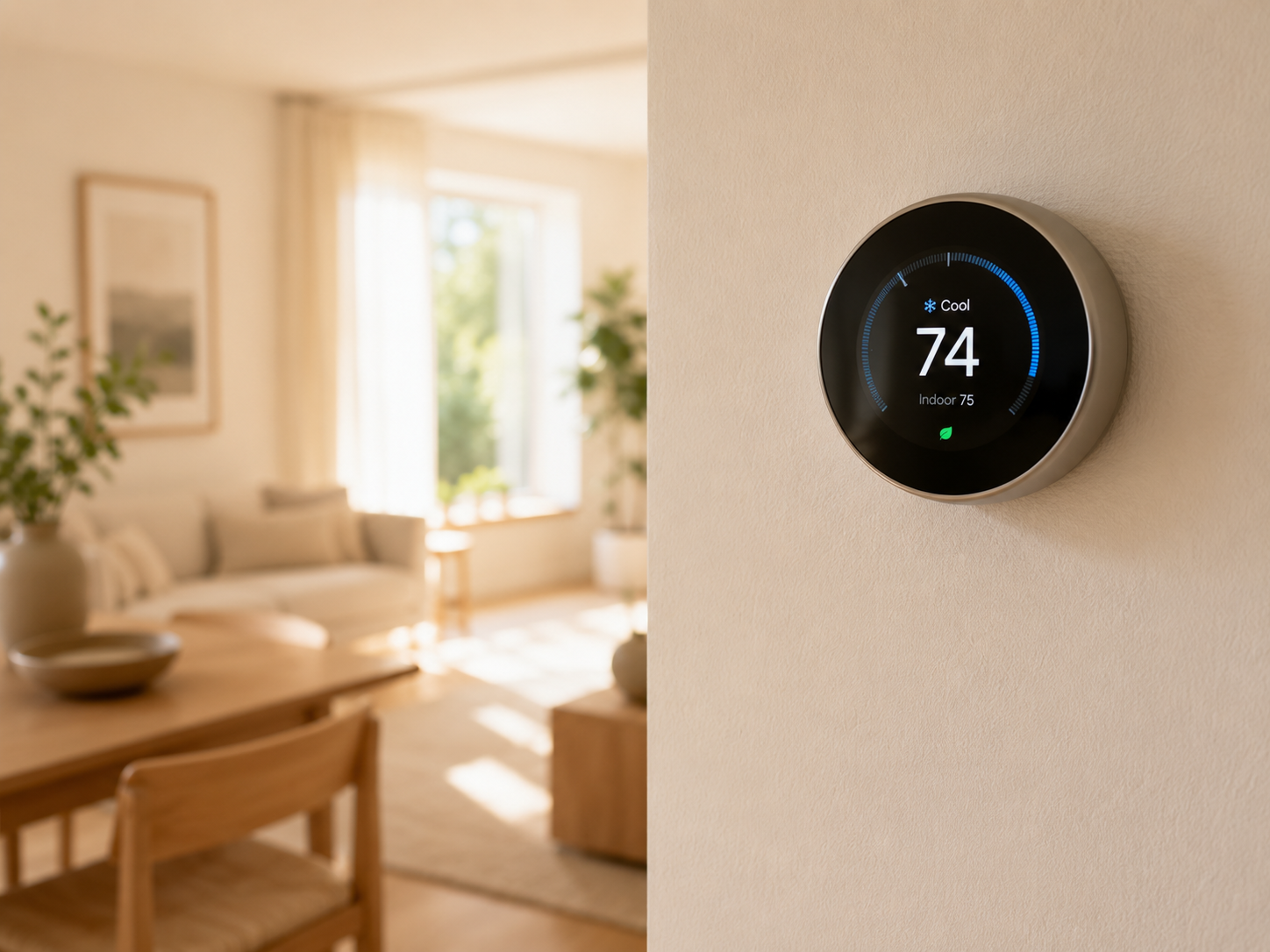
A programmable or smart thermostat pulls this all together. Set it to let temperatures rise slightly when you’re out (a two- or three-degree difference), cool down in time for your return, and ease off again overnight. Most smart thermostats pay for themselves within a single summer through reduced cooling loads — and the better ones learn your schedule and adjust without any manual input. Ontario residents may also qualify for rebates through local utilities like Enbridge or their municipal hydro provider when upgrading to an Energy Star-certified smart thermostat.
Keeping your home cool without air conditioning doing all the work isn’t a single fix — it’s a handful of small decisions that compound. Block the heat before it enters. Move air when it helps. Seal what leaks. Reduce what generates warmth from inside. Done together, the effect is genuinely surprising for how little effort it requires.
The comfort of a well-prepared home is a kind of invisible craftsmanship — you only notice it when it’s absent.
— NestDigest