
Pantry Reset: Organizing for Fall Meal Prep

The pantry is the first room in the house to lose its nerve once September hits. Half-empty cereal boxes lean into open bags of quinoa. A lone can of pumpkin purée hides behind three jars of half-used taco seasoning. The lid to the slow cooker you need for Sunday’s stew is wedged somewhere that requires a step stool and a small prayer. A real pantry organization reset for fall isn’t about matching bins for a tidy photo. It’s about removing enough friction that a Tuesday-night dinner doesn’t turn into an archaeological dig.
Fall is the busiest stretch of the eating year. Soup season starts, packed lunches go back into rotation, and holiday baking looms not far behind. A pantry that isn’t built for that rhythm quietly costs real money. The average U.S. household loses an estimated $762 a year to food that’s bought and never eaten, according to ReFED’s 2026 food waste report. North of the border, Love Food Hate Waste Canada puts the figure at more than $1,300 per household. Fresh produce and forgotten pantry staples top both lists. Most of that isn’t carelessness. It’s a pantry with no visibility — cans stacked three deep, expiration labels facing the wrong way, and three opened bags of the same pasta because nobody could see the first one already open.
The fix isn’t a Pinterest-perfect shelf. It’s a layout that matches how your household actually eats between now and the holidays, with a habit built in to keep it that way.
This fall pantry organization plan is built around one idea: sort by how you actually cook, not by what looks good in a flat-lay. Here’s how to clear it out, zone it by meal instead of by category, and set it up so the system survives past Halloween instead of collapsing back into chaos by the second week.
What You’ll Need
Tools
- Flashlight or phone light, for the back corners of deep shelves
- Step stool
- Chalk marker or a basic label maker
- Large garbage bags and a few empty boxes for donations
Supplies
- Clear, airtight canisters in assorted sizes
- Shelf risers or a two-tier organizer
- A lazy Susan for oils, vinegars, and condiments
- Wire or wicker bins for grouping items by meal
- Adhesive labels
The worth-splurging-on item here is a real set of airtight canisters rather than reused takeout containers — a tight seal is what actually keeps pantry moths and moisture out. The save-money move is skipping matching branded bins entirely; a $20 set of wire baskets from any hardware store does the zoning job just as well as a curated set that costs four times as much.
Pull everything off every shelf onto the counter or a folding table, and sort into three piles: keep, toss, and donate. This is the only way to actually see what’s crammed into the back corners — the second bag of brown sugar, the spice jar that’s been empty since spring. Wipe down the bare shelves while you’re at it; crumbs and sticky rings are exactly what draws the pests you’re checking for in the next step.
Check dates on everything in the keep pile, but don’t stop at the printed date. Dry goods like rice, flour, and dried beans are often fine for months past a “best by” date if they’ve been stored properly, while oils and nuts can turn rancid early even with time left on the label. Give oils a quick smell test and toss anything that smells like crayons or old paint.
Skip the instinct to organize by category — all the pasta together, all the cans together. Zone by how you actually cook instead. A “taco night” bin with shells, seasoning, and canned beans in one spot saves more time on a Tuesday than a perfectly alphabetized spice rack ever will. If your kitchen is short on built-in storage to begin with, pair this reset with a few of the kitchen upgrades that don’t require expanding the room. That gives your new zones somewhere real to live instead of stacking bins on top of each other.
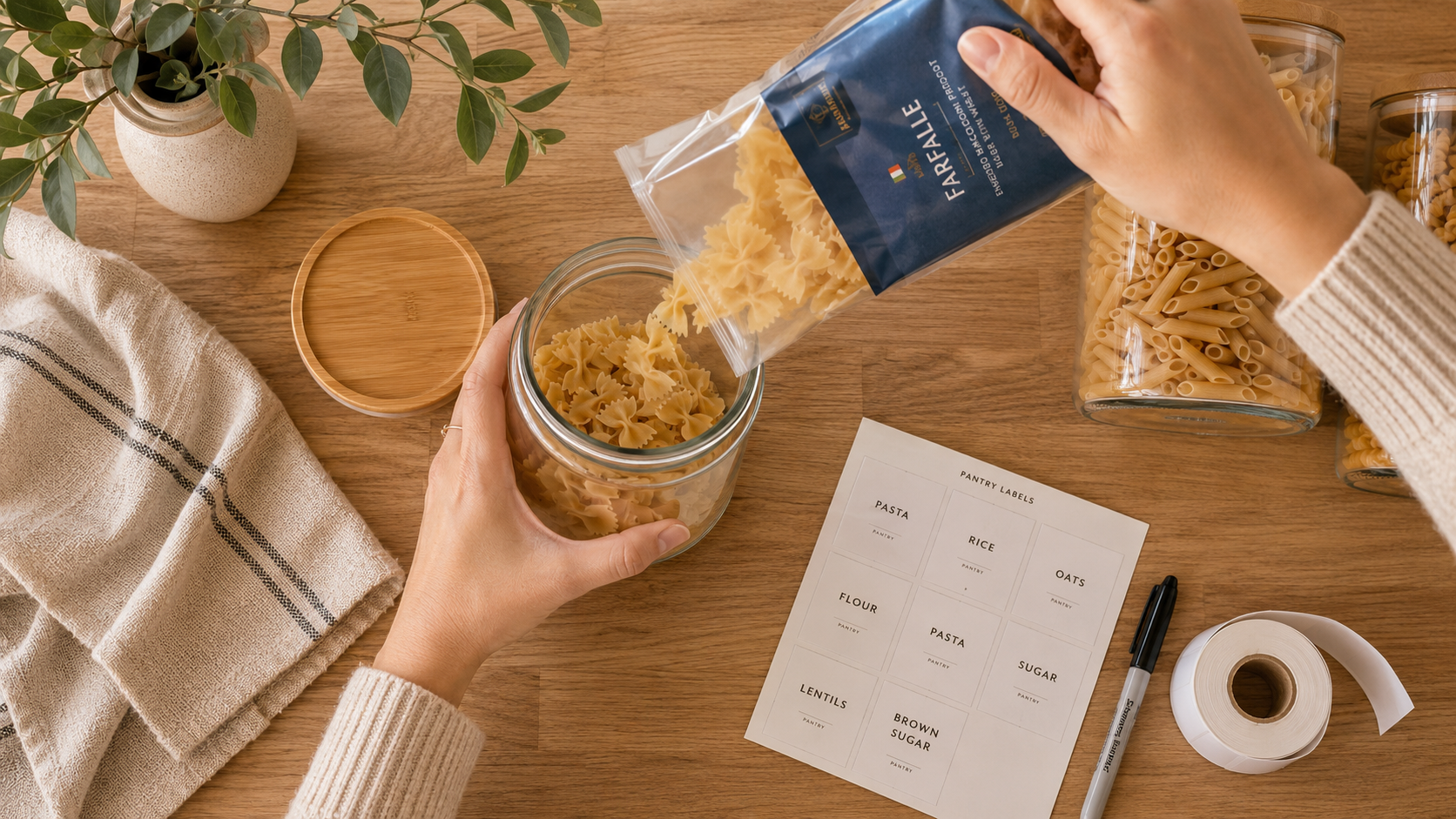
Transfer flour, sugar, rice, oats, and cereal into clear, airtight containers. Label the container — not the food — with the name and the date it was opened. This does three things at once: it keeps pests and moisture out, it lets you see at a glance when something’s running low, and it makes a small pantry function like a much bigger one. If you’re working with a narrow reach-in rather than a walk-in, several of the layout tricks in our guide to maximizing small spaces apply directly to pantry shelving, not just closets.
Fall meal prep runs on a fairly predictable list: canned tomatoes and pumpkin, dried beans and lentils, stock, warm spices like cinnamon and smoked paprika, and baking basics for weekend bread or muffins. Move that list to eye level, front and center, so it’s the first thing you reach for instead of the cereal boxes that dominated the shelf all summer. If this reset is part of a broader push to get the house ready for the season, our fall and winter micro-renovation roundup covers the other small projects worth tackling in the same weekend.
A label that just says “flour” doesn’t help you six weeks from now. Add the date it went into the container, and for anything portioned out of the freezer into the pantry rotation, the date it was made. A chalk marker on glass or a basic label maker both work — what matters is that every label answers “how old is this,” not just “what is this.”
The pantry you build today won’t survive without a maintenance habit behind it. Pick one day — Sunday works for most households — and spend ten minutes pushing older items to the front, wiping up any spills, and jotting anything running low onto a running list taped inside the door. Pair it with the fall items on our preventative home maintenance checklist so the pantry reset doesn’t quietly undo itself by December.
One counterintuitive point worth flagging: bulk buying is usually the enemy of a fall pantry reset, not the ally it’s marketed as. A five-pound bag of rice that never gets fully rotated through does more damage — to space, to visibility, and eventually to your grocery budget when it goes stale — than two smaller bags bought closer to when you’ll actually use them. Reserve bulk purchases for items with a genuinely long, stable shelf life, and buy fresh staples in quantities your household can move through before the next season change.
Most pantries don’t need outside help — a weekend, a stack of bins, and the steps above are enough. The exception is a genuine walk-in with structural shelving that needs to be reconfigured, or a system you’ve rebuilt three falls in a row that collapses again within a month no matter what you try. At that point, a professional organizer (roughly $50–$150 USD per hour, $70–$200 CAD) or a carpenter for built-in shelving is a better use of money than another round of bins. If cabinetry is already on the list, this is also a natural moment to pair the reset with a project like refreshing the kitchen cabinets rather than tackling the two separately.
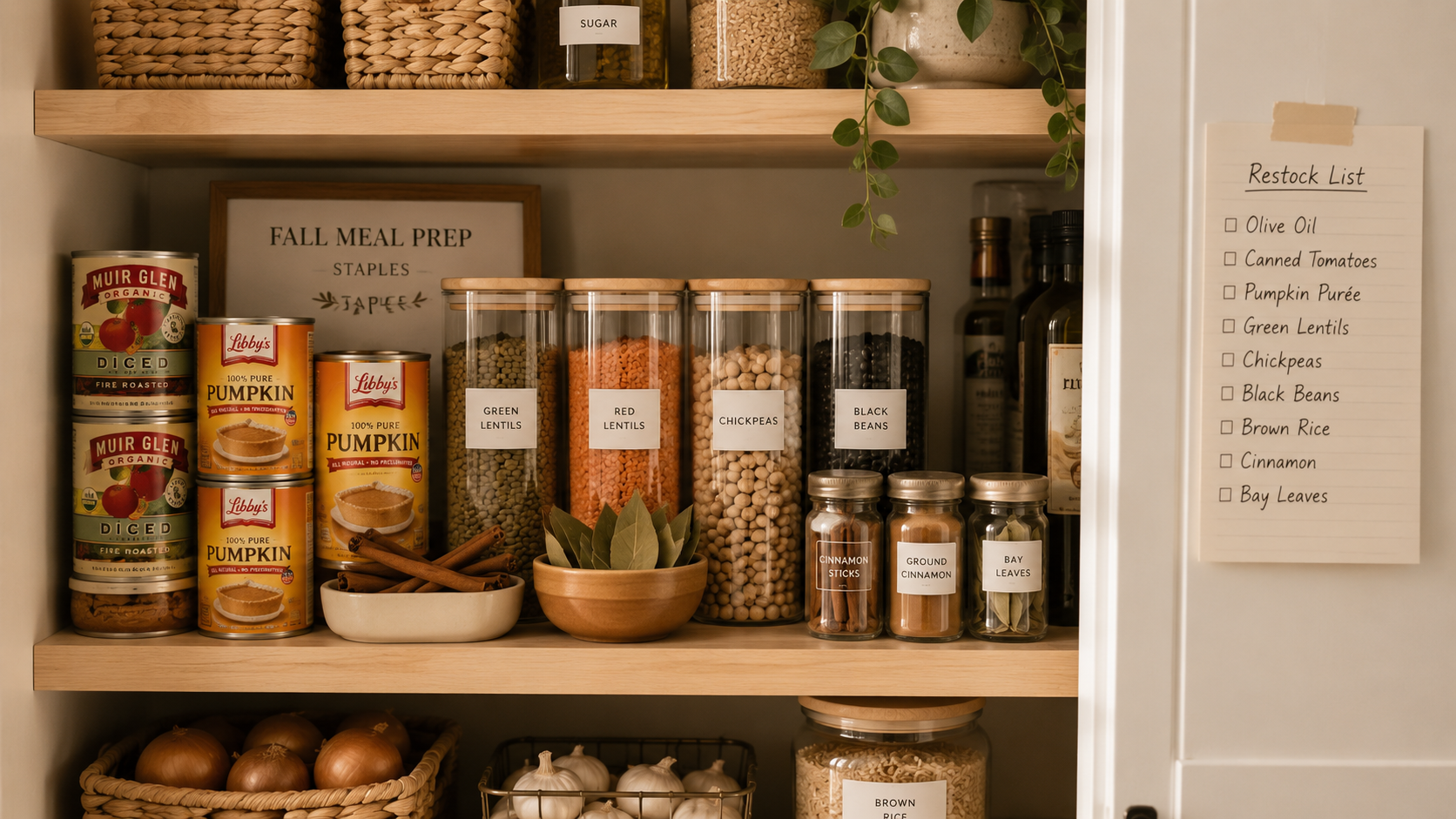
A pantry that’s still working in December isn’t the one with the prettiest labels in September — it’s the one built around how the household actually cooks once the weather turns, not how it photographed on day one. Get the zones right, keep the ten-minute habit, and the reset holds itself together long after the novelty of new bins wears off.
A well-kept pantry is just patience, stored at eye level.
— NestDigest