The Entryway Micro-Renovation: Big Impact, Honest Budget
Nobody plans a renovation around their entryway, and that’s exactly why most entryways are a disaster. The kitchen gets the budget. The bathroom gets the Pinterest board. The space between the front door and the rest of the house gets a bench from a big-box store and a resigned shrug — despite being the one room every person in the house touches daily, and the one every guest judges before they’ve said hello.
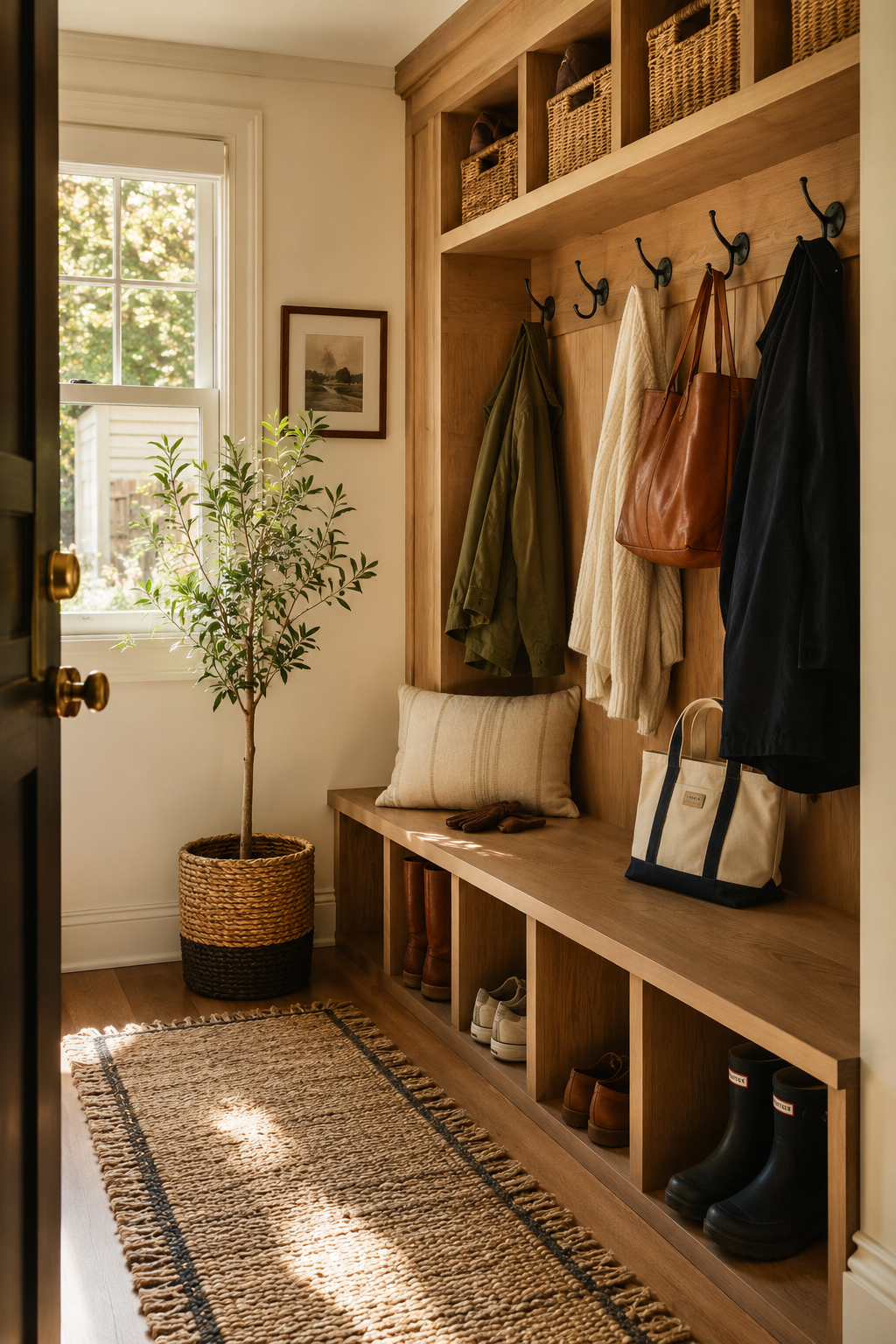
An entryway micro-renovation doesn’t need a permit or a contractor crew camping out for three weeks. It needs a system, and in most Ontario and Northeast U.S. homes, that system costs less than a single kitchen appliance. A built-in bench with cubbies and hooks, installed by a local carpenter, typically runs $2,500 to $4,500 CAD, depending on width and whether you’re adding closed cabinetry above. Go the semi-DIY route — stock shaker cabinets from Ikea or Home Depot, a butcher-block or stained-plywood bench top, hooks you install yourself over a weekend — and you’re closer to $500 to $900. That gap is the entire distance between hiring the work out and doing it with a circular saw and a free Saturday.
Here’s the part most homeowners get backwards: they think a bigger entryway looks better. It doesn’t. A generous mudroom with no defined zones — just floor space where boots and bags accumulate — reads as clutter no matter the square footage. A tight, well-organized four-foot run with individual cubbies per family member photographs better and functions better than a sprawling open area with a single shared bin. Containment beats space, every time. If you’re working with a narrow hallway entry rather than a dedicated mudroom, that’s actually the easier renovation — the constraint designs the system for you.
Stock versus custom is where most of this budget decision actually lives. A stock Ikea Pax or Ivar setup, cut and configured to fit, runs $600 to $1,200 installed yourself, and looks genuinely good if you commit to one finish and one hardware style throughout. Semi-custom — a local millworker building to your exact wall width using standard materials — lands around $1,800 to $3,000. Fully custom, built-in, painted-to-match cabinetry with integrated lighting is the $4,000-plus tier. None of these is the “wrong” choice. The mistake is mixing tiers: a custom bench with stock hooks from three different sets, or a beautiful built-in with a bargain rug that undoes the whole effect.
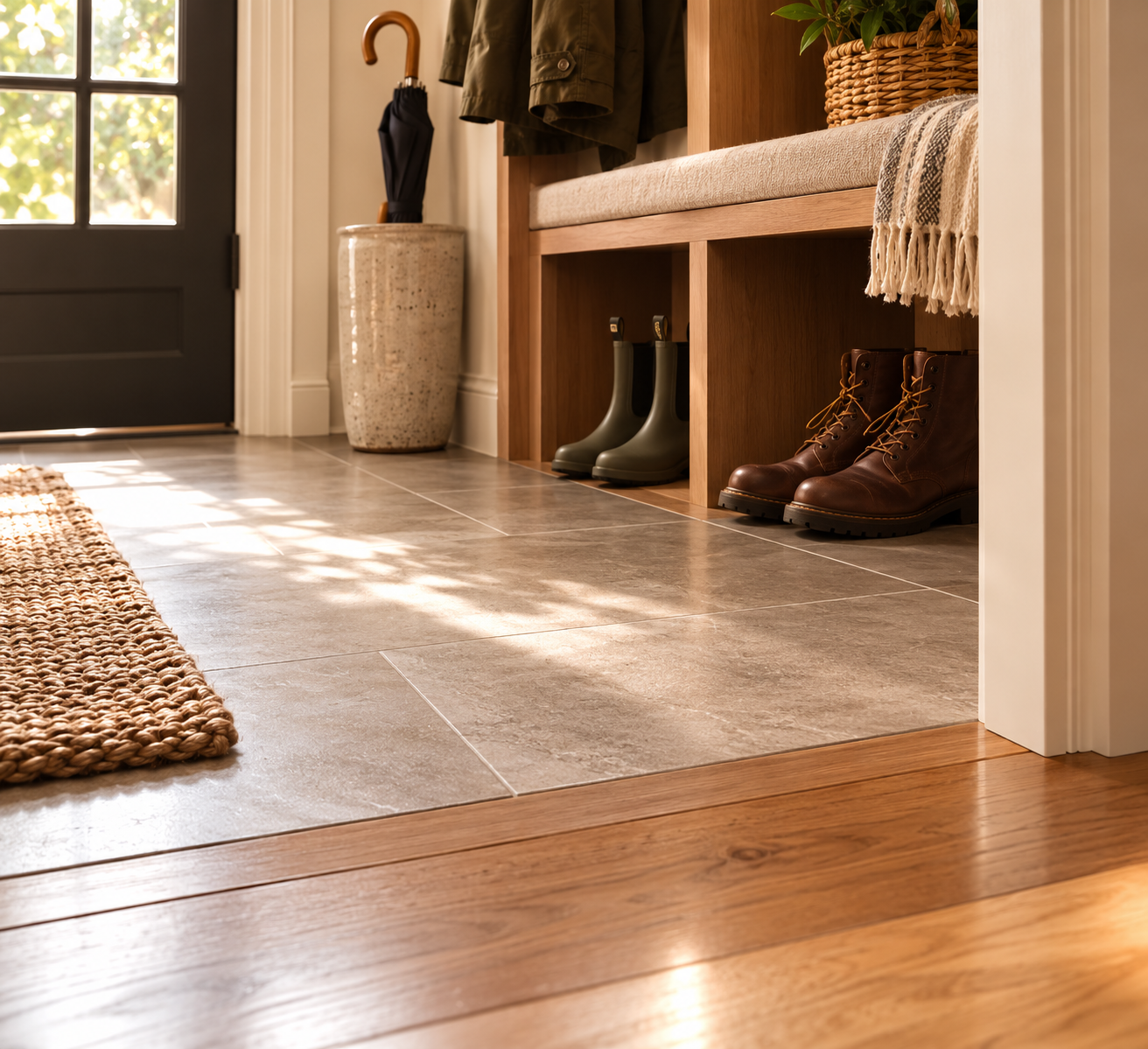
Flooring is where I see the most expensive mistakes. Homeowners install the same engineered hardwood that runs through the rest of the main floor. Within two winters, it’s cupping at the seams from boot melt and de-icing salt. An entryway that touches an exterior door needs a genuinely water-tolerant surface: porcelain tile, LVP with a real waterproof core, or a sealed concrete floor if you’re working with a slab. Budget roughly $8 to $14 per square foot installed for tile in the GTA and KW market, including a proper waterproof membrane underneath. Skipping that membrane is the mistake that shows up two years later as a soft spot in the subfloor — a much bigger bill than the tile ever was.
The other detail worth the extra hour: paint below the chair rail, or across the bottom third of the wall, should be a scrubbable, moisture-resistant finish — a satin or semi-gloss, not the matte you used in the living room. Wet coats and dripping boots leave marks on flat paint that never fully wipe clean, and repainting a mudroom every eighteen months is not the kind of maintenance anyone signs up for twice. Pair that with a runner or washable rug rather than wall-to-wall carpet, and the whole space becomes something you actually maintain instead of something you manage around. For more on which finishes and colors hold up over time, our guide to choosing paint colors that protect resale value covers the durability tradeoffs in more depth.
Lighting and hardware are the cheapest wins in the entire house. A single well-placed sconce or flush-mount fixture with a warmer color temperature — 2700K, not the 4000K daylight bulbs builders default to — makes a narrow entry feel considered rather than institutional. Swap the builder-grade doorknob and coat hooks for something in matte black or aged brass, and the whole space reads as finished for under $150. It’s the same principle at work in our breakdown of kitchen upgrades that add value without expanding square footage: hardware is disproportionately cheap for how much visual weight it carries.
If you’re renovating with resale in mind rather than just daily sanity, the entryway is quietly one of the higher-leverage rooms in the house. It’s the first thing a buyer’s agent photographs, and first impressions in a listing carry more weight than they should. A $3,000 entryway micro-renovation won’t move a home’s assessed value the way a full bathroom micro-renovation does, but it changes the emotional read of the entire showing — and that’s worth more than its line item on a spreadsheet. It’s a smaller-scale version of the same logic running through the broader micro-renovation economy: small, targeted fixes that outperform their price tag.
None of this is expensive to get right, which is exactly why it’s so often skipped. Deferred entryway fixes are the kind of thing that quietly compounds — a soft subfloor here, a scuffed baseboard there — the same pattern we’ve tracked in the real cost of delaying home repairs. The entryway isn’t the room that sells a house or wins a design award. It’s the room that tells you, every single day, whether your home is working for you or you’re working around it. Fix that threshold and everything past it feels a little more like it was actually planned.
A home announces itself at the door. Everything after that is just confirmation.
— NestDigest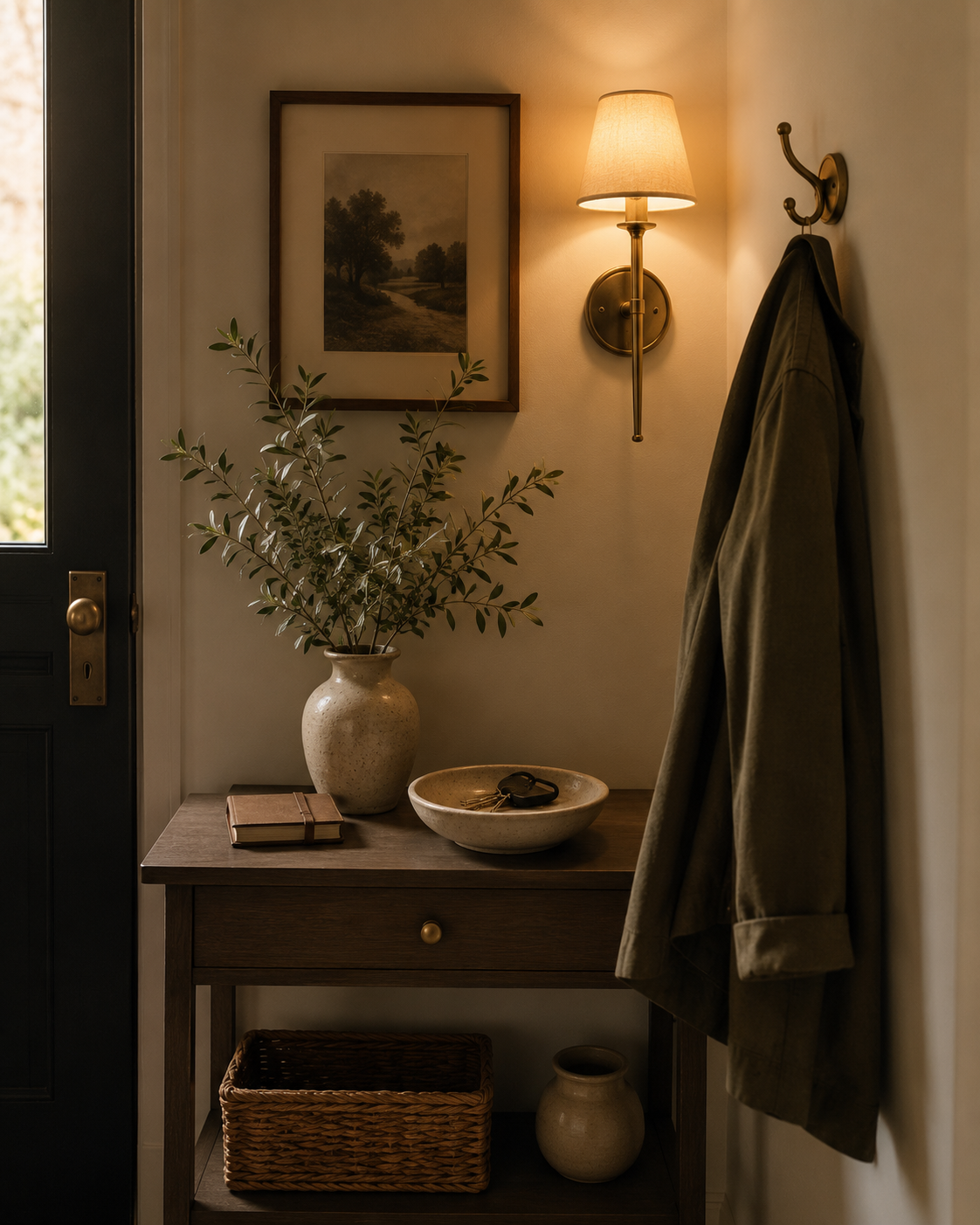
Entryway Micro-Renovation: Common Questions
How much does an entryway micro-renovation actually cost?
Most homeowners land between $500 and $4,500 CAD, depending on approach. A semi-DIY setup with stock cabinets and a plywood bench top runs $500–$900. A local carpenter-built bench with cubbies and hooks runs $2,500–$4,500. Flooring, if you’re replacing it, is a separate line item — typically $8–$14 per square foot installed for tile.
What’s the best flooring for a mudroom or entryway?
Anything genuinely water-tolerant: porcelain tile, LVP with a real waterproof core, or sealed concrete over a slab. Engineered hardwood — even the kind used elsewhere on the main floor — tends to cup at the seams within a couple of winters from boot melt and de-icing salt.
Is a custom-built mudroom bench worth it, or is stock furniture enough?
Stock cabinetry (Ikea Pax or Ivar, cut to fit) can look genuinely finished for $600–$1,200 if you commit to one finish and hardware style throughout. Custom or semi-custom built-ins ($1,800–$4,000+) make more sense for irregular wall widths or when you want integrated lighting. The mistake isn’t picking stock — it’s mixing tiers.
How do I keep a small entryway from getting cluttered again?
Containment beats space. A tight, zoned system — individual cubbies per person, a defined spot for shoes, one bin, one basket — stays organized far longer than a larger open area with a single shared catch-all. The size of the room matters far less than whether it’s actually divided into zones.