A pre-construction purchase doesn’t close in 30 to 60 days the way a resale home does. It closes in years. The gap between “we signed” and “we have keys” is where most of the stress lives, and most of the surprises.
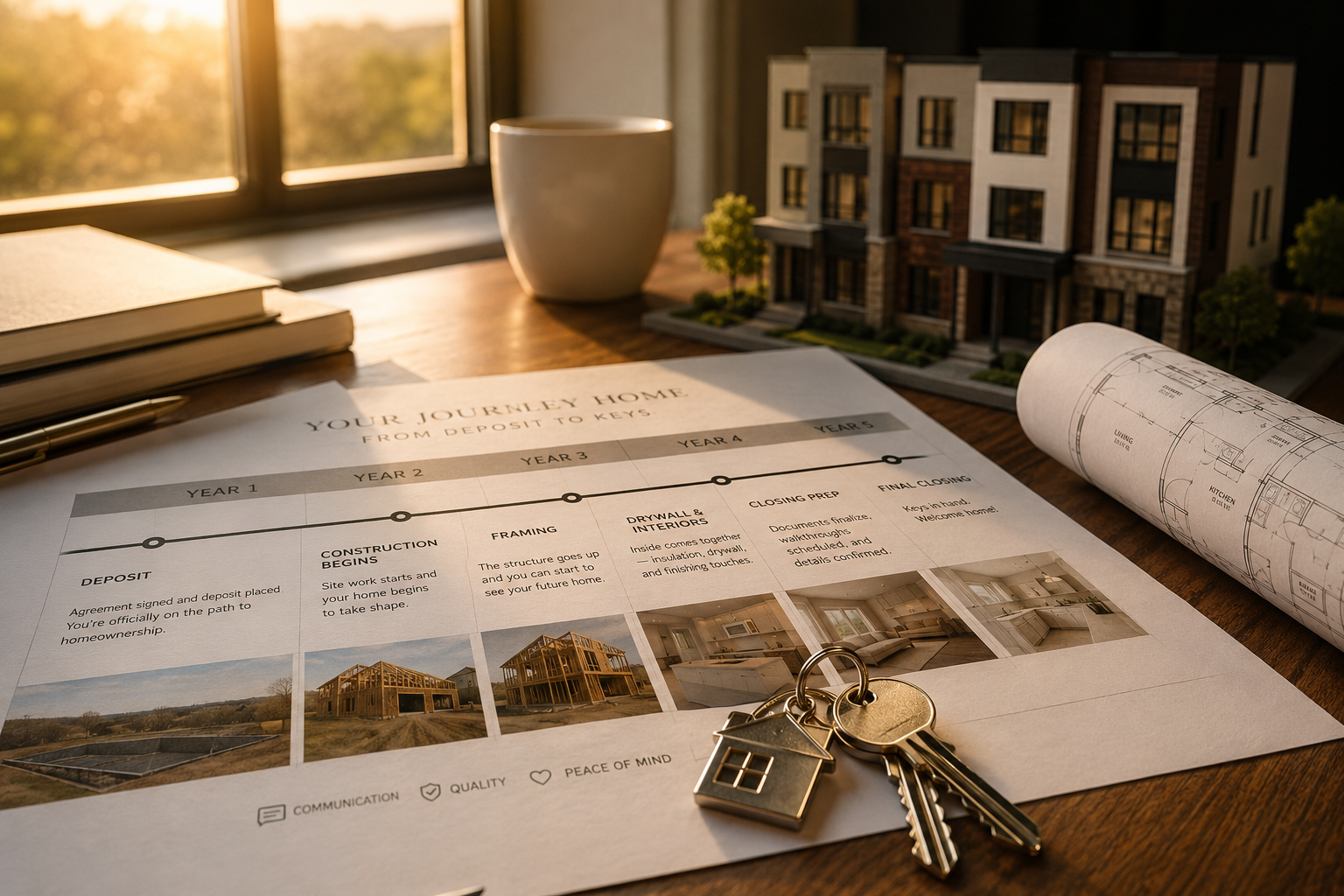
Here’s the short version. Expect four to five distinct phases. A launch period, where the best units go first. A reservation stage, where your deposit schedule locks in. A purchase-agreement window, where your lawyer needs to get involved. A construction period that runs 12 months for a townhome or three-plus years for a high-rise. And finally, occupancy and closing — which, for condos, are two separate events with two separate sets of costs. Builders miss their own estimates more often than not. Treat every date on your paperwork as a starting point, not a promise. If you read nothing else here: for condo buyers, moving in and owning are not the same day, and the fees in between are real money.
It starts before most buyers know a project exists. Builders typically run a VIP or broker-preview phase ahead of the public launch. Early access goes to past clients, referral networks, and real estate agents’ client lists. The best units — top floor, best orientation, corner layout — tend to move during this window. Sometimes before a general public sales event ever happens. If you have a realtor with builder relationships, or you’re on a builder’s VIP list from a past purchase, that access is worth using. It’s where the selection is widest and incentive pricing is often strongest.
Once you’ve picked a unit, the deposit schedule begins. This is where a lot of the confusion in pre-construction actually starts. A reservation deposit holds your unit while the formal agreement gets drawn up. It commonly runs $5,000 to $25,000, depending on the project. From there, deposits typically continue in installments. Often 5% at signing, another 5% around the 90-day mark, and the rest staggered through further milestones. Altogether, total deposits usually land at 15% to 20% of the purchase price by the time the building is complete. Not the single 5% figure that sometimes gets quoted upfront. We walked through the full breakdown in our guide on whether pre-construction is right for you. Missing a scheduled deposit deadline is one of the few genuinely unforgiving mistakes in this process. It can mean losing the unit and forfeiting what you’ve already paid. Calendar every date the moment you have it.
You’ll also get your first real look at the paperwork during this stage. The purchase agreement, the builder’s disclosure statement, and — for freehold and condo purchases alike — the Tarion Addendum. That’s the standardized document governing your deposit protection, warranty coverage, and what happens if the builder misses a date. A real estate lawyer needs to review all of it before you sign anything final. This isn’t optional diligence. Agreements of purchase and sale for new construction are written by the builder’s counsel, for the builder. A lawyer who works in new-build transactions specifically will catch clauses a general-practice review might miss. Assignment restrictions. Upgrade cost escalators. How delay compensation actually gets calculated.
This is also the window to finalize your customization choices — flooring, cabinetry, fixtures, structural upgrades — and to get a mortgage pre-approval in place. Be realistic about the second one. Upgrades can add another 10% to 30% on top of your base price. Mortgage rates you’re pre-approved at today may look very different by the time you actually need to draw on that financing, years from now. Budget with room for both to move. If you haven’t nailed down what the full cost picture looks like yet, our cost guide for pre-construction purchases walks through every line item, not just the sticker price.
Construction itself is the long middle. A townhome build typically runs 12 to 24 months. A high-rise condominium can run three years or more, from groundbreaking to occupancy. Within that window, foundation and framing usually take several months. Interior and mechanical systems take considerably longer. Finishing work and landscaping trail at the end, before final municipal inspections clear the building for occupancy. None of these sub-phases are fixed. Weather, permitting backlogs, labour availability, and supply chain issues are the norm in this industry, not the exception. They can push a completion date back by six months to a year with little warning. A townhome community, for example, might break ground in spring and target occupancy the following winter. Then a permitting delay or a wet fall season pushes that into the next spring instead. That’s not a red flag on its own. It’s simply how this industry runs.
If your builder doesn’t deliver by the date named in your agreement, you’re not stuck waiting indefinitely. Under the Tarion Addendum for freehold homes, if closing hasn’t happened by your Outside Closing Date, you get a 30-day window to terminate the agreement and get your deposit back. Condo agreements carry a similar right, tied to their own critical dates. Separately, if your builder gives less than 10 days’ notice of a delay, Tarion entitles you to compensation of $150 per day starting from that 10-day mark. No receipts required for living expenses, up to that flat rate. Most buyers never open the Addendum closely enough to know this exists until they need it.
Occupancy and final closing get treated as one event by a lot of first-time buyers. For freehold townhomes and detached homes, they largely are — you close and take title in a single step. Condos work differently, and the difference matters financially. I’ve watched buyers get genuinely blindsided by this: they budget for the purchase price and the deposits, then the interim occupancy fee shows up as a monthly bill they never planned for. Interim occupancy is the period after your unit is livable but before the building itself is registered and legal title can transfer to you. The Condominium Authority of Ontario confirms you cannot begin mortgage payments during this window, because you don’t legally own the unit yet. Instead, you pay the builder an interim occupancy fee. It’s capped by regulation to interest on your unpaid balance, estimated property taxes, and projected condo fees. None of it builds equity. That period commonly runs a few months. It averages around six months across the market, and has stretched past a year on some larger projects working through registration backlogs. Lower-floor units tend to reach interim occupancy earlier than upper floors, since the builder hands over completed floors before the whole tower is finished. Final closing, when it arrives, is the real handoff. Legal title transfers. Your mortgage officially begins. Your warranty clock starts running.
Watch for a few honest warning signs along the way, separate from ordinary delay. Construction that stops for an extended stretch with no explanation. A sales centre that closes abruptly. A builder that goes quiet on communication. All worth escalating — first to your lawyer, then to Tarion directly if the pattern continues. A request for deposits outside your original schedule is a flag too. Your payment schedule is set out in the agreement, and a builder asking for more, sooner, isn’t something to just accommodate without your lawyer reviewing why.
Most of these warning signs are easier to avoid than to manage after the fact. Before you sign anything, check the builder’s license status in the Ontario Builder Directory, maintained by the Home Construction Regulatory Authority. It’s a ten-minute check that shows whether the builder is in good standing, and whether other buyers have filed conduct complaints. Pair that with a look at how the builder has handled delays on past projects — a builder’s track record under pressure tells you more about your own timeline risk than anything in the sales centre will.
How much this timeline should worry you depends on what you need from the home. First-time buyers get a real advantage from the runway. Years to build savings, credit, and a down payment cushion, all before a single mortgage payment is due. Investors get time to research rental demand and financing options. They also get the option to assign the contract before closing if their plans change. Families with school-age kids, or a move already on the calendar, carry the most risk here. A builder’s estimated date and your actual move-in date can end up a year or more apart. Plan major life events around the outside date in your agreement, not the marketing timeline on the sales centre wall.
The timeline is the part of pre-construction that tests patience the most. It’s also the part that rewards knowing your paperwork cold. If you’re weighing whether to go this route at all, start with the first article in this series. If you’re already in, browse the rest of our pre-construction coverage for what comes next. And next up here: exactly what this all costs — deposits, upgrades, occupancy fees, and closing costs — so you can budget for the full timeline, not just the purchase price.

The date on your agreement is a starting point for planning — not a promise you should build your life around.
— NestDigest