Home Decor
How to Style a Summer Living Room That Feels Like You
The reign of safe, beige-everything interiors is ending — and summer 2026 is the season to finally put yourself back into the room.
There’s a particular kind of living room that photographs beautifully and feels like absolutely no one lives there. You’ve seen it — every surface deliberate, every tone within a centimetre of the same beige, every cushion plumped to a uniform silence. It’s a fine look for a hotel lobby. For a home, though, it leaves something out. Namely, you.
Summer living room decor ideas for 2026 are moving decisively away from that template. The dominant editorial signal this season isn’t about a new hero colour or a trending furniture silhouette — it’s about personality. About rooms that look like someone specific lives in them and cares about the space enough to let it evolve. The collections of books, the travel photographs, the tactile fabrics that make you want to sit down and stay. That’s what designers are gravitating toward right now, and it’s long overdue.
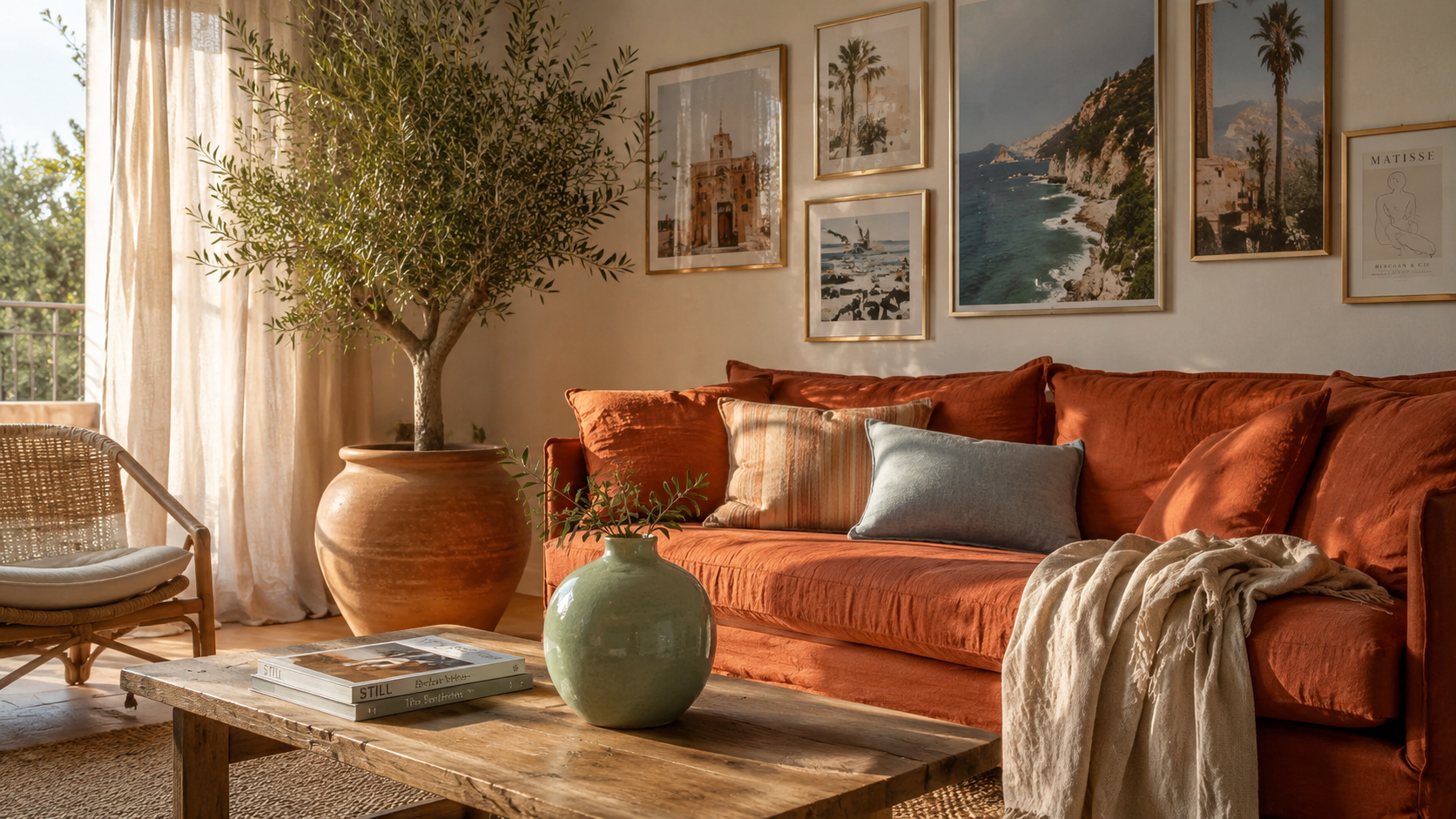
The palette shift is real and it’s worth paying attention to. After years of grey undertones and cool whites, this summer’s colour story runs warmer and more expressive: terracotta that’s sun-washed rather than saturated, pistachio green that sits easily with natural wood, dusty sky blue that feels like early morning light, aged linen that grounds everything without flattening it. These are colours with a point of view. They make a decision about the room — and that decisiveness is exactly what the moment calls for.
A room that shows who you are is always more interesting than a room that shows who you think you should be.
Start with texture before you reach for a paint chip. The material story of summer 2026 is grounded in surfaces that look better the longer you live with them — raw linen that softens with washing, rattan that deepens with age, plaster walls with the kind of gentle irregularity that no factory finish can replicate. Limewash wall treatments in particular have moved from niche to mainstream over the past eighteen months, and it’s easy to see why: they give a room a settled, almost architectural quality while remaining completely DIY-accessible. A single limewashed wall behind a sofa can do more for a living room than an entire shopping cart of new accessories.
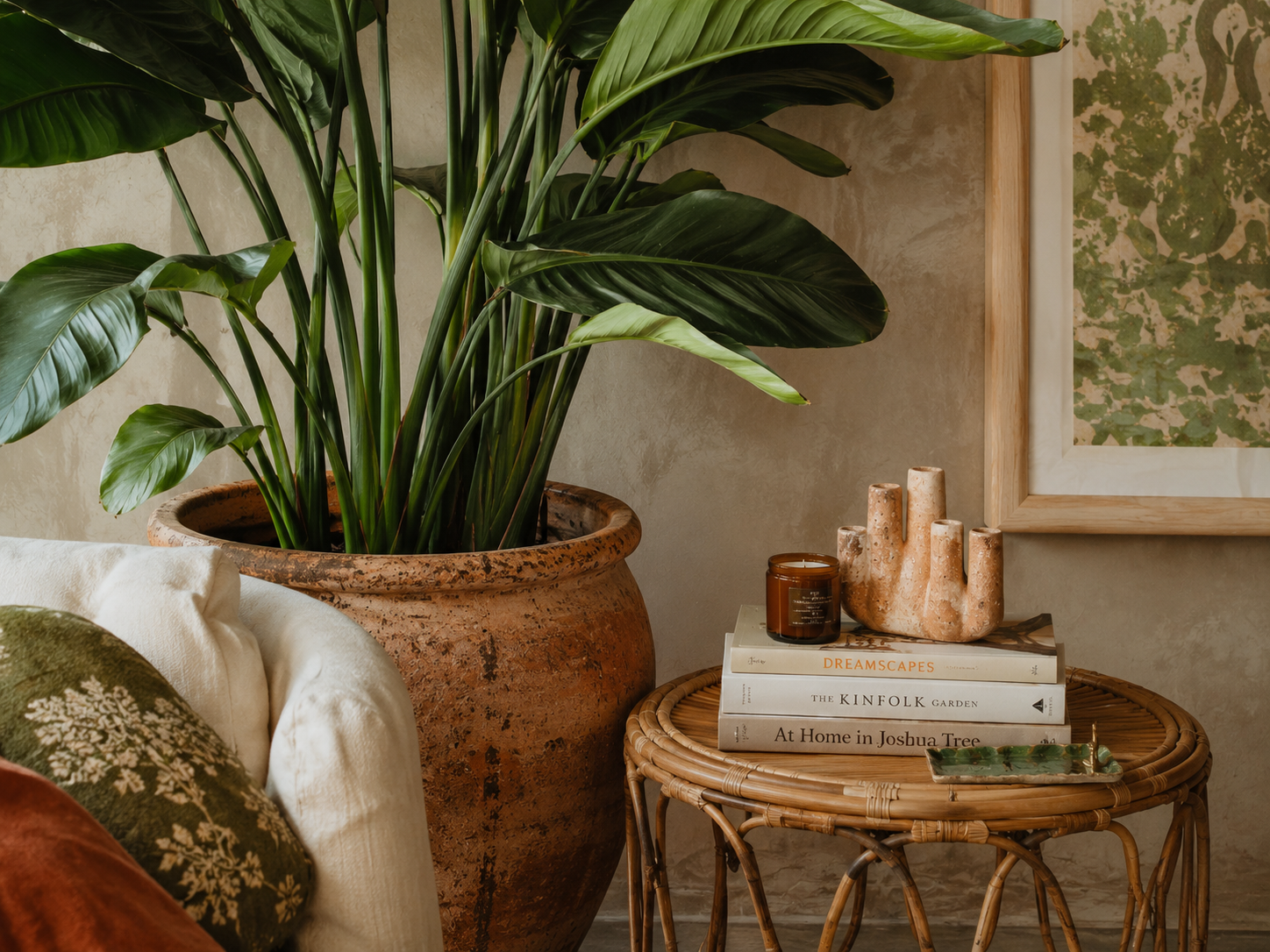
Greenery has come back in a more confident form this summer. Not the single trailing pothos in the corner, but something with presence — a large fiddle-leaf, a dramatic bird of paradise, a sculptural olive tree in a terracotta pot that the room is actually designed around. Oversized indoor plants function like furniture at this scale: they anchor zones, fill vertical space, and bring a room to life in a way that no rug or throw ever quite manages. If you’ve been underestimating plants as decor, this is the season to reconsider.
The instinct to edit ruthlessly has started to loosen, and that’s a good thing for most living rooms. Maximalism in its current form isn’t about clutter — it’s about layering with intention. A gallery wall of things you actually love reads completely differently than one that’s been assembled to look curated. The travel photograph you’ve kept in a drawer for three years, the art print you bought on a whim that turned out to be exactly right, the shelf of books you’ve actually read — these objects carry weight that fills a room in a way that perfectly matched accessories simply can’t. Let them out.
Pattern is back, too, and it arrived boldly. Striped upholstery, gingham table linens, floral wallpaper used as an accent rather than a wallpaper-the-whole-room commitment — these are the details that make a living room feel considered rather than assembled. The key is to mix scale rather than match perfectly: a large graphic stripe on a cushion with a smaller botanical repeat on a throw works in a way that two patterns of identical scale often doesn’t. Trust the contrast.
What ties all of this together is a simple shift in design philosophy — from asking what a room should look like to asking how it should feel. A summer living room that feels genuinely good to be in is warm without being heavy, expressive without being chaotic, and personal without being precious. The things that make it yours are exactly the things that make it interesting to anyone who walks in. That trade-off, it turns out, isn’t a trade-off at all.
The home should be the treasure chest of living.
— Le Corbusier