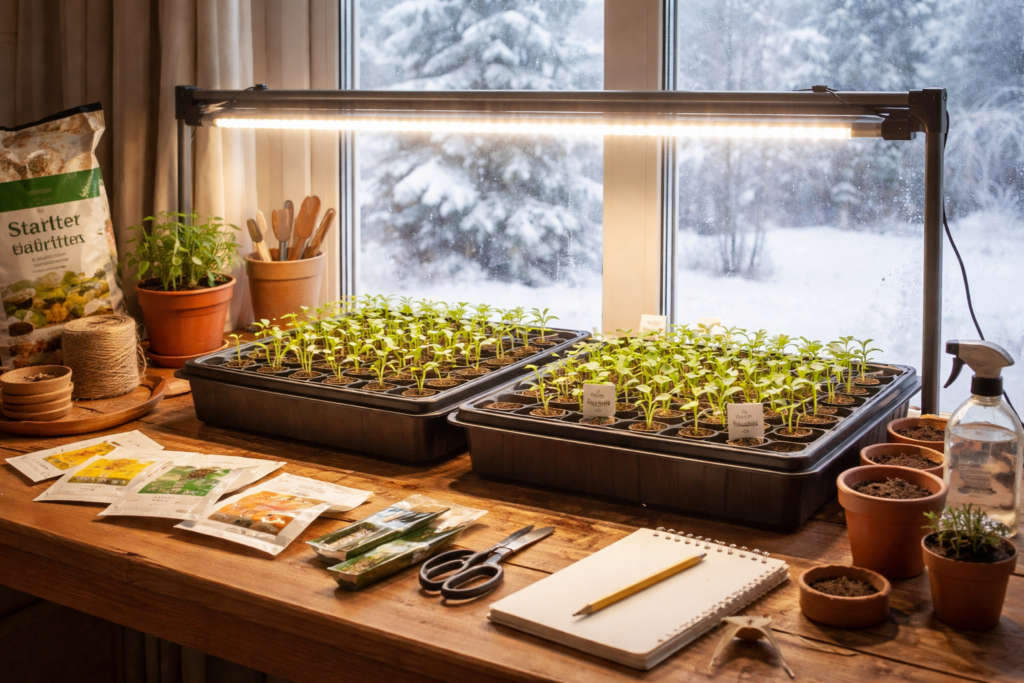
2026 Curb Appeal Trends: Low-Maintenance Hardscape for Ontario Winters
Walk any street in Kitchener-Waterloo in late February and you can spot the good driveways in about ten seconds. It’s never the material that gives it away — it’s whether anyone respected the frost line before pouring. That distinction is exactly what’s driving low-maintenance curb appeal in 2026. It isn’t a new look. It’s a harder requirement: whatever goes down out front has to survive an Ontario winter without a homeowner babysitting it every March. In practice, low-maintenance curb appeal means hardscape material and installation depth specified to survive freeze-thaw and road salt without annual repair — not simply a low-upkeep planting scheme.
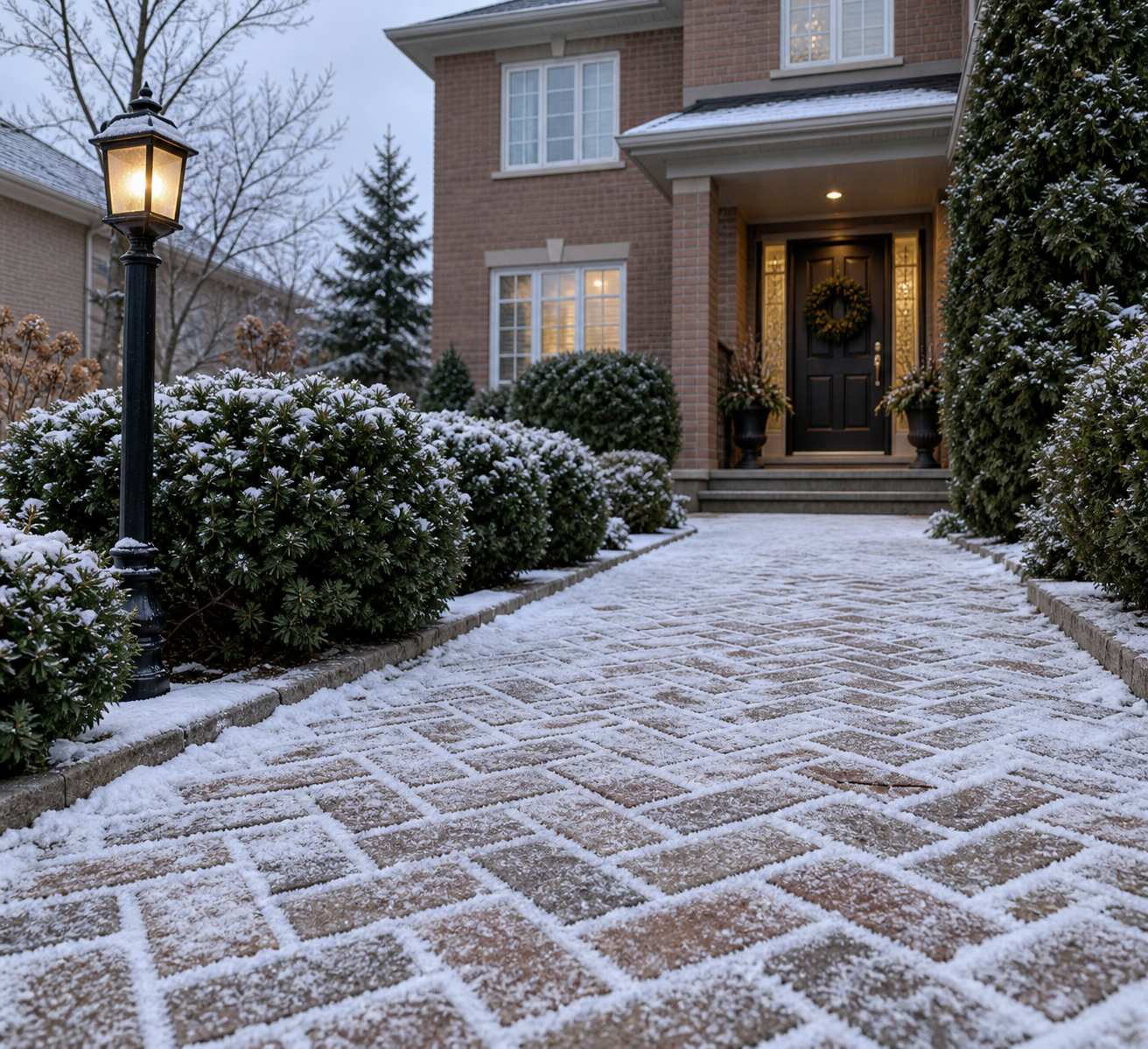
The shift shows up the same way from Durham Region to the GTA, which makes it a real trend rather than a marketing angle. Interlocking pavers and permeable systems are turning up on more front walkways. They manage snowmelt and resist heaving better than a single poured slab. Homeowners are pairing them with discreet catch basins instead of hoping the water finds its own way to the street. Natural stone steps and porcelain-tile porch overlays are replacing the builder-grade concrete stoop, too. Part of that is the look. Part of it is that a slip-resistant, salt-tolerant finish matters more on a stoop that sees six months of freeze-thaw than one that doesn’t. Low-voltage path and step lighting rounds it out: cheap to run, genuinely useful once the sun sets at 4:45, and one of the few upgrades that asks for zero seasonal maintenance.
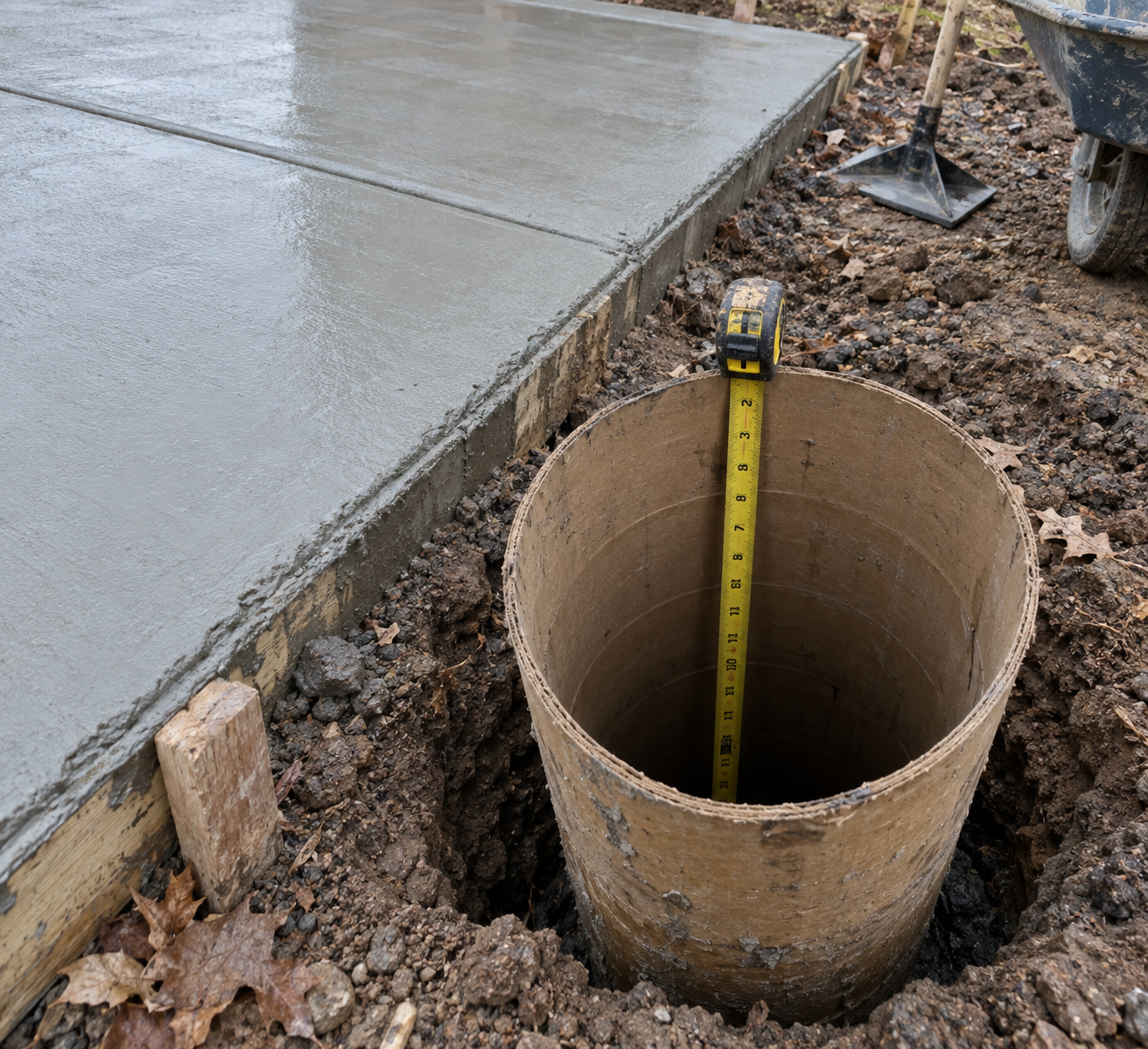
None of it holds up if the footing underneath was never sized for the climate — and footings are the part of 2026’s low-maintenance curb appeal push that nobody photographs. Ontario’s Building Code sets the minimum foundation depth at 1.2 metres for southern Ontario. That single number is the real reason a shallow patio slab or an under-footed retaining wall heaves within two winters, while a properly built one doesn’t move for thirty. Contractors working around Ottawa and the Muskokas dig closer to 1.5 metres, because frost penetrates deeper the farther north you go. Code depth isn’t a suggestion. It’s the line between a hardscape project that lasts and one that becomes next spring’s repair bill, as set out in the 2024 Ontario Building Code.
Here’s the detail most homeowners never hear from a contractor in a hurry: the concrete mix matters almost as much as the depth. Road salt doesn’t just wear a surface down cosmetically — it draws salt-saturated water into the pores of standard ready-mix concrete, and that water expands more than fresh water does when it freezes, causing efflorescence and surface spalling within a handful of winters. Air-entrained concrete — mixed with microscopic air bubbles that give expanding ice somewhere to go — is what actually survives an Ontario driveway long-term, and it costs next to nothing extra to specify. The paver industry has its own version of this test: ASTM C1645 is the standard that measures a concrete paver’s freeze-thaw and de-icing-salt durability, and it’s worth asking a contractor whether the units they’re quoting are rated to it. Ask for it by name. A driveway poured without it isn’t a bad driveway on day one. It’s a bad driveway by its third winter, and by then the crew that poured it has moved on.
Among the low-maintenance options worth comparing, interlocking concrete pavers sit in the middle of the pack — durable, repairable one unit at a time, and the closest thing to a default choice for an Ontario front walkway. Poured concrete costs less up front but turns any crack into an all-or-nothing repair. Natural stone rewards the higher price with decades of wear, provided the base underneath was compacted properly. Porcelain paving, still fairly new to the Ontario market, splits the difference on both cost and looks.
| Material | Cost (CAD / sq ft) | Maintenance | Freeze-Thaw Durability |
|---|---|---|---|
| Poured concrete | $8–$14 | Low, until it cracks | Good — only if air-entrained |
| Interlocking pavers | $15–$25 | Low — resand every few years | Very good — units reset individually |
| Porcelain paving | $20–$32 | Low | Very good — dense, salt-resistant |
| Natural stone | $28–$55+ | Low, if properly set | Excellent — decades with a compacted base |
A simple front walkway in permeable pavers is a realistic weekend-and-a-half DIY project for anyone comfortable renting a plate compactor. A full driveway, a retaining wall over about two feet, or anything requiring a permit for excavation depth is a hire-a-pro job, full stop. Those are exactly the projects where the frost-depth math above stops being optional. If the hardscape is only half the plan, pair it with native, cold-hardy plantings around the new walkway to keep the whole front yard low-maintenance, not just the hard surfaces. For the softer side of the same goal, a broader low-maintenance landscaping plan covers the planting and lawn decisions this piece doesn’t, because low-maintenance curb appeal in 2026 means the whole yard, not just the driveway. Weighing a backyard patio alongside the front-yard work? The budget math is laid out in our deck and patio cost breakdown.
The resale case for getting this right is real, if imported. The National Association of Realtors’ Remodeling Impact Report on outdoor features found homeowners typically recover a large share of what they spend on a landscape upgrade. Realtors surveyed for that same report overwhelmingly said curb appeal shapes a buyer’s first impression before they’ve stepped through the door, per the National Association of Realtors. The exact percentages are American data, not Ontario-specific. But the underlying logic travels fine across the border. A front yard that still looks intentional in March, after a full winter of salt and snowbanks, reads as a well-kept house before anyone’s seen the inside. Whatever structure eventually joins the hardscape — a gazebo or covered sitting area — should get the same frost-depth treatment on its footings. And the yard care that carries the look through the shoulder seasons is worth planning early; our fall lawn care schedule covers the maintenance side hardscape alone can’t fix.
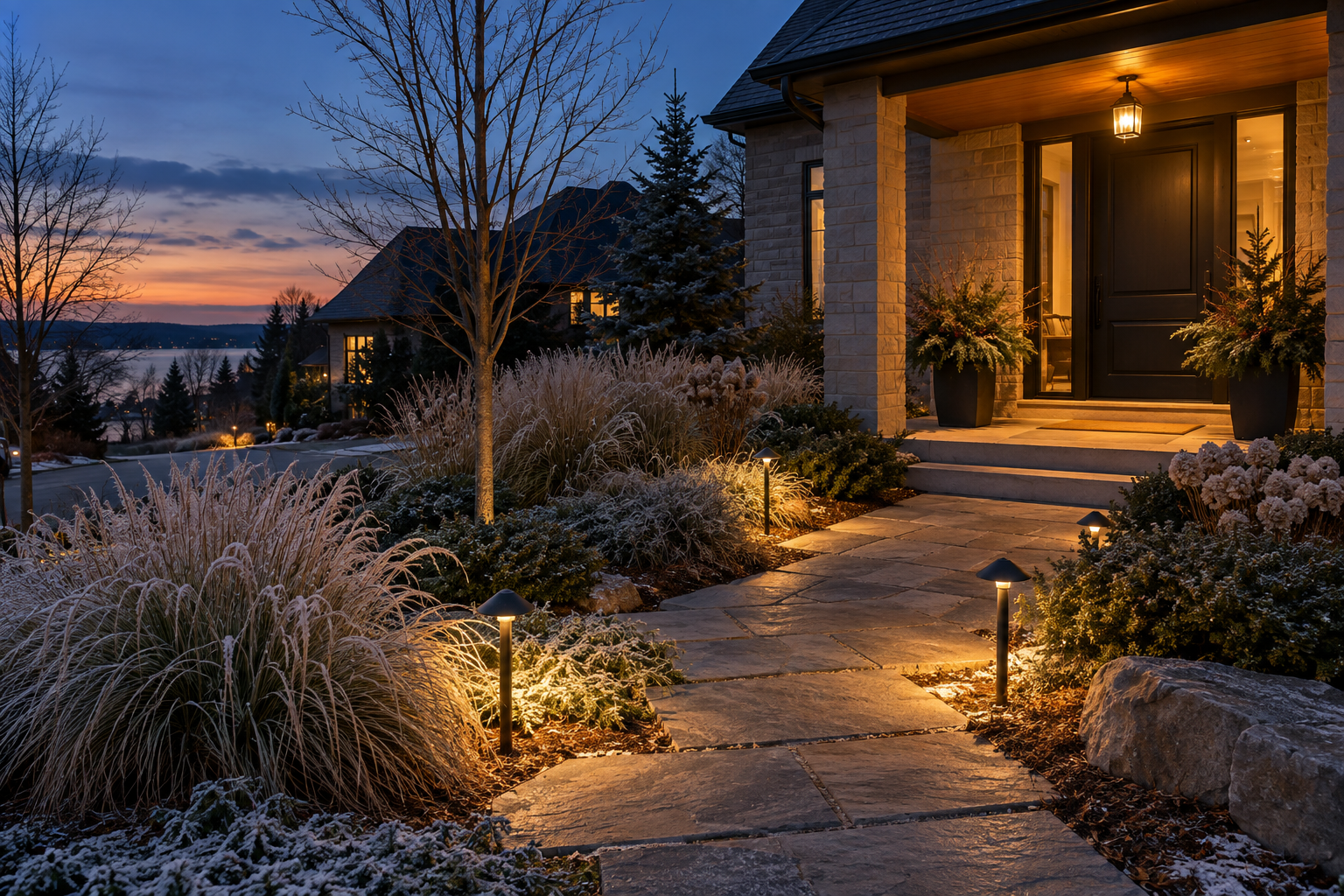
The homeowners who get the most out of this aren’t the ones who spent the most. They’re the ones whose front yards still look considered in the middle of March instead of merely tolerated — because they asked their contractor two boring questions before signing anything: how deep is the footing going, and what’s actually in the concrete. Everything else about 2026’s curb appeal trends is really just a more attractive way of answering those two questions correctly.
A yard that outlasts the seasons was never an accident — it was poured, packed, and planned before the frost ever arrived.
— NestDigest