
Seasonal Fixes & Upgrades
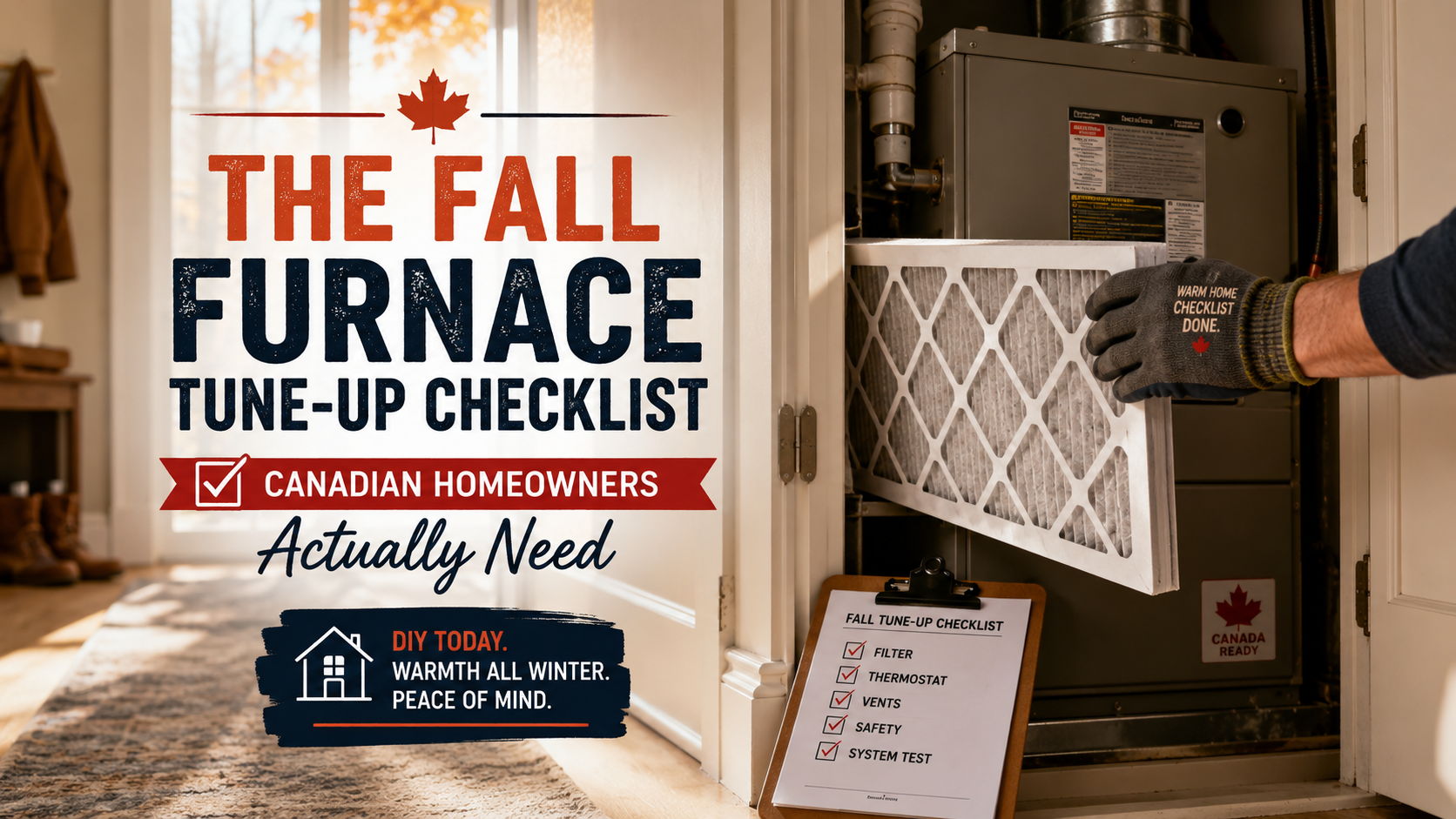
The Fall Furnace Tune-Up Checklist Canadian Homeowners Actually Need
The smartest week to think about your heating system is the one when nobody else is thinking about theirs.
Somewhere between the last cut of the lawn and the first frost warning, a furnace that hasn’t run since March gets asked to fire up flawlessly on command — and every fall, plenty of them don’t. A proper fall furnace tune-up checklist isn’t really about ticking boxes. It’s about catching the twenty-dollar fix before it becomes the fifteen-hundred-dollar one, and the smartest time to run through it is now, not the week the temperature drops.
In short: a fall furnace tune-up checklist has two parts. Homeowners can handle the first part in about twenty minutes — replacing the filter, clearing space around the unit, checking vents, testing carbon monoxide alarms, and running one full heating cycle to listen for problems. The second part belongs to a licensed technician, who tests the heat exchanger, gas pressure, and flame sensor, and confirms the system cycles correctly. A professional visit typically costs $125 to $250 CAD across most of Canada and is best booked in September, before the first cold snap fills every HVAC company’s schedule at once. Skipping it doesn’t save money — it just moves the cost from a small, planned tune-up to an unplanned repair or, in the worst case, a full furnace replacement in the middle of winter.
Here’s the part that surprises most homeowners: the best week to book a furnace tune-up is the one when nobody else is thinking about their furnace at all. HVAC companies across the country see the same pattern every year. A quiet September gives way to a flooded phone line the moment the first hard cold snap hits in late October, when every neglected furnace in the neighbourhood seems to fail at once. Book in September and a technician has time to run a full diagnostic properly. Book after that first freeze, and you’re in a queue behind everyone else who waited, too.
A fall furnace tune-up checklist really splits into two lists: the handful of things any homeowner can do in twenty minutes, and the deeper service that belongs to a licensed technician. The homeowner side matters more than most people assume — it’s the difference between a technician spending their visit on real diagnostics versus basic housekeeping you could’ve handled yourself.
A clogged filter forces the blower motor to strain for the same airflow, which is the single fastest way to shorten a furnace’s working life. Swap it every one to three months through the heating season — more often with pets or a fan that runs continuously.
Stored boxes, paint cans, and cleaning supplies pushed up against a furnace aren’t just clutter — they’re a combustion and fire hazard. Give the cabinet room to draw air properly.
Walk the house room by room and make sure vents aren’t blocked by furniture, rugs, or curtains. A blocked return is one of the more common reasons a furnace short-cycles and wears out its components early.
Press the test button on every unit in the home, and check the manufacture date — most CO alarms need replacing every five to seven years regardless of how healthy the battery reads.
Turn the thermostat up five degrees and listen. A healthy furnace ignites within seconds and runs without banging, rattling, or a burning-dust smell that lingers past the first few minutes.
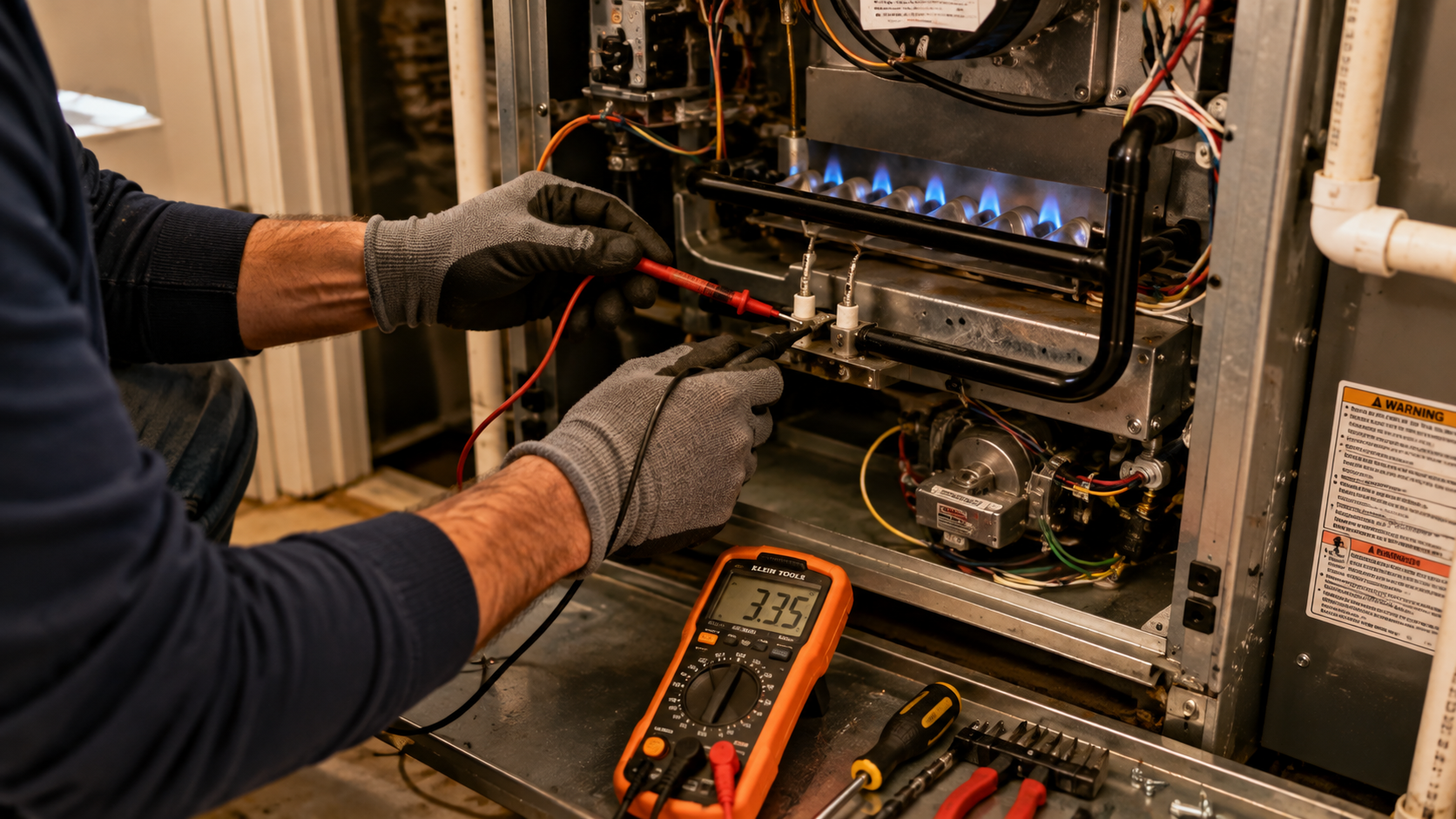
The homeowner side of a fall furnace tune-up checklist buys peace of mind; the professional side is what actually catches the failures that matter. A technician’s visit goes places a filter change never will. They test the heat exchanger for hairline cracks that can let combustion gases leak into supply air. They check gas pressure against manufacturer spec and calibrate the flame sensor. Then they run a full cycle test to confirm the system starts, ramps, and shuts down the way it’s designed to. This is also the visit that protects a manufacturer’s warranty. Most warranties on newer high-efficiency units require documented annual service to stay valid — a detail buried in the paperwork that a surprising number of homeowners never read until they need to file a claim.
None of this is free, but it’s cheaper than the alternative. A standard annual tune-up runs somewhere between $125 and $250 CAD across most of the country, with pricing swinging wider depending on the market and whether the visit includes extras like a full coil clean. Skip it, and the math tips the other way fast. A mid-life repair on a neglected furnace routinely runs into four figures. A full replacement — for a modern, code-compliant high-efficiency unit — typically lands between $4,000 and $7,000 installed. Natural Resources Canada puts the stakes in perspective. Heating is by far the biggest energy line item in a Canadian home, which is exactly why a furnace running even slightly inefficiently shows up so clearly on a winter utility bill.
Carbon monoxide is the one item on this checklist that isn’t optional under any provincial building or fire code, and for good reason. It’s colourless, odourless, and only detectable with a working alarm. Several provinces have tightened CO alarm placement rules in the past year. The general trend requires an alarm on every storey of a home with a fuel-burning appliance, not just outside sleeping areas, certified to the CSA 6.19 standard. Sealing up drafts around doors and windows is worth doing before the heating season starts, but it only pays off if the furnace behind that sealed-up house is burning fuel cleanly. If it’s been more than five to seven years since your alarms were installed, this is the week to replace them — not the week after the first cold snap, when hardware stores tend to sell out.
A fall furnace tune-up checklist doesn’t exist in isolation from the rest of a home’s systems, either. A furnace running dry heat all winter interacts directly with a home’s humidity levels. The filter habit that keeps a furnace efficient is the same discipline that shows up across every seasonal maintenance list worth following. The same system doing the heating in January is doing the cooling in July. A technician already inside the cabinet for a fall visit is often the fastest way to catch an aging component before it becomes a summer no-cool emergency instead of a fall no-heat one.
The homeowners who skip this most consistently aren’t being careless — they’re being busy, and a furnace that’s currently working feels like the lowest-priority item on a long fall list. But the data on delayed home repairs tells the same story across every mechanical system in a house: the repair bill grows faster than the maintenance bill ever does, and heating is no exception.
The furnace that gets checked in September is rarely the one making the emergency call in January. That’s not because September homeowners are luckier — it’s because they let a technician find the small problem while it was still small. That’s the entire logic of a fall tune-up: not fixing what’s broken, but noticing what’s about to be.
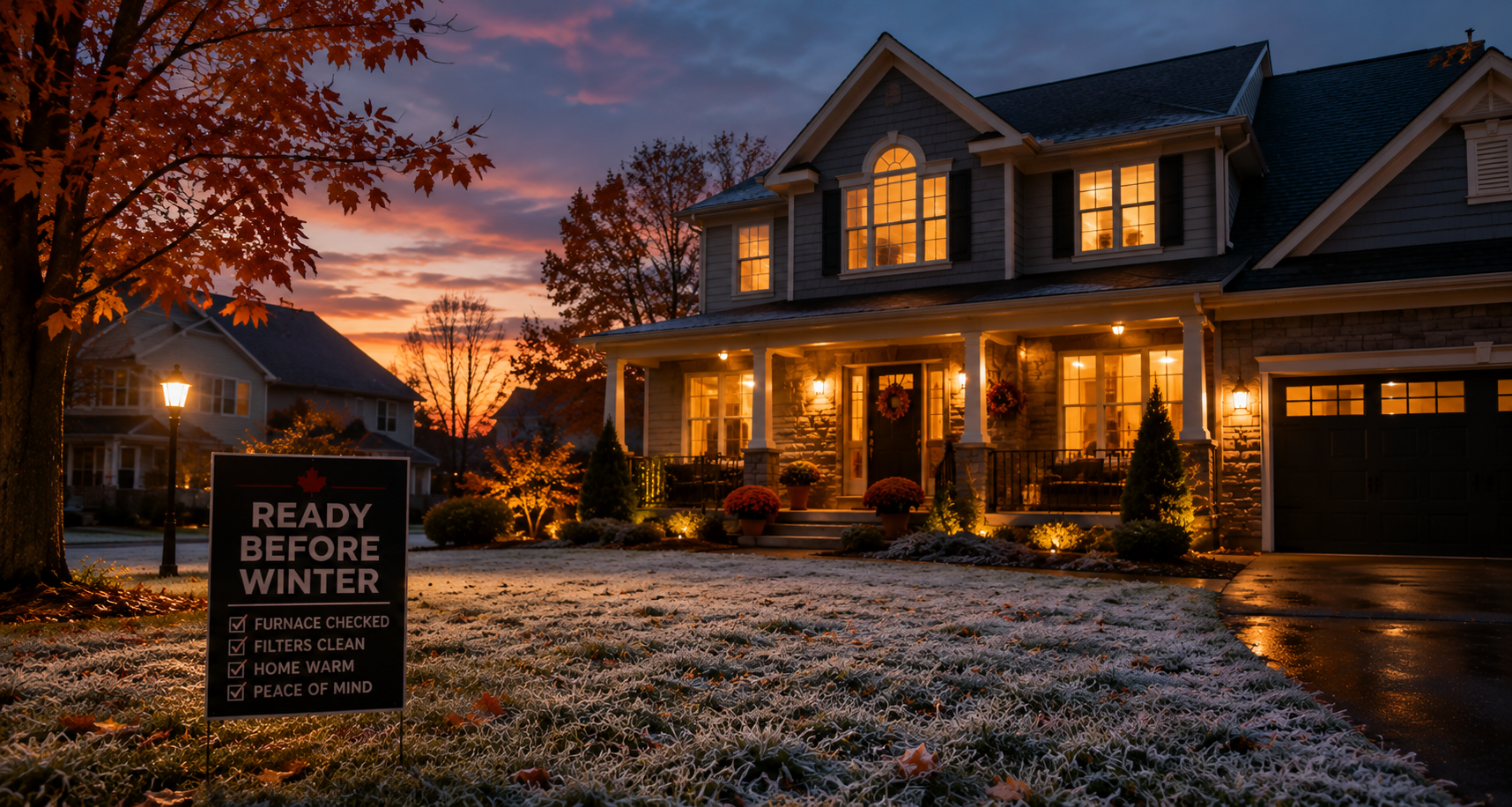
A house doesn’t ask to be noticed until it’s cold. The good ones get noticed anyway.
— NestDigest