Found Luxury: Inside the Curated Maximalism Trend Replacing Quiet Luxury
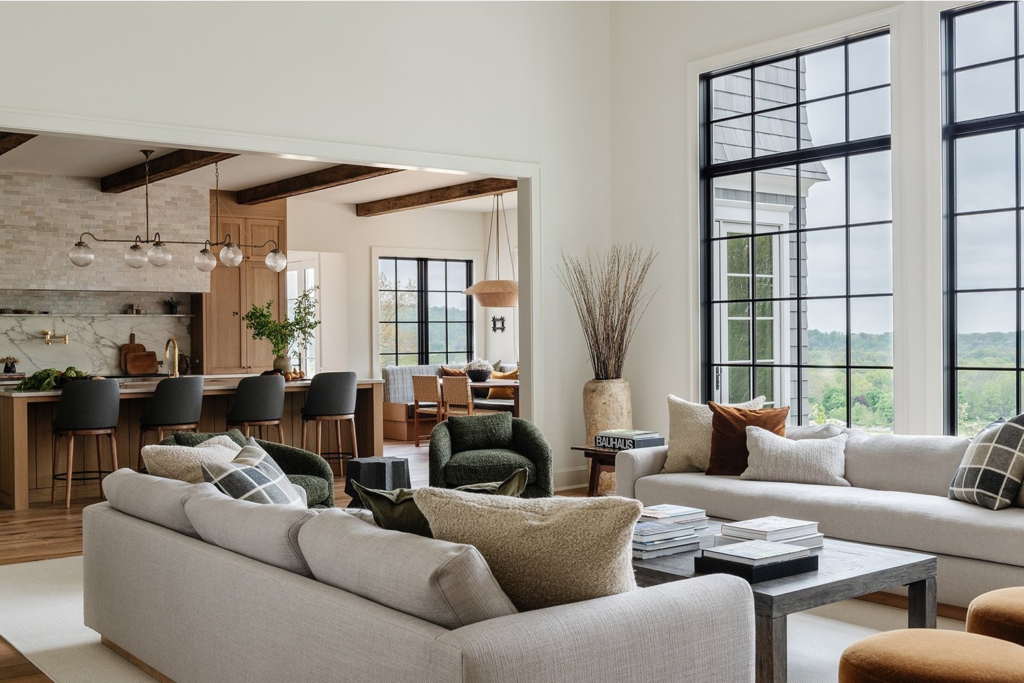
Beige is losing its grip. After half a decade of quiet luxury telling us that good taste meant disappearing into oatmeal linen and unbleached everything, homeowners are starting to admit they miss having a personality on their walls. What’s replacing it isn’t a return to 2015 accent-wall chaos — it’s something designers are calling curated maximalism home decor, and it’s less about volume than it is about conviction.
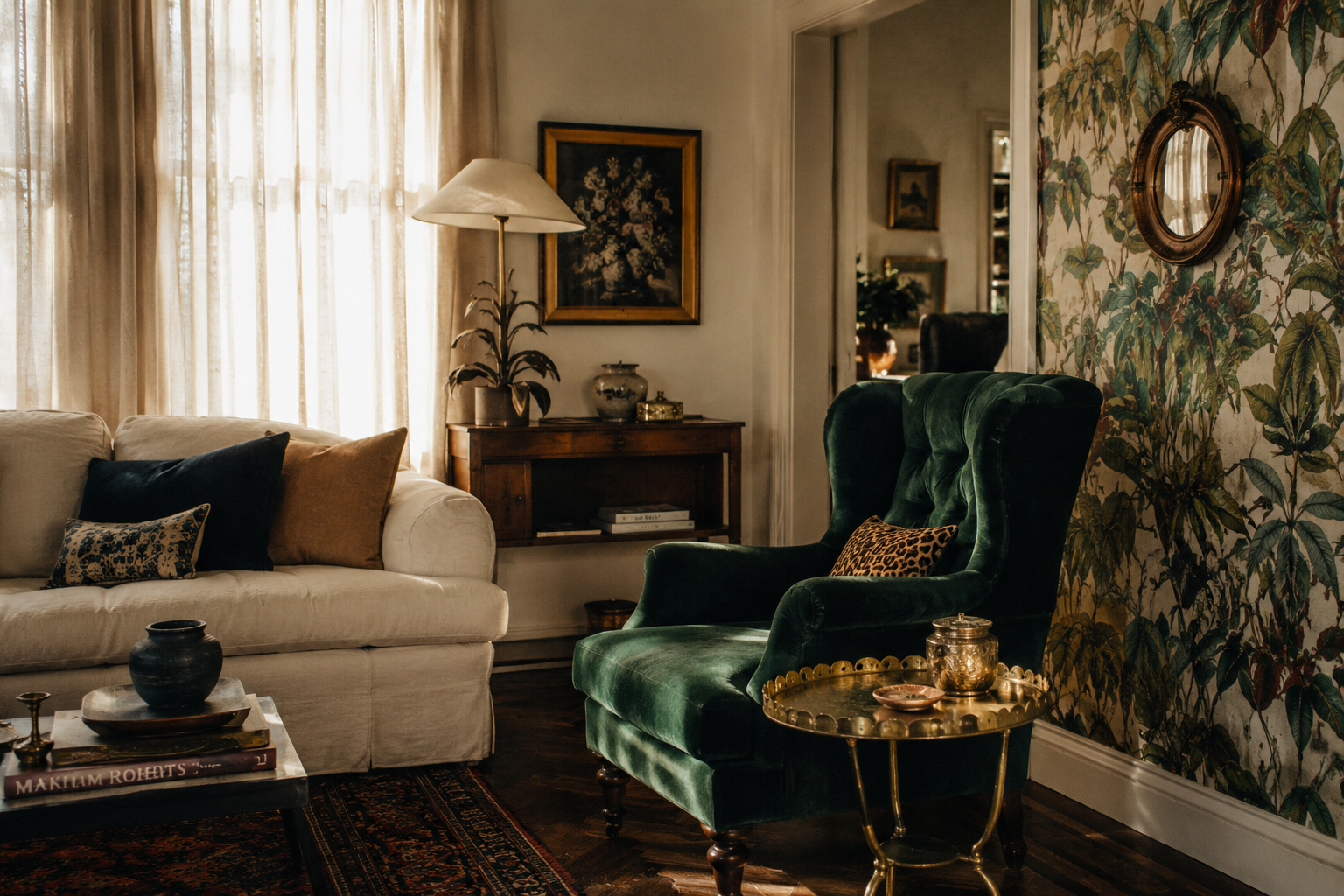
The distinction matters because maximalism has a branding problem. Say the word and most people picture cluttered shelves and clashing prints, a room that looks like it’s trying too hard. Found luxury — the term a handful of design editors have started using this year — is the opposite instinct. It’s a jewel-toned wing chair next to a plain linen sofa. It’s your grandmother’s brass candlesticks on a concrete console. It’s color and pattern and history, chosen with the same discipline that quiet luxury applied to restraint. Nothing in the room is an accident. That’s the part that took years to learn and the part most people skip when they try to copy the look from a single Pinterest board.
What actually separates a curated maximalist room from a cluttered one comes down to three things a good decorator will tell you and a bad one won’t: a controlled color story, a mix of eras rather than a mix of everything, and negative space that’s just as intentional as the objects filling the rest of the room. A room with twelve different patterns can still read as calm if seven of them share a single undertone — terracotta, forest green, aged brass — and if the floor and ceiling are left quiet enough to let the eye rest. Strip out the breathing room and the same exact furniture reads as chaos. It’s the same math as a well-edited wardrobe: more pieces, tighter rules.
Color is where this trend earns its name. Where quiet luxury lived almost exclusively in the neutral family — greige, oat, bone — found luxury pulls from richer registers: aged burgundy, bottle green, ochre, ink blue. These aren’t accent colors slipped in through a throw pillow. They’re structural — a painted built-in, an upholstered headboard, a lacquered door. The trick that keeps it from looking dated is restraint in application rather than restraint in color choice. One deep, saturated hue used with confidence across a large surface reads as intentional. Three timid pops of color scattered across small accessories reads as indecisive.
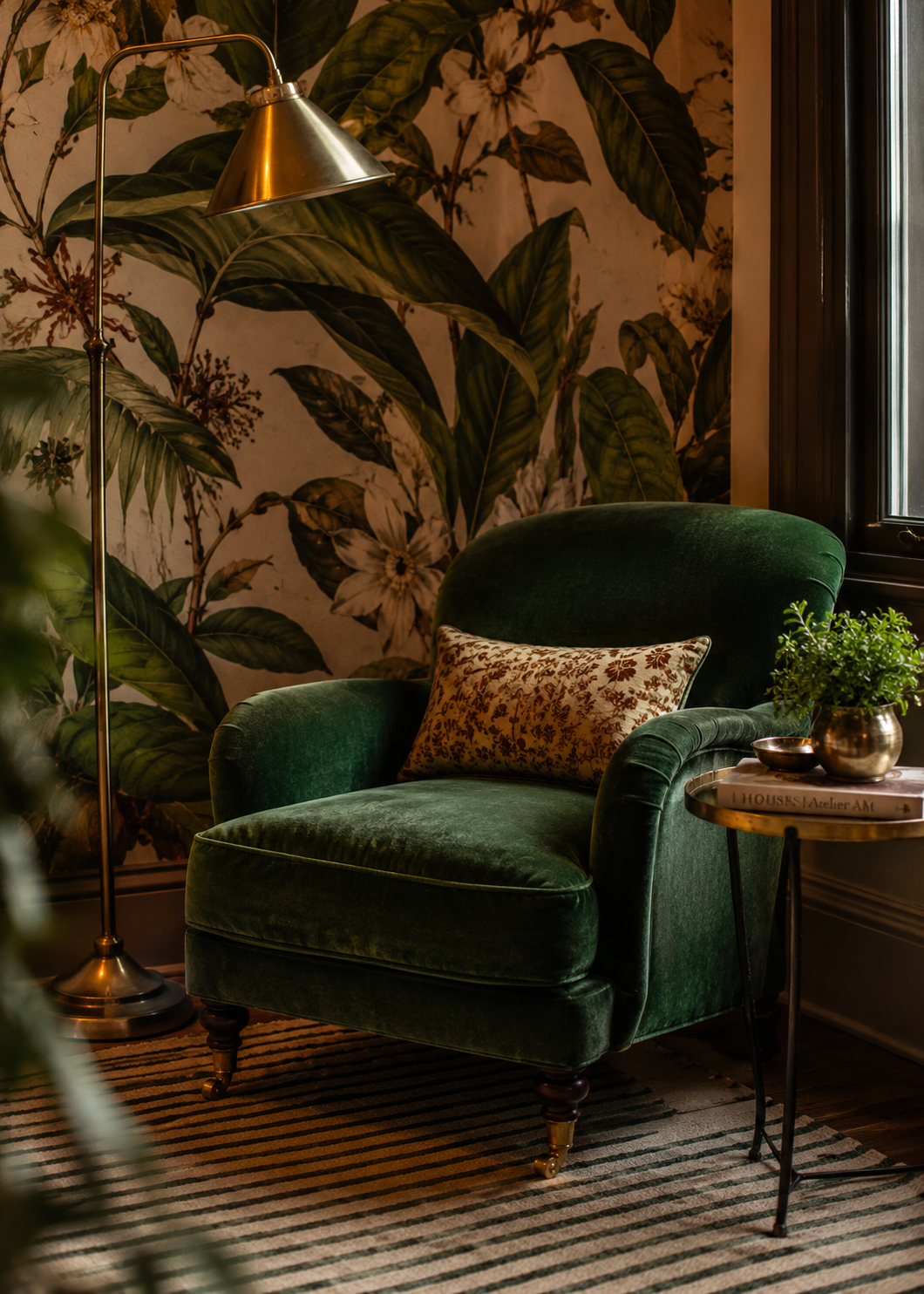
Pattern behaves the same way. The rooms that make this trend work almost always mix a large-scale pattern with a small-scale one and let a solid color sit between them as a buffer — a botanical wallpaper, a striped rug, and a plain velvet sofa in the same tonal family, for instance. What most people miss is that the buffer matters more than either pattern. Skip it and even two beautiful patterns will fight. Include it and you can get away with far more pattern than seems reasonable on paper.
Then there’s the object mix, which is really where “found” earns its place in the name. This isn’t a trend built on buying a full matching collection from one retailer. It leans on flea market brass, an inherited mirror, a vintage rug bought secondhand and re-bound, alongside newer, better-made investment pieces — a good sofa, a well-built dining table. The mix of old and new, cheap and expensive, is what keeps a maximalist room from reading as a showroom. A space where every object was purchased in the same six-month window, from the same three stores, almost always looks less expensive than a room that’s been genuinely lived in and added to over years.
For anyone testing this in a rental or a starter home, the entry point doesn’t have to be a full room. Start with one wall or one surface where you’re willing to commit to real color or pattern — a painted powder room, a wallpapered reading nook, a single deeply upholstered chair — and keep everything around it quiet. That’s the found luxury formula in miniature: one confident move, supported by restraint everywhere else. It’s a far more forgiving way to test a maximalist instinct than repainting an entire open-concept main floor on a hunch.
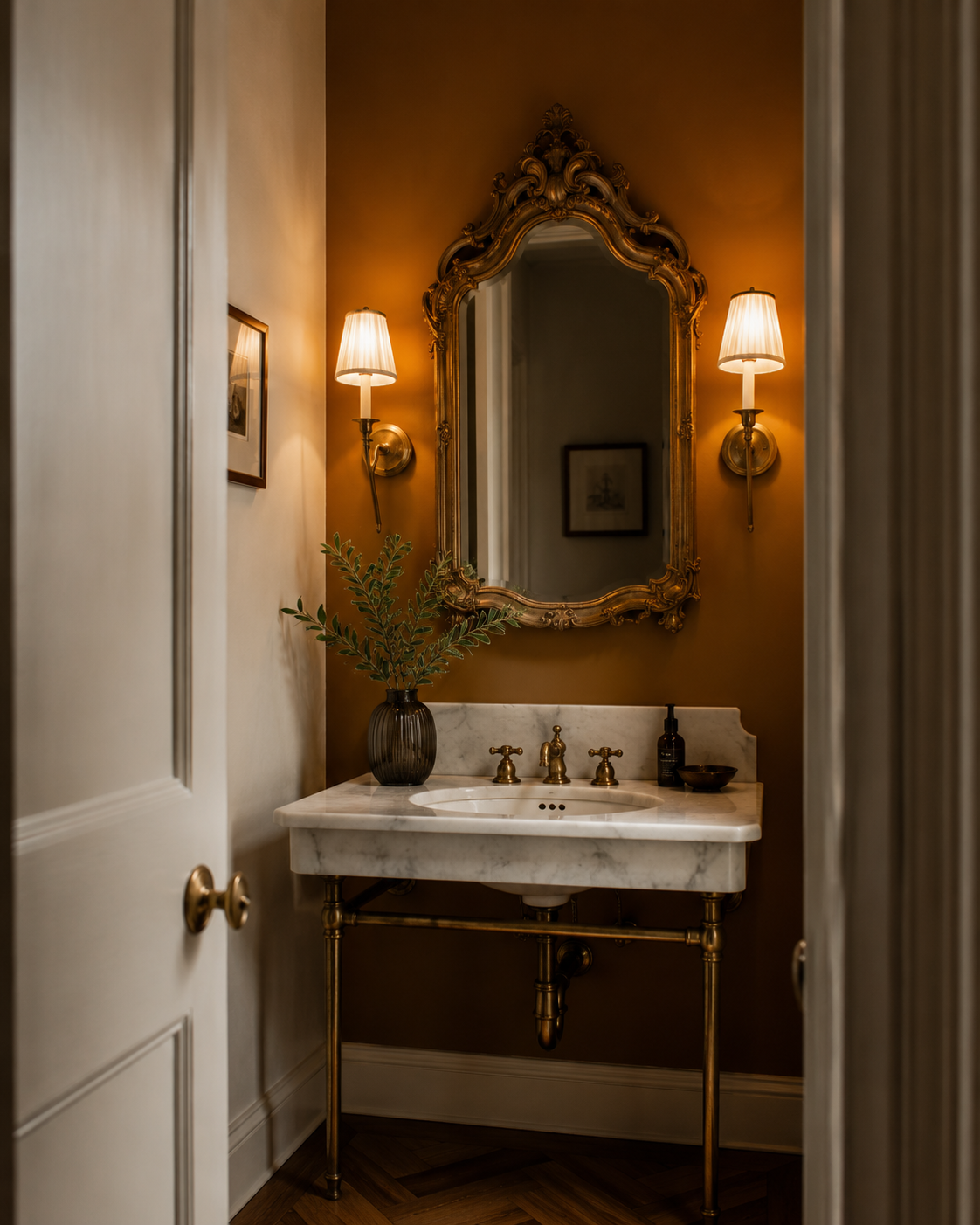
The irony of curated maximalism home decor replacing quiet luxury is that it isn’t actually a rejection of the last five years — it’s an evolution of the same underlying value. Quiet luxury was never really about beige. It was about intention — the same case for timeless design over trend-chasing, about nothing in the room being there by accident. Found luxury just extended that same discipline to color, pattern, and history instead of asking everything to disappear. The rooms that get this right don’t look louder than the quiet luxury rooms that came before them. They just look more like someone actually lives there.
A house is never perfectly finished, and that is exactly what makes it a home.
— NestDigest