
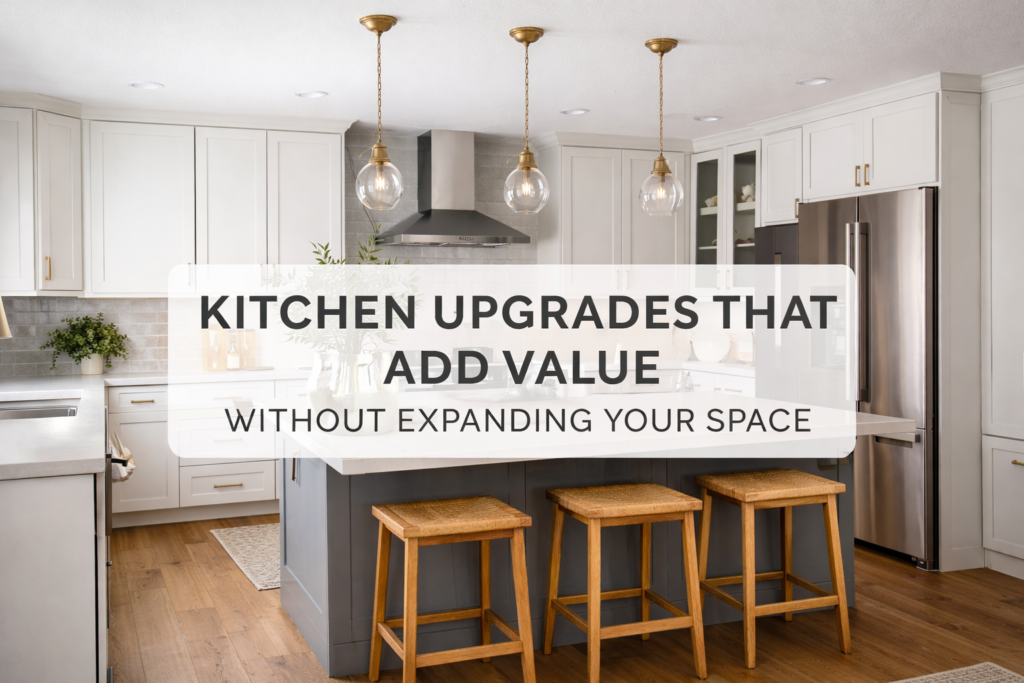

Why Layout Matters More Than Size
It’s easy to assume that a bigger kitchen automatically translates to better functionality and higher value. But in practice, the opposite is often true. Some of the most frustrating kitchens I’ve encountered were large but poorly planned, while some of the most impressive were compact yet exceptionally efficient.
The real differentiator is not square footage—it’s how intelligently that space is used.
A well-designed kitchen operates almost intuitively. You don’t think about where things are or how to move between tasks—it simply flows. This is achieved by organizing the kitchen into functional zones: preparation, cooking, cleaning, and storage. When these zones are thoughtfully arranged, movement becomes effortless, and even a small kitchen feels generous.
From a resale standpoint, this matters more than most homeowners realize. Buyers rarely measure a kitchen—they experience it. They notice whether it feels cramped or comfortable, cluttered or clean, dim or inviting. That experience is what drives perceived value.
This is why kitchen upgrades that add value without expanding your space are so effective. Instead of investing in structural changes, you’re improving how the space performs on a daily basis—something both you and future buyers benefit from immediately.
High-Impact Upgrades That Truly Add Value
Cabinets: More Than Just a Visual Feature
Cabinets are often treated as a purely aesthetic decision, but in reality, they are the backbone of your kitchen’s functionality. They dictate how you store items, how easily you access them, and how visually cohesive the space feels.
One of the most common mistakes homeowners make is assuming that cabinets must be completely replaced to make an impact. In many cases, that’s unnecessary. If the cabinet boxes are structurally sound, refacing or repainting them can deliver a transformation that feels just as dramatic.
However, what truly separates a standard upgrade from an expert-level one is what happens inside the cabinets.
Deep shelves, for example, are notoriously inefficient. Items get pushed to the back and forgotten, forcing you to constantly rearrange just to access everyday essentials. By converting these shelves into pull-out drawers, you fundamentally change how the kitchen functions. Everything becomes visible, accessible, and easier to manage.
Similarly, incorporating vertical dividers for trays or cutting boards eliminates stacking, which not only improves organization but also reduces wear and tear. Hidden waste and recycling pull-outs create a cleaner visual environment, while corner solutions—often overlooked—turn previously awkward spaces into usable storage.
From a design perspective, cabinet upgrades are one of the most effective ways to implement kitchen upgrades that add value without expanding your space, because they simultaneously enhance both form and function.
Lighting: The Element That Changes Everything
Lighting is one of the most underestimated aspects of kitchen design, yet it has a profound impact on how a space is perceived and used.
A poorly lit kitchen feels smaller, less inviting, and more difficult to work in. Shadows on countertops make food preparation frustrating, while overly harsh lighting can make the space feel clinical rather than comfortable.
The key is to think of lighting not as a single fixture, but as a layered system.
Ambient lighting provides overall illumination, ensuring the space is evenly lit. Task lighting, particularly under-cabinet lighting, is essential for functionality. It directly illuminates work surfaces, making everyday tasks safer and more efficient. Accent lighting, such as pendant fixtures or subtle toe-kick lighting, adds depth and visual interest, elevating the overall design.
What many homeowners don’t realize is that lighting also plays a psychological role. Warm, consistent lighting makes a kitchen feel more welcoming and lived-in, while inconsistent or overly cool lighting can create visual discomfort.
When done correctly, lighting can make a kitchen feel larger without changing a single dimension. It’s one of the simplest yet most powerful ways to execute kitchen upgrades that add value without expanding your space.
Storage: The True Advantage of a Well-Designed Kitchen
In smaller kitchens, storage is not just about capacity—it’s about efficiency.
A kitchen with abundant but poorly designed storage can feel just as limiting as one with too little. On the other hand, a kitchen with thoughtfully planned storage can feel surprisingly spacious.
The goal is to ensure that every inch of available space is working for you.
Vertical space is often underutilized. Extending cabinetry to the ceiling not only increases storage but also creates a cleaner, more streamlined look. It eliminates the dust-collecting gap above cabinets and draws the eye upward, subtly enhancing the perception of height.
Inside the cabinets, organization is key. Drawer dividers, pull-out systems, and dedicated compartments reduce clutter and make it easier to maintain order over time. When everything has a place, the kitchen naturally stays cleaner, which contributes significantly to how large and functional it feels.
Ultimately, effective storage design is one of the defining features of high-performing kitchens—and a cornerstone of kitchen upgrades that add value without expanding your space.
Budget Tiers: How to Allocate Your Investment Strategically
Understanding how to allocate your budget is just as important as the upgrades themselves. The same amount of money can deliver vastly different results depending on how it’s used.
At the lower end, around $1,000, the focus should be on surface-level improvements that enhance visual appeal. A fresh coat of paint on cabinets, updated hardware, and improved lighting can significantly modernize the space. While these changes are relatively simple, they have a disproportionate impact on first impressions.
In the mid-range, around $5,000, you begin to address both aesthetics and functionality. This is where cabinet refacing, upgraded countertops, and a proper backsplash come into play. These elements work together to create a cohesive and polished look, while also improving durability and usability.
At the higher end, around $20,000, you have the opportunity to make more substantial changes without altering the kitchen’s footprint. Semi-custom cabinetry, high-quality countertops, and upgraded appliances can bring the space close to a full renovation. The key at this level is to balance quality with practicality—ensuring that your choices align with the overall value of your home.
Across all budget tiers, the guiding principle remains the same: invest in upgrades that improve how the kitchen functions, not just how it looks.
ROI Breakdown: Understanding Where Value Is Created
Not all kitchen upgrades deliver the same return on investment, and understanding this is crucial for making informed decisions.
Cabinet upgrades tend to offer one of the highest returns because they impact both aesthetics and functionality. Countertops also perform well, particularly when upgrading to durable, visually appealing materials like quartz.
Lighting, while often overlooked, provides a strong return by enhancing both usability and ambiance. Storage improvements are slightly different—they may not always show up directly in ROI percentages, but they significantly influence buyer perception and day-to-day satisfaction.
What’s important to recognize is that targeted upgrades often outperform full renovations in terms of efficiency. By focusing on key elements that drive both usability and visual appeal, you can achieve a high-value outcome without overspending.
This is precisely why kitchen upgrades that add value without expanding your space are such an effective strategy—they maximize impact while minimizing unnecessary cost.
DIY vs Professional Upgrades: Making the Right Call
There’s a growing appeal to DIY projects, and in many cases, they can be both cost-effective and rewarding. However, knowing where to draw the line is essential.
Tasks like painting cabinets or replacing hardware are relatively straightforward, provided they are done with proper preparation and attention to detail. These projects can deliver excellent results when executed carefully.
On the other hand, more complex upgrades—such as electrical work, countertop installation, or cabinetry modifications—require a level of precision and expertise that is difficult to achieve without professional experience. Mistakes in these areas can be costly, not only in terms of repairs but also in reduced resale value.
A useful guideline is to consider the long-term impact of the upgrade. If it affects safety, structural integrity, or durability, it’s worth investing in professional execution.
Common Mistakes That Undermine Kitchen Value
Even with a well-intentioned plan, certain mistakes can significantly reduce the effectiveness of your upgrades.
One of the most common issues is prioritizing aesthetics over functionality. A kitchen may look beautiful in photos but feel frustrating to use if the layout is inefficient.
Another frequent mistake is over-customization. While it’s natural to want a space that reflects personal taste, highly specific design choices can limit broader appeal, particularly when it comes time to sell.
Lighting is another area where errors are common. Relying on a single overhead fixture creates uneven illumination and diminishes both usability and atmosphere.
Finally, a lack of cohesion—whether in materials, finishes, or color palette—can make a kitchen feel disjointed and smaller than it actually is.
Avoiding these pitfalls is just as important as choosing the right upgrades.
Designer’s Perspective
Before moving forward with any renovation, it’s helpful to step back and evaluate your plan holistically.
Consider whether your upgrades genuinely improve how the kitchen functions. Think about whether the design feels cohesive and timeless, rather than trend-driven. Reflect on whether your investment aligns with the overall value of your home.
Most importantly, ask yourself whether the changes you’re making will enhance your daily experience in the space.
Because at the end of the day, the most successful kitchens are not defined by their size—they are defined by how well they serve the people who use them.
Final Thoughts
When approached thoughtfully, kitchen upgrades that add value without expanding your space can deliver results that rival full-scale renovations.
By focusing on layout, cabinetry, lighting, and storage, you’re not just improving the appearance of your kitchen—you’re elevating its performance. And in both design and real estate, performance is what ultimately drives value.
A smaller kitchen, when designed with intention and expertise, doesn’t feel limiting. It feels efficient, refined, and complete.