Smart home upgrade ideas do not always come in boxes from a furniture store. Sometimes the most powerful changes you can make to a room cost almost nothing — and pay back more than you spent. Whether you are preparing a home to sell, trying to love the space you already live in, or simply tired of walking into rooms that feel flat and unfinished, this guide covers five practical strategies that deliver real results without a full renovation.
These ideas sit alongside the bigger seasonal design shifts covered in our guide to Spring Room Design Ideas for 2026 — a full look at how to refresh your home this season with intention and style. Think of this article as the deeper dive into five specific moves that carry real weight both in terms of how a room feels day-to-day and how it holds up as an asset.
Each section below covers one upgrade, why it works, how to do it well, and what kind of return you can realistically expect — whether that return is measured in daily quality of life or in dollars added to your home's perceived value.
1. Make Books Part of the Design — Not Background Clutter
There is a reason every well-photographed interior you have ever admired contains books. Not because the people who live there happen to read — though they might — but because books are one of the few household objects that carry visual weight, personal character, and layered texture simultaneously. The problem is most homes treat books as overflow storage rather than deliberate décor.
Stacked sideways on a shelf with spines pointed inward, or shoved into a corner bookcase without arrangement, books become visual noise. Treated with the same intention you would give a piece of artwork, they become the room's personality.
How to do it well
Start by pulling every book off your shelves and sorting them by colour. You do not need to keep them in that order permanently — this is just a way to see what you are working with. Group warm tones together, then cool tones, then neutrals. When you return books to shelves, arrange by colour family rather than by author or genre. The result reads as a designed installation rather than a dumping ground.
Mix in objects between book stacks — a small ceramic vase, a candle, a piece of driftwood, a framed photograph turned face-out. Vary the height by stacking some books horizontally to create small platforms. Leave deliberate gaps. Empty space on a shelf is not wasted space; it is breathing room that makes the rest of the arrangement look considered.
For rooms where shelf space is limited, books stacked on a coffee table or side table in groups of three or four create the same effect at floor level. A tall hardcover book under a lamp makes it look intentional. Two or three books beneath a tray or a candle become part of a vignette.
The ROI case
Home staging research consistently shows that personalised, curated rooms — ones that feel inhabited by a specific, thoughtful person — generate stronger buyer interest than sterile spaces. Books are among the cheapest and most effective tools for creating that feeling. A styled bookshelf photograph in a listing tends to perform better in engagement metrics than an empty wall or a generic print. For the homeowner not selling, the return is daily: a room that feels like yours rather than a showroom.
2. Add Comfort Through Texture — Not More Stuff
One of the most common mistakes in home decorating is solving a room that feels empty or cold by adding more objects. A new lamp, another cushion, a decorative bowl — none of these will fix a room that lacks sensory depth. What an under-whelming room usually needs is not more things, but more texture.
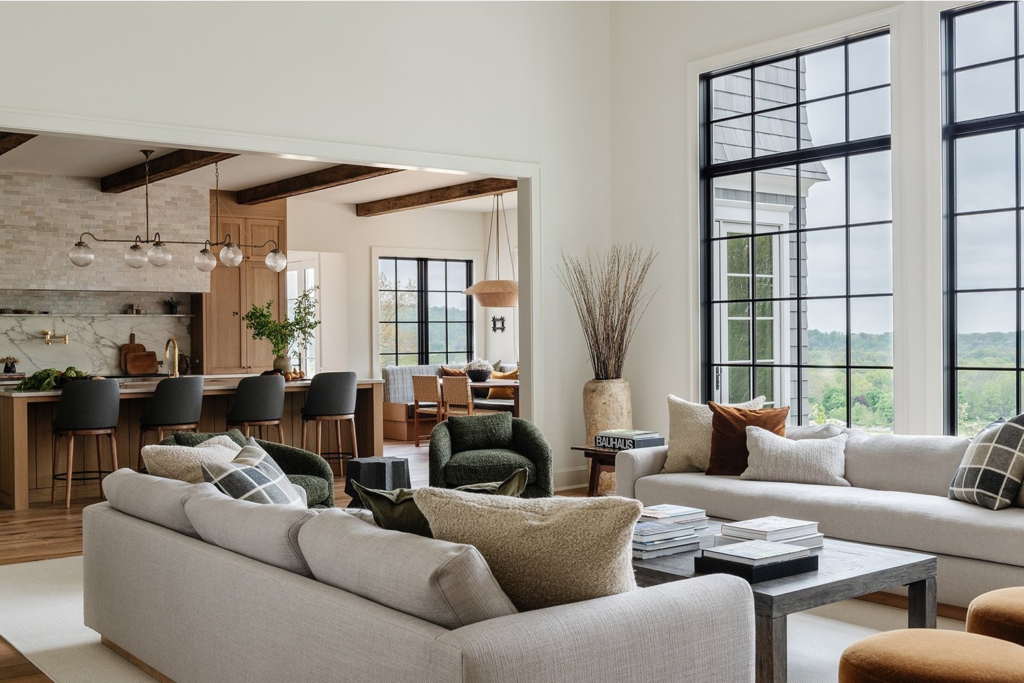
Texture is what makes a room feel warm when you walk in, even before you sit down. It is the difference between a sofa that looks inviting and one that looks like it belongs in a waiting room. It is why a rug transforms a space in a way that another piece of furniture rarely does. And it is one of the most accessible smart home upgrade ideas available, because textural layering is largely about what you choose rather than how much you spend.
How to do it well
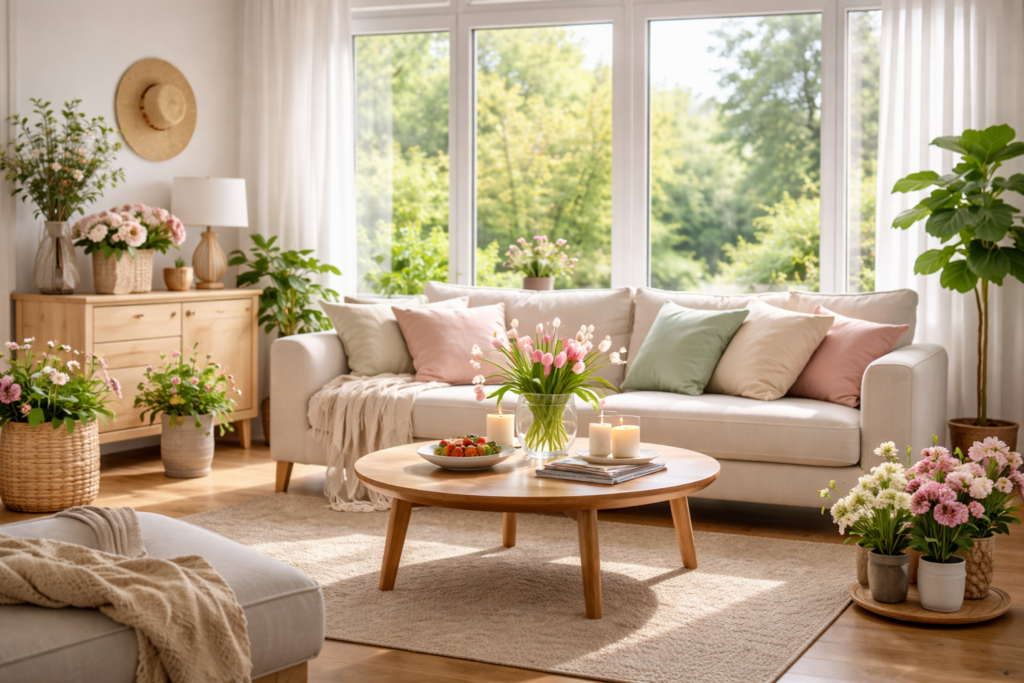
The goal is to achieve at least three distinct textures in any given zone of a room. In a seating area, that might mean a linen sofa, a chunky knit throw, and a jute or wool rug. In a bedroom, it might be a matte cotton duvet, a velvet cushion, and a textured bedside lamp base in rattan or ceramic.
The textures do not need to match — in fact, contrast is the point. Smooth leather next to a rough-weave cushion. A polished marble tray on a nubby bouclé ottoman. The interplay of surfaces is what creates that layered, lived-in quality that feels both high-end and comfortable at once.
Colour matters here too. Keep your textural layering within a restricted palette — two to three tones at most — so the variety of surfaces reads as richness rather than chaos. Warm neutrals (linen, oat, terracotta, warm grey) are particularly effective in 2026 because they complement the earth-toned design direction that has replaced cooler, more clinical palettes.
The ROI case
Staging professionals and interior designers working in real estate routinely cite textural layering as one of the highest-ROI additions to a home before sale. It photographs exceptionally well, making online listings more compelling. It also appeals directly to buyers' emotional responses — a textured room feels like a home rather than a property. For those not selling, the investment is in daily comfort: rooms that feel good to be in reduce fatigue and improve the experience of living in a home.
3. Reconsider Carpet as a Comfort Feature
For at least a decade, hard flooring was the default answer. Wood, LVT, polished concrete — the assumption was that hard floors meant modern, easy to clean, and desirable. Carpet was treated as the design choice you made reluctantly, or the one the previous owner left behind that you were planning to replace.
That has shifted. In 2026, carpet is back in earnest — and the designers leading its return are positioning it not as a fallback but as a deliberate comfort upgrade with specific acoustic, thermal, and aesthetic benefits that hard floors simply cannot match.
Why carpet works
In bedrooms especially, carpet delivers something no rug on a hard floor fully replicates: full underfoot warmth from the moment you get out of bed to the moment you reach the door. That tactile experience — feet on soft, warm, cushioned surface — contributes significantly to how a room feels as a rest space. In family homes with children, carpet in living rooms reduces noise transmission between floors and softens impact, both literal and sonic.
The new generation of carpet options makes it far more appealing than the beige loop-pile of previous decades. Textured loop weaves in warm earthy tones — clay, sage, warm charcoal, cream — work with contemporary palettes rather than against them. Performance fibres mean modern carpet handles spills and wear better than older products while still feeling plush underfoot.
How to approach it
If a full carpet installation is beyond your current budget, start with an oversized area rug in a bedroom or living room that covers most of the floor area. The effect is similar in terms of warmth and visual softness. When choosing a rug or carpet, go larger than you think you need — rugs that are too small are one of the most common décor mistakes, and they make rooms feel smaller rather than larger.
For those considering carpet as one of their smart home upgrade ideas before a sale, focus on bedrooms rather than living areas. Buyers frequently respond well to carpeted bedrooms when the carpet is clean, well-fitted, and in a neutral tone. It signals comfort and care rather than compromise.
The ROI case
Installing quality carpet in a master bedroom typically costs far less than replacing flooring across an entire home. Yet the comfort dividend is immediate and significant. For resale, a clean, well-chosen bedroom carpet in a neutral tone is increasingly an asset rather than a liability — particularly as the design narrative around carpet shifts toward the intentional and premium.
4. Build Multifunction Into the Room Early
The most valuable rooms in a modern home are the ones that work harder than their label suggests. A living room that also functions as a reading library and occasional home office. A spare bedroom that doubles as a creative studio. A kitchen dining area that transitions smoothly into a casual workspace. This kind of layered functionality does not happen by accident — it has to be planned, and the earlier in a room's design you address it, the more elegantly it integrates.
Multifunction room design has become one of the defining smart home upgrade ideas of 2026, driven by the reality that most households now need more from their spaces than a single-use room can deliver. Hybrid working, home learning, creative hobbies, and the simple desire for a home that supports a full life rather than just eating and sleeping have all pushed flexibility to the top of the priority list.
How to do it well
The key principle is to build in the function without advertising it. A desk tucked into an alcove behind a bookcase reads as a library nook; the fact that it also serves as a work-from-home station is secondary. A storage ottoman in a living room is a coffee table, extra seating, and a storage solution simultaneously — but it looks like one piece of furniture.
Consider zones rather than rooms. A large open-plan living space can contain a reading zone (armchair, side table, good directional light, a small bookcase), a social zone (sofa, coffee table, softer ambient light), and a work zone (compact desk, storage above, a chair that works for both tasks) — all within the same room, delineated by rugs, lighting, and furniture arrangement rather than walls.
When choosing furniture for a multifunction approach, prioritise pieces that serve at least two roles. Lift-top coffee tables. Daybed sofas. Fold-down desks on wall-mounted units. Dining tables that extend. The cost of one well-chosen piece that does two jobs is almost always lower than the cost of two separate pieces, and the room feels less cluttered as a result.
The ROI case
Flexible, multifunction rooms consistently rank as highly desirable features among homebuyers across all market segments. A room that clearly demonstrates multiple uses helps buyers imagine their life in the home — which is one of the most powerful factors in purchase decisions. From a daily-use perspective, the return is even clearer: a home that supports everything you need to do, without requiring you to move to a different location to do it, is simply a better home to live in.
5. Refresh the Room by Editing What You Already Have
This is the home upgrade that costs nothing, takes an afternoon, and consistently produces the most dramatic before-and-after results. It is also the one most homeowners skip, because it requires a different kind of effort — not the effort of shopping, but the effort of making decisions about what stays and what goes.
Editing a room means looking at everything currently in it and asking, with genuine honesty: does this object serve the room? Does it add to the feeling you want this space to have? Or is it here because it has always been here, because you have not gotten around to moving it, or because it was a gift and you feel obligated to display it?
How to do it well
Clear the room as much as practically possible. Remove everything you can from surfaces — shelves, tables, windowsills, the top of cabinets. Then look at the room empty. Notice what the architecture actually offers: the quality of light, the proportions of the space, any features worth highlighting. This is the room you are working with.
Return objects one by one, and only return the ones that earn their place. Each object should either serve a functional purpose or contribute meaningfully to the aesthetic. If something does neither, it goes into a box. You do not need to throw it away immediately — store it out of sight for a month and see if you miss it.
Once you have edited down, rearrange what remains. Furniture placement has an enormous effect on how a room feels and flows. Pull sofas away from walls rather than pushing them back. Angle a chair slightly. Move a lamp from one corner to another. Small changes in arrangement can make a familiar room feel new without a single new purchase.
You can also rotate items between rooms. A print that has been sitting above a sofa for three years will look brand new above a bedroom dresser. A ceramic piece that gets lost on a crowded shelf becomes a statement on a cleared one. This kind of internal rotation is one of the most underused smart home upgrade ideas available — completely free, and endlessly effective.
The ROI case
For homeowners preparing to sell, decluttering and editing a room is the single highest-ROI activity recommended by virtually every staging professional and estate agent. It costs nothing and makes every other investment — in paint, in furniture, in décor — more visible and effective. For everyday living, a well-edited room is simply easier and more pleasant to inhabit. Visual clutter creates low-level cognitive load; removing it creates genuine mental ease.
Putting It All Together: Smart Upgrades That Work as a System
None of these five strategies exist in isolation. The most effective room refreshes use them together — books styled as part of a textural layering scheme, on shelves in a room designed for multiple uses, in a space that has been edited down to what genuinely matters. Each approach reinforces the others, and together they create rooms that feel both elevated and authentic.
If you are looking for the broader seasonal context — colour direction, furniture choices, the full scope of what makes a room feel current and considered in 2026 — our Spring Room Design Ideas for 2026 guide covers the landscape in full. Use this article alongside it as your practical toolkit: the specific moves you can make this week, in the rooms you already have, that will change how those spaces look and feel for months to come.
The best smart home upgrade ideas are the ones that respect both your budget and your time. These five do exactly that — whether your goal is a more beautiful home to live in today, a more valuable one to sell tomorrow, or simply a space that finally feels like it reflects the person you actually are.
Frequently Asked Questions
What are the best smart home upgrade ideas that don't require a big budget?
The most effective budget-friendly upgrades include styling books as intentional décor, layering textures through throws, cushions, and rugs, reintroducing carpet in comfort-focused rooms, building multifunction zones into existing space, and editing what you already own rather than buying more. These approaches cost little but deliver substantial changes in how a room looks, feels, and is perceived by others.
How do books add value to interior design?
Books add personality, warmth, and a curated quality that manufactured décor cannot replicate. Grouped by colour, arranged in stacks, or used as shelf-styling props alongside ceramics and plants, they signal taste and intentionality. Interior designers regularly use books as low-cost, high-impact elements that raise the perceived value of a room significantly.
Does adding texture to a room increase home value?
Yes. Textural layering — through linen, wool, bouclé, jute, or velvet — adds visual depth and perceived quality. Staging professionals and real estate agents consistently note that textured spaces photograph better and feel more premium to prospective buyers, contributing to stronger sale prices and faster offers.
Is carpet still a good idea in 2026?
Absolutely. Carpet is making a significant design comeback, particularly in bedrooms and living rooms where comfort and acoustic warmth matter. Modern options in earthy tones, textured loops, and sustainable fibres offer a practical and stylish alternative to hard floors, and consistently increase buyer appeal in family homes.
What does multifunction room design mean and why does it matter?
Multifunction room design means planning a space to serve more than one purpose — a living room that also works as a home office or reading library, for example. It matters because buyers and homeowners place a premium on flexible living, especially in smaller homes. Designing dual or triple purpose into a room from the start avoids expensive retrofitting later and increases both livability and resale value.
How do I refresh a room without buying anything new?
The most effective approach is editing — removing objects that do not serve the room's purpose or aesthetic, then rearranging what remains with intention. Swap artwork between rooms, restyle shelves, change the furniture layout, and reassess your lighting. This process costs nothing but time and routinely produces dramatic transformations.
What home upgrades give the best return on investment?
The home upgrades with the strongest ROI include improving comfort through textural layering and carpet, adding curated personality through books and art, building functional flexibility into room design, and decluttering and editing existing spaces. These low-cost improvements consistently outperform expensive structural renovations when it comes to buyer perception and home value.