
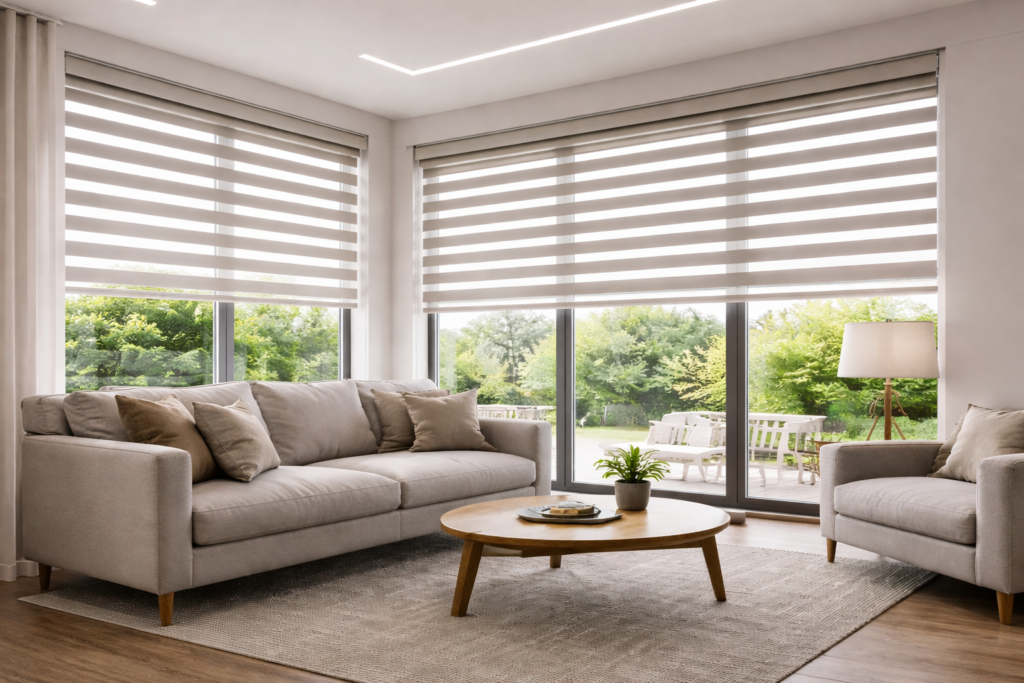
Buying your first home or condo is exciting. But when it comes to window treatments, many new homeowners feel overwhelmed by the options. Should you choose zebra blinds, roller shades, or curtains? What about motorization? And why does everyone keep talking about sizing?
This guide will walk you through everything you need to know about window blinds, from measurement basics to automation options, so you can make confident decisions for your home.
Windows Come First: Why Size Dictates Everything
Here’s something most first-time buyers don’t realize: the size of your window is the single most important factor when choosing blinds and shades for homes.
Why? Because undersized window treatments create three major problems that no amount of style or quality can fix.
First, you’ll get light gaps. When blinds or shades don’t extend far enough beyond the window frame, light streams in around the edges. This ruins your privacy and makes it nearly impossible to sleep in on weekend mornings or during bright summer evenings.
Second, your privacy suffers. Those same gaps that let light in also let people see in, especially at night when your lights are on. This is particularly concerning for ground-floor condos or homes close to sidewalks.
Third, undersized window coverings simply look unfinished. Even premium zebra blinds Canada will look cheap and poorly installed if they don’t properly cover your windows.
The solution is simple but critical: for large windows, your blinds should extend approximately 4.5 cm on each side of the window frame. This overlap eliminates light gaps, improves privacy, and creates a polished, intentional appearance. Professional installers know this, but many homeowners trying to save money with DIY installation miss this crucial detail.
When you’re shopping for window treatments for homes, always start by measuring your windows accurately. Everything else—fabric choice, color, automation—comes after you’ve nailed the sizing.
Fabric Isn’t Just About Color: Plain vs Woven Explained
Walk into any showroom and you’ll be drawn to the gorgeous textured and woven fabrics. They look beautiful, sophisticated, and expensive. But there’s something sales representatives don’t always emphasize: woven fabrics create significantly more operational noise than plain sheet fabrics.
Plain fabrics are smooth, single-layer materials that roll up and down quietly. They’re what you’ll find in most modern roller shades Canada and many contemporary zebra blinds. When you operate them—whether manually or with a motor—they glide almost silently.
Woven fabrics, on the other hand, have texture and depth. They might have a linen look, a subtle pattern, or a dimensional weave. They’re undeniably attractive, but every time they move, the woven threads create friction and noise. It’s not deafening, but it’s noticeable, especially in quiet spaces.
For bedrooms, this matters enormously. The last thing you want is a loud grinding sound when you’re opening your blinds in the morning or closing them before bed. In condos with open-concept layouts, noisy window treatments can disrupt the entire living space.
Our recommendation: choose plain fabrics for bedrooms, living rooms, and condos where quiet operation matters. Save the woven fabrics for spaces where noise is less of a concern, or be prepared for the acoustic trade-off if aesthetics are your top priority.
The Hidden Parts That Matter: Cassette, Threads & Internal Mechanisms
Here’s where many homeowners make expensive mistakes. They focus on the fabric and color—the visible parts—while ignoring the components that actually determine how well their window treatments work over time.
Every blind and shade has internal mechanisms you don’t see: the cassette housing at the top, the roller that the fabric wraps around, the threads and gears that control movement, and for some systems, side channels that guide the fabric.
High-quality internal components mean smooth, quiet operation that lasts for years. Cheap components mean jerky movements, increased noise, premature wear, and eventual failure—often just after your warranty expires.
Think of it like a car. Two vehicles might look identical from the outside, but the one with a better engine and transmission will drive smoother and last longer. The same principle applies to window blinds Canada.
When you’re comparing quotes for custom blinds installation Canada, don’t just look at the bottom-line price. Ask about the cassette quality, the roller materials, and what kind of internal mechanisms they use. A company that can’t or won’t answer these questions clearly is probably cutting corners where you can’t see them.
This is especially important for motorized blinds Canada, where the motor has to work with the internal mechanisms. Poor-quality threads and rollers put extra strain on motors, reducing their lifespan and increasing the likelihood of malfunctions.
Zebra Blinds, Roller Shades or Curtains: Choosing What Works Best
Let’s break down your three main options for modern window coverings Canada.
Zebra blinds are the trendy choice right now, and for good reason. They feature alternating stripes of sheer and opaque fabric. By adjusting the alignment of these stripes, you can control light and privacy without fully opening or closing the blind. Want diffused natural light? Align the sheer stripes. Need complete privacy? Align the opaque stripes. They’re ideal for living rooms and bedrooms where you want flexibility throughout the day.
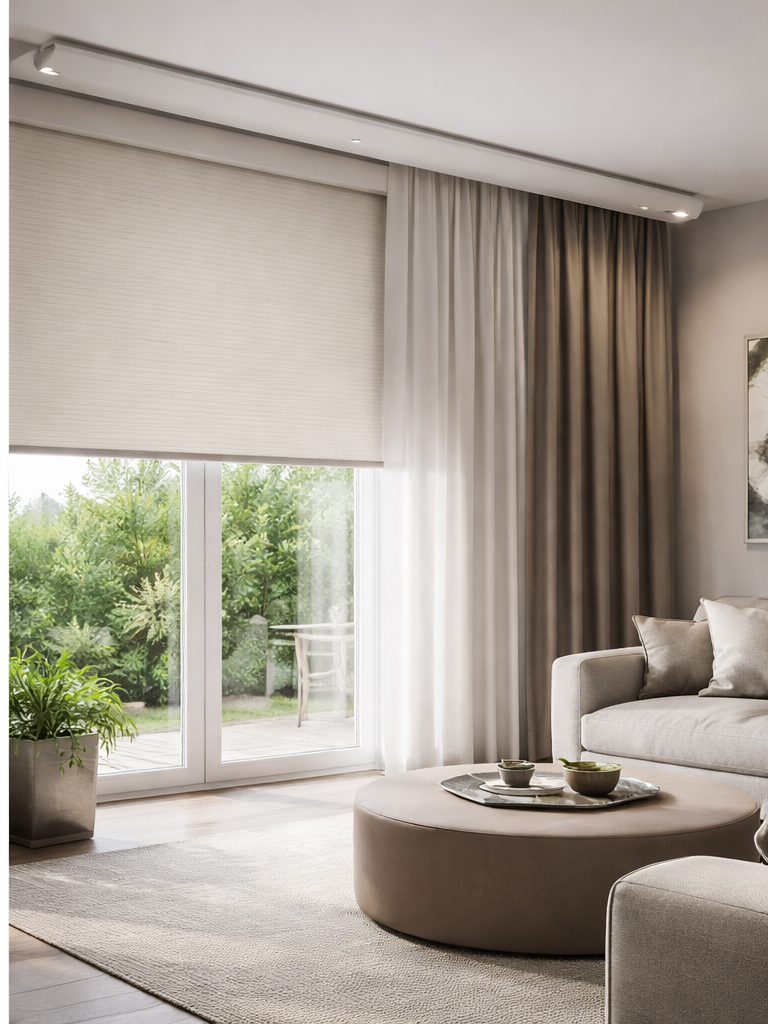
Roller shades are the minimalist option. A single sheet of fabric rolls up into a cassette at the top of your window. They’re clean, simple, and work well in modern spaces. The latest innovation in roller shades Canada is the dual-layer system, which gives you two fabrics on one cassette—typically one sheer and one blackout. This combination provides the same flexibility as zebra blinds but with an even sleeker profile. Dual-layer systems are particularly popular for condos where clean lines matter.
Curtains are the traditional choice that’s making a comeback, especially for large windows. Modern curtains for large windows aren’t your grandmother’s heavy drapes. Today’s automated curtains Canada use sleek tracks, premium fabrics, and smart motors to open and close smoothly at the touch of a button. They’re particularly effective for floor-to-ceiling windows or wide patio doors where blinds might look disproportionate.
For most homes, the decision comes down to window size and personal style. Zebra blinds and roller shades work beautifully for standard windows. Curtains shine when you’re dealing with expansive glass.
Large Windows Need Smart Solutions: Why Motorization Is Worth It
If you have large windows—anything wider than about 120 cm or taller than 180 cm—motorization isn’t just a luxury. It’s a practical necessity that will save you money in the long run.
Here’s why: large window treatments are heavy. When you operate them manually, you’re putting stress on every component with every single use. Over months and years, that repeated stress causes wear and tear. Fabrics begin to sag. Mechanisms start to stick. Components break down faster.
Motorized blinds Canada eliminate this problem entirely. The motor handles the weight smoothly and consistently, reducing mechanical stress and extending the lifespan of your investment. You’ll get years of additional use from motorized systems compared to manual ones on large windows.
Beyond longevity, there’s the daily convenience factor. Opening and closing large, heavy blinds manually is genuinely annoying. You have to use both hands, pull carefully to avoid jerking the mechanism, and hope nothing gets stuck. With motorization, you press a button or use your phone. That’s it.
If your budget allows, consider motorizing all your windows, not just the large ones. Having a consistent system throughout your home creates a premium experience. You can program schedules so your blinds open with sunrise and close at sunset. You can control everything from one app. And when guests visit, they’ll notice the seamless, modern functionality.
For curtains on large windows, we strongly recommend side-opening automated curtain tracks rather than center-opening systems. Side-opening tracks are more reliable, create cleaner stack-back when open, and generally require less maintenance.
Noise, Comfort & Daily Living in Homes
Homes need to be comfortable year-round, and noise plays a bigger role in comfort than most people realize.
Manual systems, especially those with woven fabrics and basic internal mechanisms, create sound every time you use them. The grinding of gears, the friction of fabric, the rattle of chains—it all adds up, especially in condos with hard surfaces that amplify sound.
Motorized systems with plain fabrics and quality internal components are dramatically quieter. The motor provides smooth, consistent power, and the plain fabric rolls without friction. For bedrooms and living spaces where peace matters, this difference is significant.
In shared living situations—whether you’re in a condo with close neighbors or a house where family members have different schedules—quiet window treatments make everyone’s life better. You can close your bedroom blinds at night without waking your partner. You can open your living room shades in the early morning without disturbing the entire household.
This is one of those quality-of-life factors that you don’t appreciate until you experience it. Once you’ve lived with quiet, smooth window treatments, going back to loud, jerky manual systems feels frustrating.
Warranty Matters in Canada: Choose Manufacturers Wisely
Not all warranties are created equal, and in the window treatments industry, warranty differences reveal which manufacturers stand behind their products.
Pay attention to two separate warranties: motor warranties and fabric warranties.
Motor warranties typically range from one year to lifetime coverage. Budget manufacturers offer minimal motor protection because they know their motors won’t last. Premium manufacturers offer five-year or lifetime motor warranties because their components are built to endure. This is your clearest signal of motor quality.
Fabric warranties cover fading, discoloration, and material breakdown. Quality fabrics should maintain their appearance for years without significant fading from sun exposure. A strong fabric warranty—typically three to five years—indicates the manufacturer uses UV-resistant materials and proper dyes.
If you’re investing in custom blinds installation Canada for your home, especially for multiple windows, prioritize manufacturers with comprehensive warranties and established presence. Local support matters when you need service. A great warranty from a company that has no dealers or service network is worthless when something goes wrong.
For higher-budget projects, the warranty is where you see the real return on your investment. Premium manufacturers deliver reliable after-sales support, quick replacement parts, and hassle-free warranty claims. Budget options might save you money upfront, but you’re on your own if problems arise.
Installation Is Not DIY: Why Professional Measurement Matters
YouTube makes window treatment installation look easy. It’s not.
Professional installation isn’t just about drilling holes and hanging hardware. It’s about understanding mounting depth—how much space you need behind the window for the cassette and side channels. It’s about ensuring perfect alignment so the fabric rolls straight without binding. It’s about sizing accuracy so you get that crucial 4.5 cm overlap on each side.
Even the highest-quality zebra blinds Canada will perform poorly if they’re installed incorrectly. Misaligned cassettes cause uneven rolling. Insufficient mounting depth creates operational problems. Inaccurate measurements lead to light gaps and poor coverage.
Professional installers bring specialized tools, years of experience, and importantly, accountability. If something doesn’t work right, they fix it. When you DIY and something goes wrong, you’re stuck troubleshooting problems you don’t fully understand.
For motorized systems, professional installation is even more critical. Electrical connections need to be safe and code-compliant. Motor programming requires technical knowledge. Troubleshooting malfunctions demands diagnostic expertise.
The cost of professional measurement and installation is typically a small percentage of your total window treatment investment—often 10 to 15 percent. It’s the best insurance policy you can buy for protecting the other 85 percent you’re spending on the products themselves.
Budget Smart, Not Cheap: How To Spend on Window Treatments
Here’s how to think about your budget for window treatments for homes.
Spend more on: Motors are worth the investment, especially for large windows. Premium motors last longer, operate quieter, and come with better warranties. Similarly, invest in quality internal mechanisms—the cassettes, rollers, and threads that determine long-term performance. Finally, fabric quality matters for both aesthetics and durability. Better fabrics resist fading and maintain their appearance through years of sun exposure.
Optimize costs on: You don’t need the most expensive fabric pattern or the most elaborate side channels. Simple, well-made components in classic colors often look better and age more gracefully than trendy options. For smaller windows where manual operation isn’t burdensome, you can skip motorization without sacrificing performance.
The biggest mistake homeowners make is choosing the cheapest option for every window to reduce upfront costs. This strategy backfires when you’re replacing failed components within two or three years, or living with noisy, poorly functioning window treatments that diminish your enjoyment of your home.
Instead, budget for quality where it matters—motors, mechanisms, and fabric—and simplify where it doesn’t. You’ll spend slightly more initially but save significantly over the lifespan of your window treatments while enjoying superior daily performance.
Make Your Windows Work for Your Life
Choosing window treatments doesn’t have to be overwhelming. Start with accurate sizing—remember that 4.5 cm overlap on large windows. Choose plain fabrics for quiet spaces and quality internal mechanisms for longevity. Consider motorization for large windows and anywhere you want effortless operation.
Most importantly, work with professionals who can measure accurately, explain your options clearly, and install everything correctly. Your windows are a significant part of your home’s comfort, privacy, and aesthetic appeal. They deserve the same care and attention you’d give to any other major home decision.
Whether you choose zebra blinds, modern roller shades, or automated curtains, the right window treatments will enhance your home for years to come. Take your time, ask questions, and invest in quality. Your future self will thank you every single day.