

The Bank of Canada Held Rates Again. The Trade War Underneath Is the Real Story for Buyers.
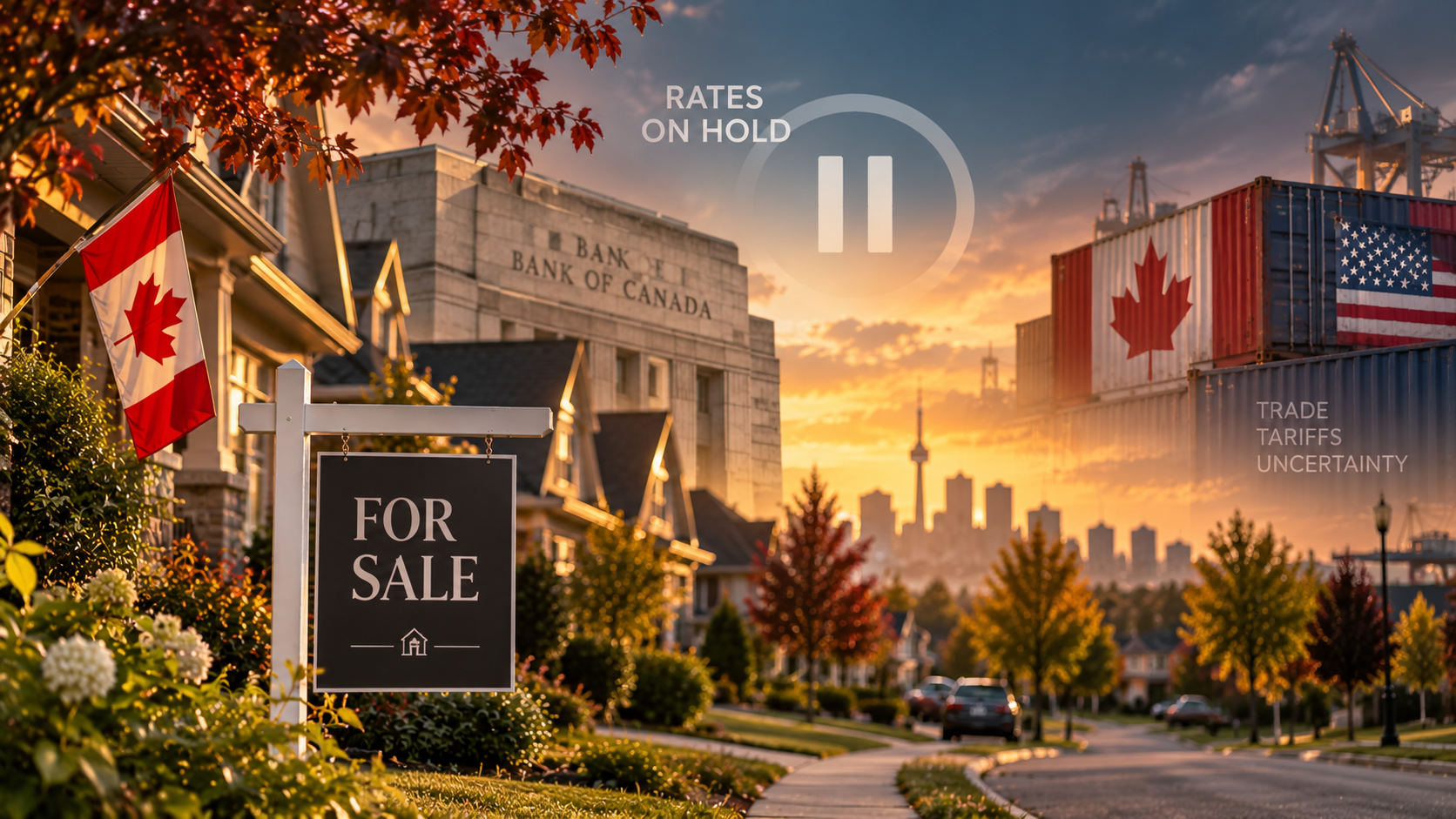
On Wednesday, the Bank of Canada did what it’s done six times before this year: nothing. The overnight rate stayed parked at 2.25%, a seventh consecutive hold, and on its own that would barely be news. What makes this Bank of Canada rate hold worth a second look is what’s sitting directly underneath it. A Canada-US trade war reignited nine days before the announcement. The Bank itself named it as the reason a cut is no longer the safe bet.
Here’s the sequence, because it matters for how you read the hold. On August 22, trade talks between Ottawa and Washington collapsed hours before a deadline. The US began enforcing 50% tariffs on roughly $20 billion of Canadian goods — lumber, steel, aluminum, alcohol, and a list that reaches into hockey equipment and cement. Prime Minister Mark Carney said Canada would match the tariffs “dollar for dollar.” On September 8, Canadian counter-tariffs take effect on $27.6 billion of US imports, concentrated in steel, dairy, appliances, agricultural equipment, pulp and paper, and electronics. Several of those categories sit directly in a homebuilder’s supply chain.
That’s the part most coverage of the rate hold skated past: the Bank didn’t hold because the economy is roaring. It held because it’s caught between two forces pulling in opposite directions, and it said so directly. Second-quarter GDP grew a strong 3.3%, unemployment eased to 6.4%, and by the numbers alone the case for a cut had quietly evaporated. But the Bank also flagged that the reintroduced tariffs, layered on top of energy prices kept elevated by the Middle East conflict, have pushed the risk to inflation upward — not downward. A trade war usually gives a central bank a growth-side reason to cut. This one is doing the opposite, because a chunk of it is landing as an import tax that shows up in construction costs and eventually in the CPI.
You can already see it in what it costs to build. Industry estimates put the tariff-driven cost effect at roughly $10,900 per new home in the US. On the Canadian side, builders are absorbing 50% duties on steel and aluminum stacked with softwood lumber tariffs, pushing combined levies toward 45% on framing lumber — a material Canada supplies roughly 85% of to the US market. That’s the professional nuance that gets lost in “rates held, no change”: tariffs are a cost-side shock that hits new construction directly, while a rate hold is a financing-side variable that hits existing owners and buyers. They’re moving through the housing market on different timelines, and treating them as one story flattens what’s actually two separate pressures compounding each other.
Three charts, one story
Tap a tab to see the rate path, the tariff timeline, and today’s mortgage split side by side.
Overnight rate has been flat at 2.25% since the October 29, 2025 cut — the lowest level since the easing cycle began at 5.00% in June 2024. Source: Bank of Canada.
Sources: Bank of Canada, Government of Canada (Department of Finance), Congressional Research Service.
Fixed rates track Government of Canada bond yields, not the overnight rate directly — which is why fixed pricing has stayed elevated through a rate hold. Variable holders feel a hold or hike immediately; fixed shoppers are pricing bond-market risk instead.
Meanwhile, the resale market has been quietly rebalancing without any help from lower rates at all — which is the counterintuitive part worth sitting with if you’ve been waiting for a cut before you buy. National home sales climbed for a fourth straight month in July, according to the Canadian Real Estate Association. The sales-to-new-listings ratio sits at 51.3% — close to the long-run average of 54.7%, and squarely inside balanced territory. National inventory sat at 4.7 months of supply, the tightest reading of the year. None of that recovery has been driven by cheaper borrowing; rates haven’t moved since October. It’s been driven by new listings pulling back for three straight months, which is a supply story, not an affordability story — and supply stories don’t reverse just because the Bank eventually cuts again.
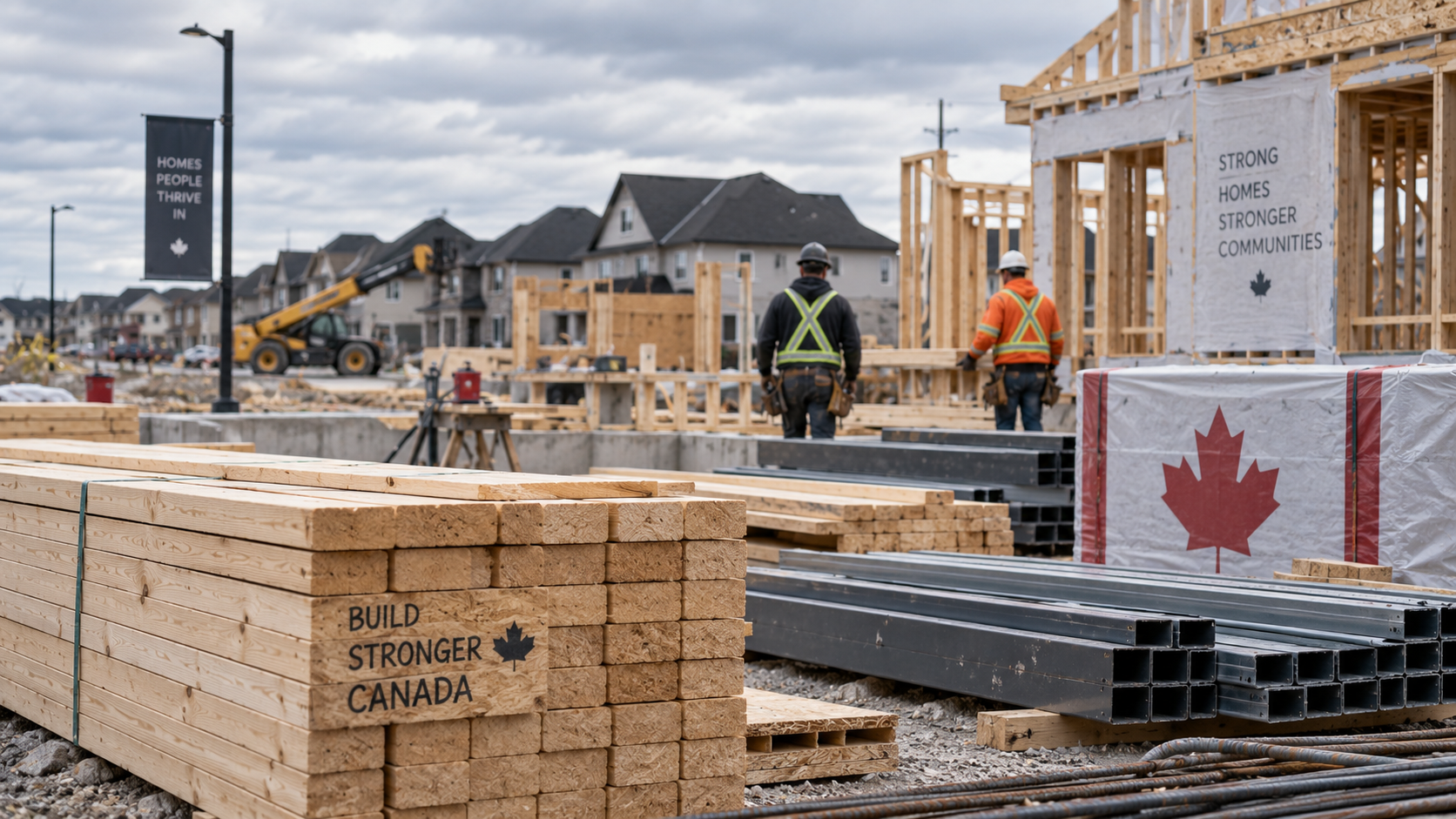
For anyone shopping a mortgage right now, that split between the rate story and the tariff story shows up directly in the numbers. Variable rates sit meaningfully below fixed — the lowest 5-year variable is around 3.35% against prime at 4.45%, while the lowest 5-year fixed from a top bank is closer to 4.24%. Fixed pricing tracks Government of Canada bond yields, which have stayed elevated on exactly the trade and geopolitical uncertainty driving the Bank’s hold — so a rate hold doesn’t mean fixed rates are cheap, it means they’re stuck. Variable holders get the Bank’s next move immediately, whichever direction it goes; and after this week, “whichever direction” genuinely includes a hike, not just a longer wait for a cut.
The honest read on all of this isn’t that Canadians should brace for a rate shock tomorrow — most economists still put the odds of another hold in October at well over 90%. It’s that the signal worth watching has shifted. Six months ago, the housing story was entirely about when the Bank would cut again. Right now it’s about whether Ottawa and Washington get back to a negotiating table before the tariff list currently locked in for September 8 has time to work its way through a full construction cycle. Rates are the variable everyone tracks because it’s the one with a scheduled announcement date. The trade file has no calendar — and for buyers weighing a purchase against building costs that move on a different clock than the mortgage rate does, that’s the part actually worth losing sleep over.

Markets don’t wait for certainty. They price the next best guess and keep building anyway.
— NestDigest