How to Extend Fire Pit Season Into Fall: Setup, Safety, and Fuel Choices
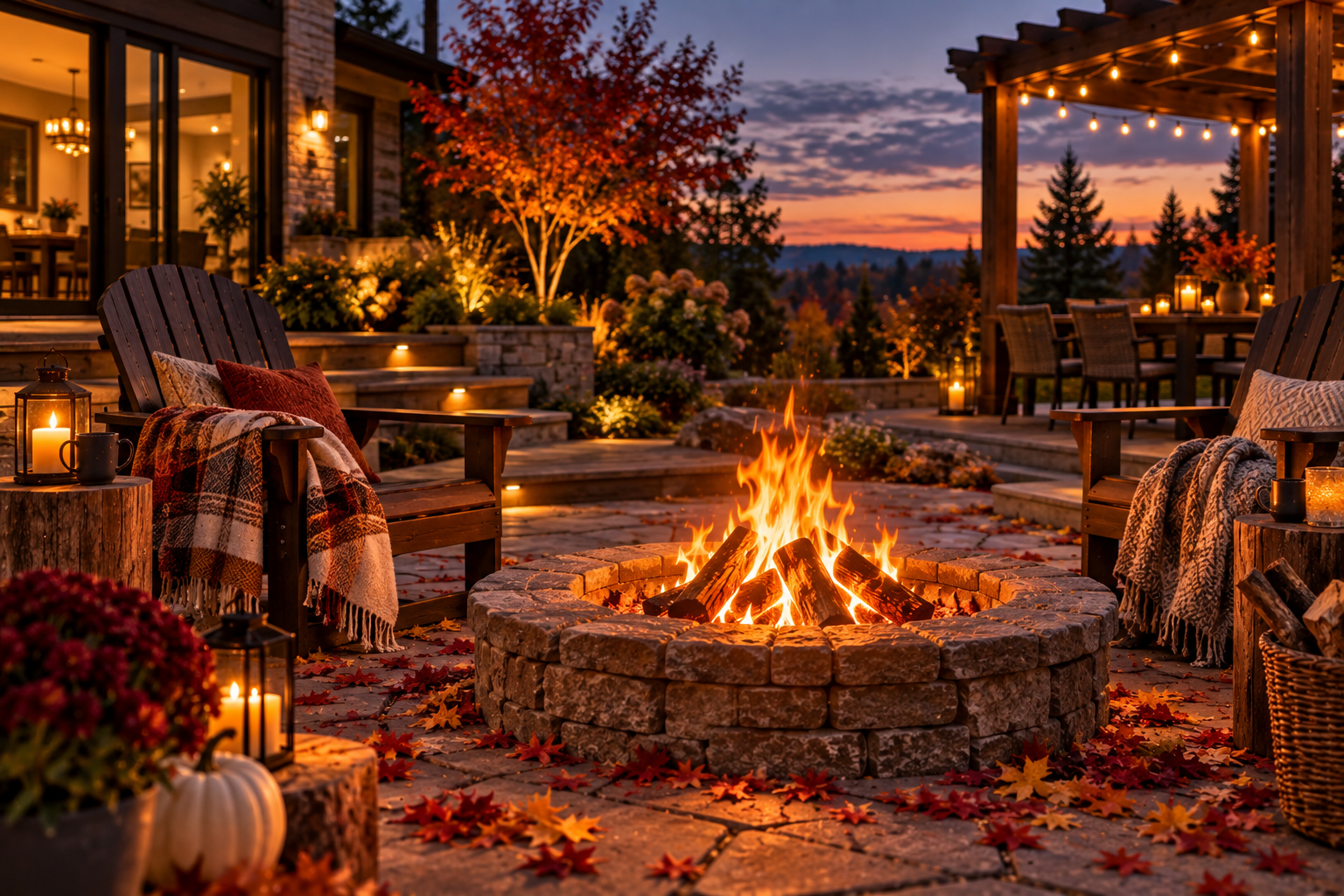
The real end of fire pit season isn’t the first frost. It’s the first night someone reaches for a blanket instead of heading back inside. In most of Canada, that moment lands sometime in late September, weeks before anyone’s ready to give up the backyard. A few deliberate changes are usually enough to extend fire pit season into fall by six to eight weeks: re-checking your municipal permit and clearance rules for fall conditions, matching your fuel — wood, propane, or natural gas — to how often you’ll actually burn through cooler weather, and adding wind and moisture protection so a damp, gusty evening doesn’t cancel the fire before it starts. Most of those fixes cost less than people assume, and none of them require replacing the fire pit itself.
Start with what’s allowed before what’s appealing. Ontario runs on the Ontario Fire Code and requires a burn permit for open-air fires in the province’s northern fire regions between April 1 and October 31. Everywhere else in the province defers to municipal by-law, so your fire pit’s legality depends on your specific city, not the province as a whole. Ontario’s outdoor fire rules page is the right first stop before assuming last year’s setup is still compliant this year. The pattern holds across the country. The Regional Municipality of Wood Buffalo in Alberta doesn’t require a permit for a backyard fire pit at all, but it does demand a minimum three-metre clearance from any structure, deck, or fence, plus a metal spark screen with openings no larger than 13 millimetres, per its outdoor fire rules. What most people miss is that a portable propane fire table often sits outside these open-burning by-laws entirely, since it isn’t classified as an open-air fire. That exemption is never universal, though. A five-minute call to your local fire department settles it for the season.
Fall changes the physics of the fire itself, not just the paperwork. Dry leaf litter accumulating around a patio through September and October is far more combustible than the mowed grass of July. Gusting fall wind also carries embers farther than the still air of a summer evening. A fire pit that felt perfectly sited in June may sit six feet closer to a hedge than it should for October conditions. The safe move is re-walking your clearance zone each fall rather than assuming spring’s setup still holds. Ten feet minimum from any structure or combustible surface is the baseline most Canadian municipalities converge on, measured to the outer edge of the flame rather than the rim of the pit. Several jurisdictions, including parts of Alberta, now ask for a full three metres — close to that same ten-foot mark.
Rules reset with fire-danger conditions, not the calendar — check your municipality’s page or call the fire department before your first fall burn, even if you burned all summer without issue.
Confirm at least 10 feet (3 metres) to structures, fences, and overhanging branches, then clear fallen leaves and dry debris in a wider ring than you would in summer.
Choose based on how often you’ll actually light it through cooler, less predictable weather — not on which fuel looked best in the showroom.
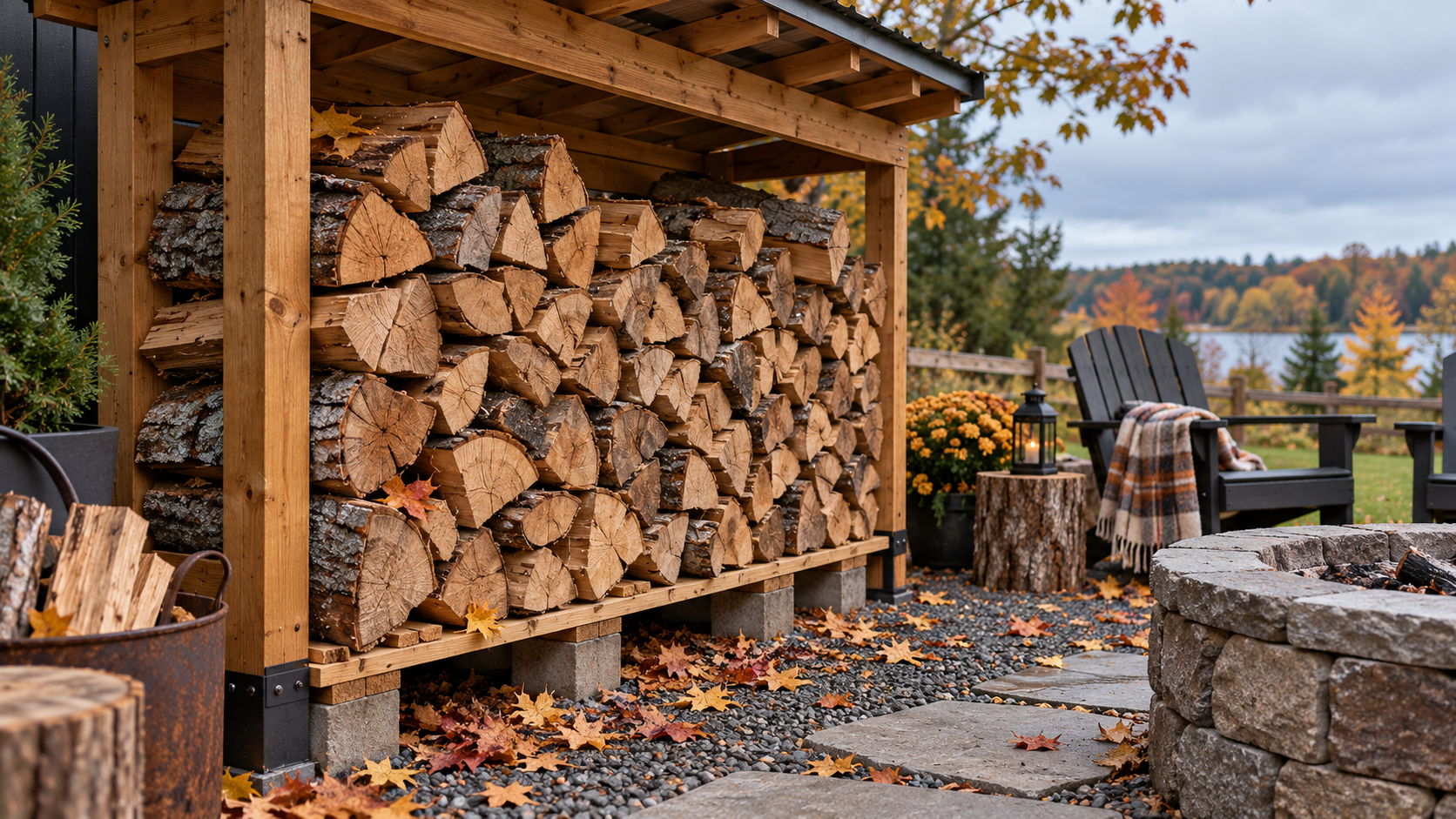
A low glass or metal windscreen, a lid for gas units, and firewood stored off the ground under cover keep fall dampness and gusts from turning a five-minute lighting job into thirty.
A garden hose or five-gallon bucket of water, a metal shovel for ash, and a working flashlight matter more in fall, when a burn that starts at 6 p.m. now ends in the dark.
Fuel choice is where the season-extension math actually happens. Propane runs roughly 2,500 BTUs per cubic foot against natural gas’s 1,000. That’s why a propane fire table throws more heat per tank than a natural-gas unit of the same size — useful when you’re holding a comfortable temperature against a 10°C evening instead of a balmy July one. A 20-lb propane tank refill runs somewhere in the $20–$30 CAD range at most exchange stations. One tank comfortably covers four to six evenings of moderate use, which makes propane the low-commitment choice for a household unsure how many fall weekends they’ll actually spend outside. Natural gas costs less per hour of burn time once a line is run, but that installation — usually requiring a licensed technician — only pays for itself if the fire pit becomes a fixture rather than an occasional fall indulgence. Wood remains the cheapest option for households with an existing supply, though “cheap” assumes wood that’s actually seasoned. Firewood needs roughly six months of proper drying to drop below the 20% moisture content that separates a fire that lights on the first match from one that smokes and sputters through half a bundle of kindling. In Ontario, a face cord of seasoned hardwood — about a third of a full cord — typically runs $120 to $180. A full cord lands between $300 and $450, depending on how close you are to a supplier. Any gas fire feature installed on a wooden deck or near combustible siding should carry certification to CSA/ANSI Z21.97, the harmonized North American standard for outdoor decorative gas appliances. Look for the C/CSA or CSA-US mark on the unit itself, not just in the marketing copy.
Where you live changes which of these trade-offs matters most. Coastal British Columbia’s damp fall air makes wood harder to keep dry through the season, tipping the math toward gas for anyone without covered storage. The Prairies swing the other way. Alberta and Saskatchewan see fire bans and restrictions tighten with dry, windy conditions well into fall, and a portable propane unit is often the only option still permitted when a ban on open wood burning is in effect. Atlantic Canada’s fall storm track means a heavier windscreen and a lid that actually locks down matter more than fuel type. Quebec’s earlier frost dates in the Laurentians and Eastern Townships shorten the extension window itself, so the setup changes above buy proportionally more usable evenings there than they do in southern Ontario, where first frost often waits until mid-October.
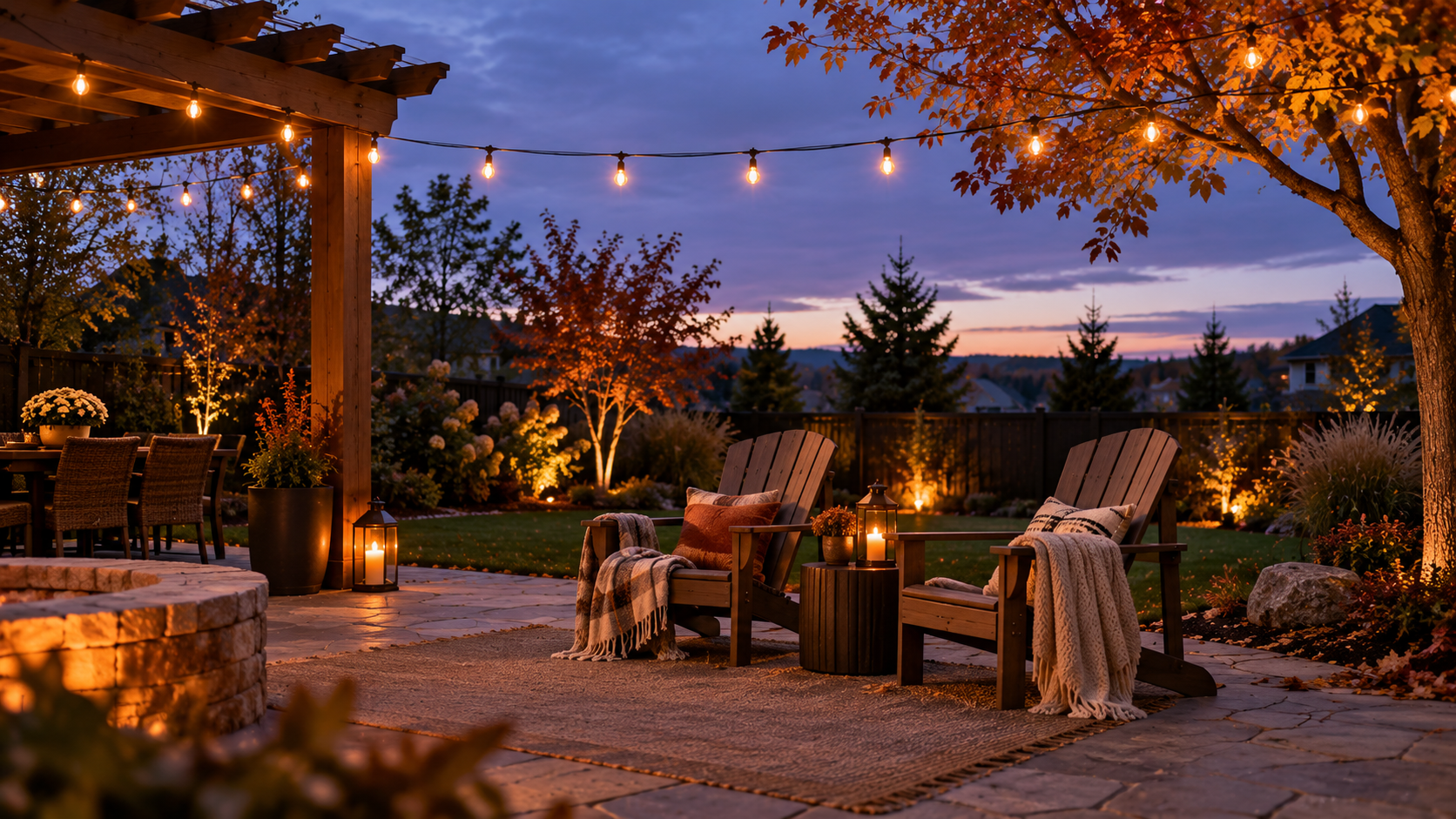
The last piece of the season-extension puzzle has nothing to do with the fire itself. Wool throws, a low windscreen, and seating that doesn’t hold cold the way metal does will keep people outside twenty minutes longer than the fire’s heat output alone justifies. The sun now sets before 7 p.m. instead of after 9, so a couple of low, warm-toned lights near the seating area do more for the evening’s atmosphere than any upgrade to the fire pit itself. None of this requires a renovation. It just requires treating fall as its own season for the fire pit, with its own rules, rather than the tail end of one that’s already over.
There’s a particular kind of quiet that settles over a backyard once the leaves start turning. The neighbourhood gets louder in summer and softer in fall, and a fire pit is one of the few things that makes that softer version worth stepping outside for. Extending fire pit season into fall isn’t really about squeezing more use out of a piece of equipment. It’s about deciding the year doesn’t have to end at the equinox just because the calendar suggests it should.
A fire in October asks more of you than one in July — and gives back more warmth for the asking.
— NestDigest