
Fall Lawn Care Schedule for Ontario: Aerating, Overseeding & Fertilizing
The single most important thing you can do for an Ontario lawn all year happens in a six-week window between late August and early October — not in spring, when most homeowners instinctively reach for the fertilizer bag. A proper fall lawn care schedule for Ontario runs on a different clock entirely, built around cool-season grass that’s just coming out of summer stress and heavy clay soil that compacts harder here than almost anywhere else in the country.
Ontario’s fall lawn care schedule comes down to three steps, done back-to-back over five or six weeks:
- Aerate — late August to mid-September, while soil is still warm and the grass is actively growing again after summer stress. Ontario’s clay-heavy soil compacts harder than most, so this step earns more attention here than in sandier regions.
- Overseed — the same day as aeration, straight into the fresh holes, using a cool-season blend (Kentucky bluegrass, fine fescue, or perennial ryegrass) matched to sun or shade.
- Fertilize — a phosphorus-forward starter blend three to four weeks after germination, then a high-potassium “winterizer” (roughly 10-0-20) in late September or October, before the ground freezes.
Budget $200–$500 CAD for a professional bundle covering all three steps, or $100–$200 in materials if you’re doing it yourself.
When Should You Aerate an Ontario Lawn in Fall?
Most Ontario lawns are Kentucky bluegrass, fine fescue, or perennial ryegrass — cool-season species that green up in spring, struggle through July and August heat, then rally again once temperatures drop. That rally is the entire reason fall exists as a lawn care season. The grass is actively growing again, the soil holds moisture more reliably, and any wound from aeration or seeding has weeks to heal before the ground freezes. Clay is the other half of the story. It’s the dominant soil type across much of the Golden Horseshoe and the GTA, and it compacts under foot traffic, mower wheels, and dog runs far more readily than the sandier soils found elsewhere in the country. A screwdriver test tells you what you’re working with — push one into moist soil, and if it stops before 10 centimetres, the ground is compacted enough that aeration will make a visible difference by next spring.
The window itself shifts slightly by region. Southwestern Ontario and the Golden Horseshoe can often start in late August and still have room to spare into early October. Cottage country and Northern Ontario see frost earlier, so aim for the front half of that window — late August into the first week or two of September — to leave enough recovery time before the ground hardens.
What Order Should Aerating, Overseeding & Fertilizing Happen In?
Once the timing is right, the order of operations matters as much as the calendar. Here’s how the three steps fit together:
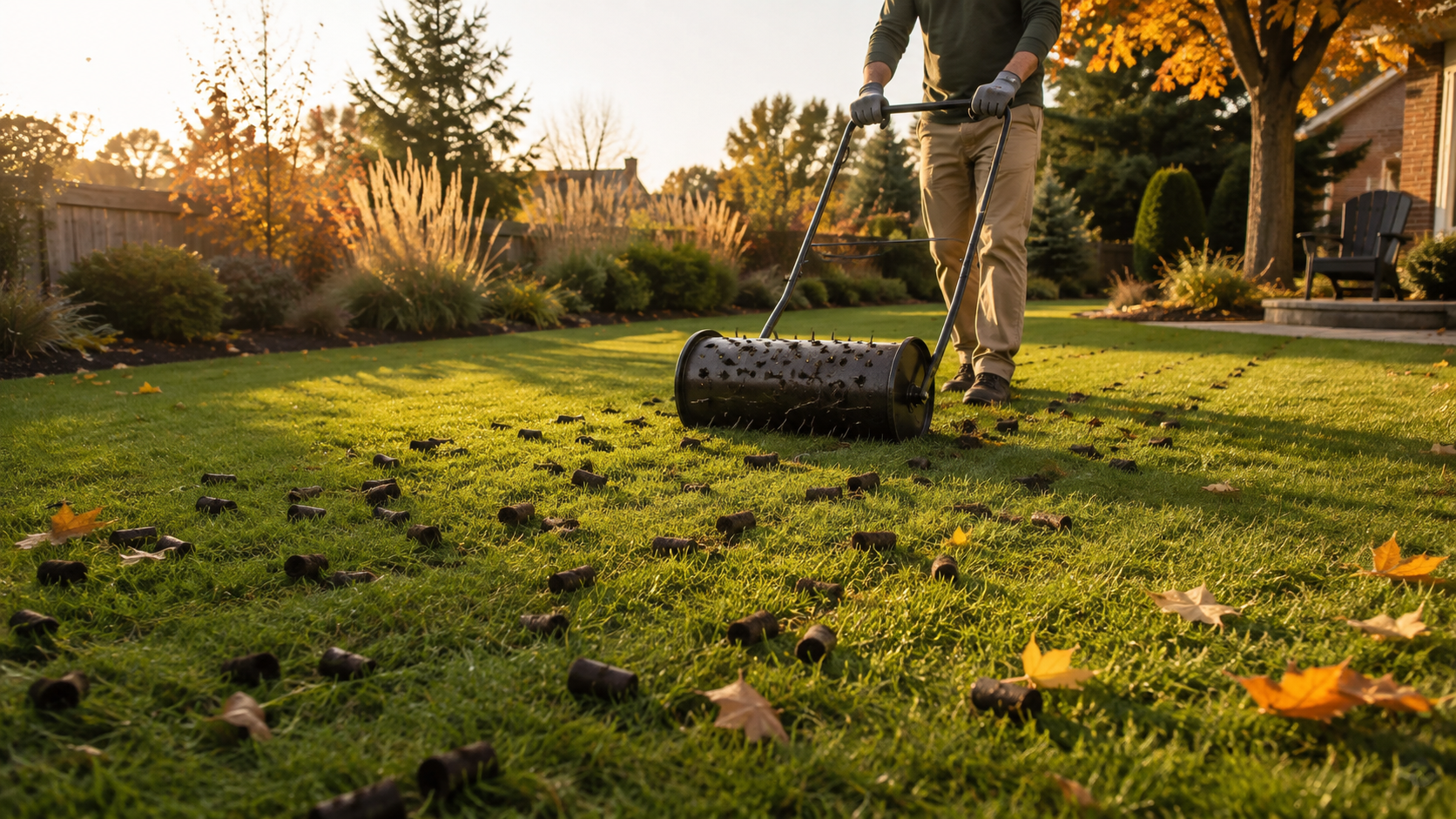
Water 24–48 hours ahead if the soil is dry — dry clay resists the tines and leaves a spotty, uneven result. Use a core (hollow-tine) machine rather than a spike aerator; spikes just compress the soil further around the hole instead of relieving compaction. Leave the cores where they land. They break down on their own within a couple of weeks and feed the lawn as they go.
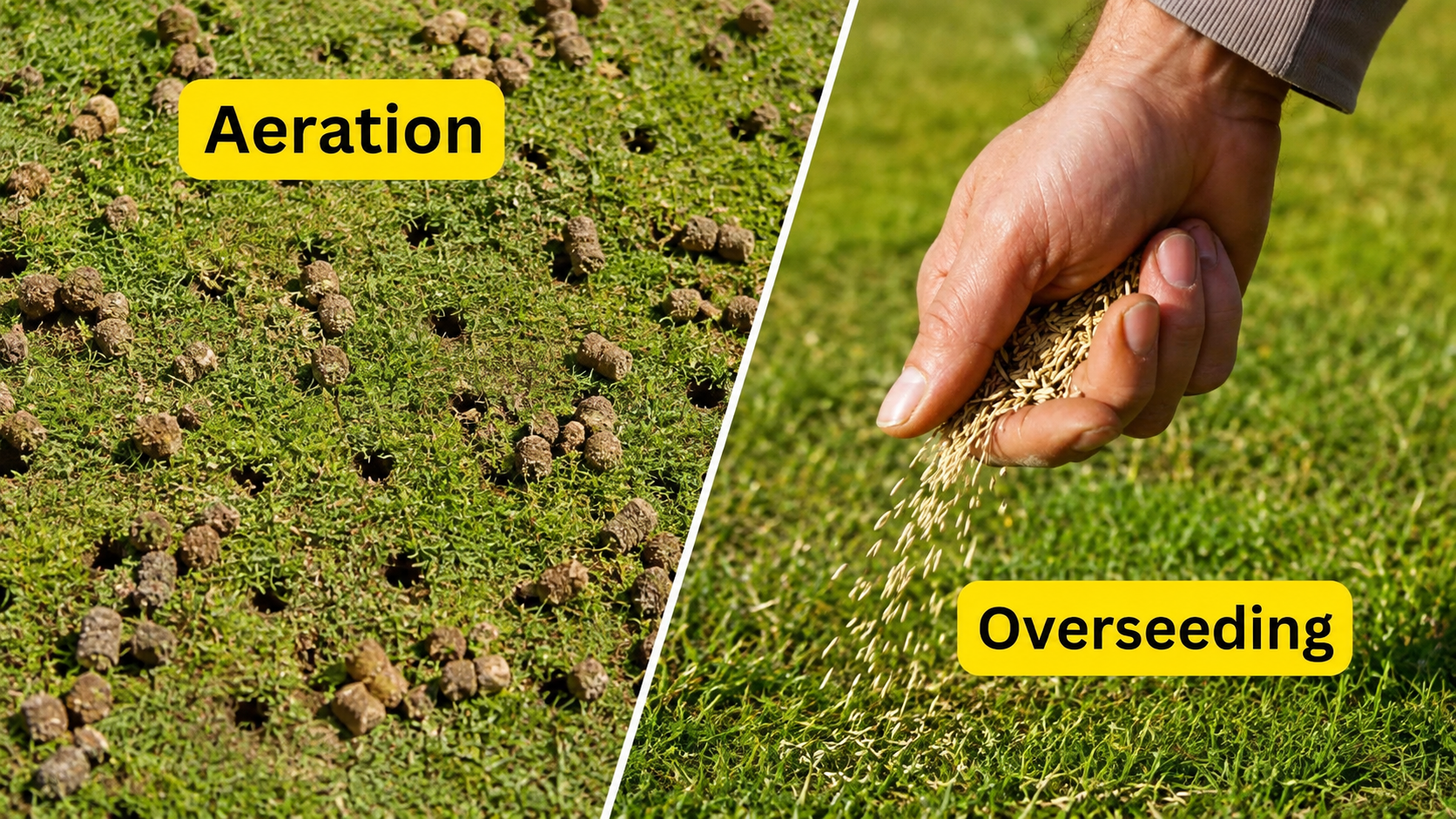
The fresh holes from aeration are the best seedbed you’ll get all year, so overseed the same day rather than waiting. For full-sun lawns, a Kentucky bluegrass or bluegrass-ryegrass blend fills in densest; for shaded areas under mature trees — common on older Ontario lots — a fine fescue blend tolerates low light far better. Kentucky bluegrass alone can take close to a month to germinate, which is exactly why this only works on fall’s longer runway; try it in October and the seed won’t establish before frost.
Hold off on regular fertilizer for three to four weeks after seeding and use a phosphorus-forward starter blend instead, so new roots — not existing top growth — get the nutrient boost. Once that’s established, apply a high-potassium winterizer (something in the 10-0-20 range) in late September or October, before the ground freezes. This late application does more for root development and spring green-up than every other application you’ll make the rest of the year combined.
What Does Fall Lawn Care Cost in Ontario?
The economics of this sequence are worth knowing before you book anyone or rent equipment. A professional aerate-overseed-starter fertilizer bundle typically runs $200–$500 CAD for an average residential lot, depending on square footage and soil condition — most of that spread comes from whether you’re covering 4,000 square feet of turf or four times that. Doing it yourself, a core aerator rental plus a bag of quality seed and starter fertilizer usually lands closer to $100–$200 in materials, though you’re trading roughly a half-day of physical labour for that savings. On lawns under about 3,000 square feet, the gap between a pro’s minimum callout fee and the DIY route is often thin enough that hiring out wins on convenience alone. Larger properties are where doing it yourself actually pays for itself. If there’s one place worth spending a little more, it’s the seed — a premium shade-tolerant blend for the parts of the yard under tree cover earns its keep far more than splurging on a fancier fertilizer.
There’s a broader argument for treating this seriously, too, and it isn’t just about grass. The curb-appeal math that applies to native plantings applies just as directly to turf — a dense, even lawn reads as “maintained” the moment someone pulls into the driveway, before they’ve noticed a single perennial bed. If you’re weighing where a fall lawn overhaul sits against other yard investments, compare it against the broader menu of low-maintenance landscaping upgrades that add resale value. Lawn renovation tends to be one of the cheapest per-square-foot improvements on that list.
Why Shouldn’t You Aerate Again in Spring?
Resist the urge to redo any of this once spring arrives. The instinct to aerate again in April, when the ground finally softens and the itch to do yard work returns, works against everything the fall schedule just accomplished. Cool-season grass is still settling in from a fall renovation — it doesn’t need a second round of stress before it’s even finished the first. Spring energy in Ontario is better spent elsewhere — prepping garden beds and assessing winter damage, or getting a head start on planning next year’s vegetable beds while the lawn quietly finishes rooting in. OMAFRA’s official lawn maintenance guidance puts the ideal overseeding window at mid-August to mid-September for exactly this reason — cooler nights and more consistent moisture without competing against the last of summer’s weeds. If thatch or disease-prone patches from snow mould show up over winter — a risk the province’s own winter-prep guidance flags directly — a light raking in early spring is usually all a properly fall-renovated lawn needs. Pair this whole routine with a broader look at what else belongs on an Ontario fall maintenance checklist. The lawn work and the rest of the season’s prep — gutters, weatherstripping, furnace checks — all compete for the same shrinking window of good weather.
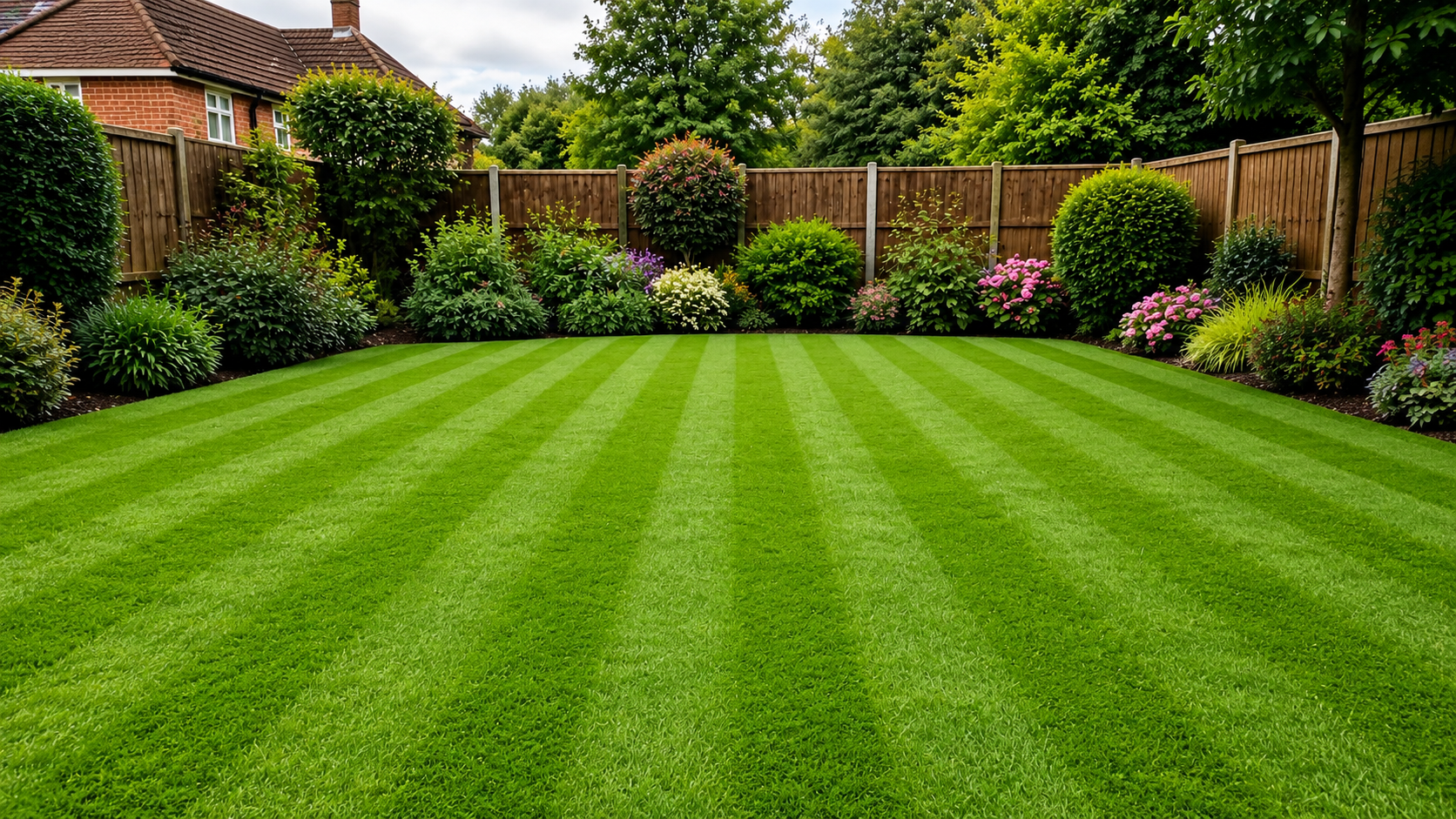
The lawn that looks effortless next June was decided in September. Nobody sees the aeration, the seed, or the October fertilizer application — they just see grass that came back thick and green while the neighbour’s stayed patchy. That’s the quiet payoff of following a fall lawn care schedule Ontario’s own climate actually rewards: the work is invisible, but the result isn’t.
The lawn that looks effortless in June was decided in September.
— NestDigest