How Toronto Actually Builds Affordable Housing: Inside the Danforth Mixed-Income Model
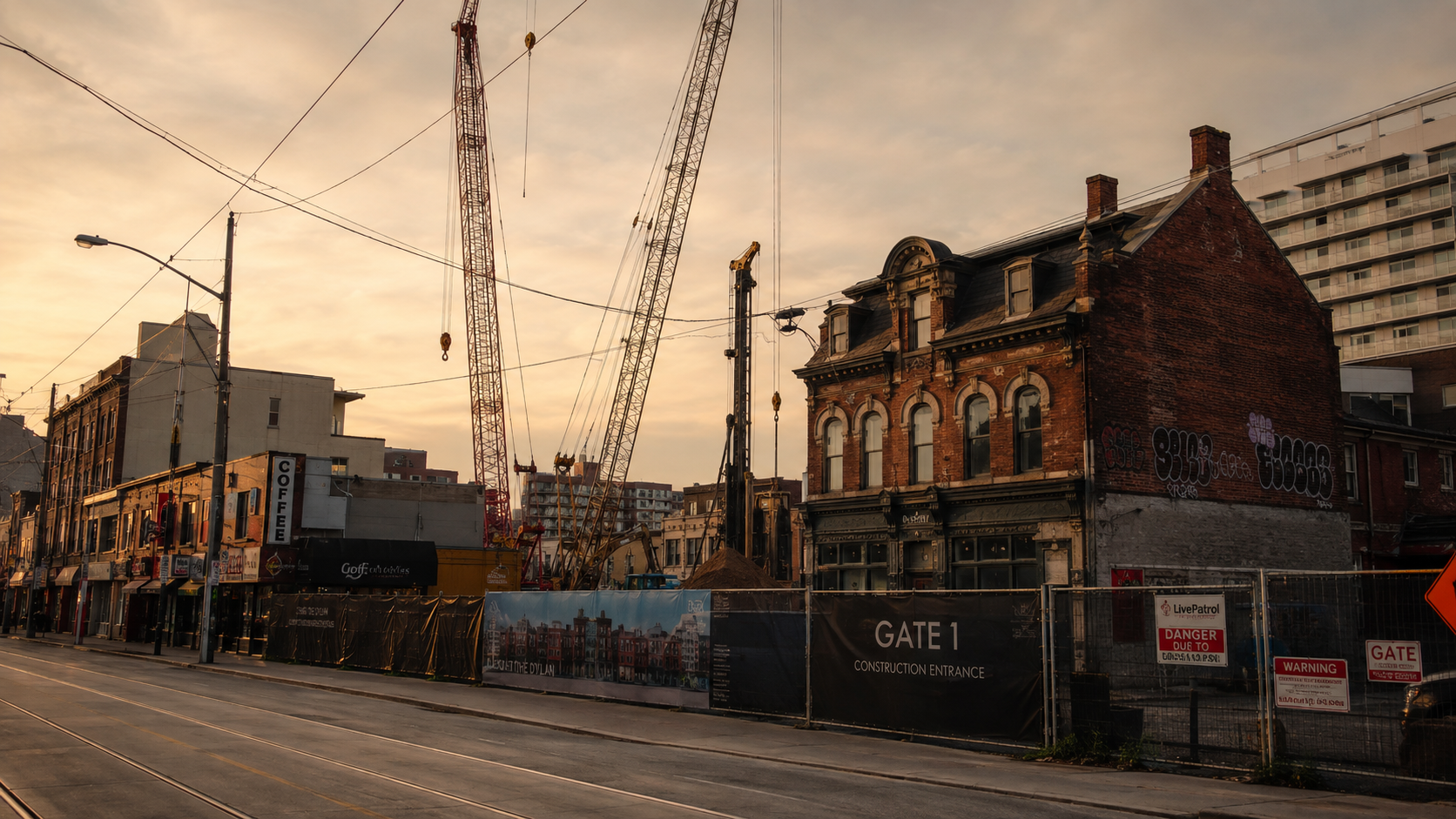
The site at 1111 Danforth Avenue held a two-storey funeral home built in 1931 until this summer, when Mayor Olivia Chow, Councillor Paula Fletcher, and representatives from a private investment firm and a fifty-year-old non-profit housing operator turned the first shovels on what’s become one of the most closely watched examples of a Toronto affordable housing development in 2026. What’s rising there now isn’t a single tower with a single price tag, but two connected buildings, two different developers, and three distinct rent categories stacked into one project — which is precisely what makes it worth understanding in detail rather than skimming as another groundbreaking photo op.
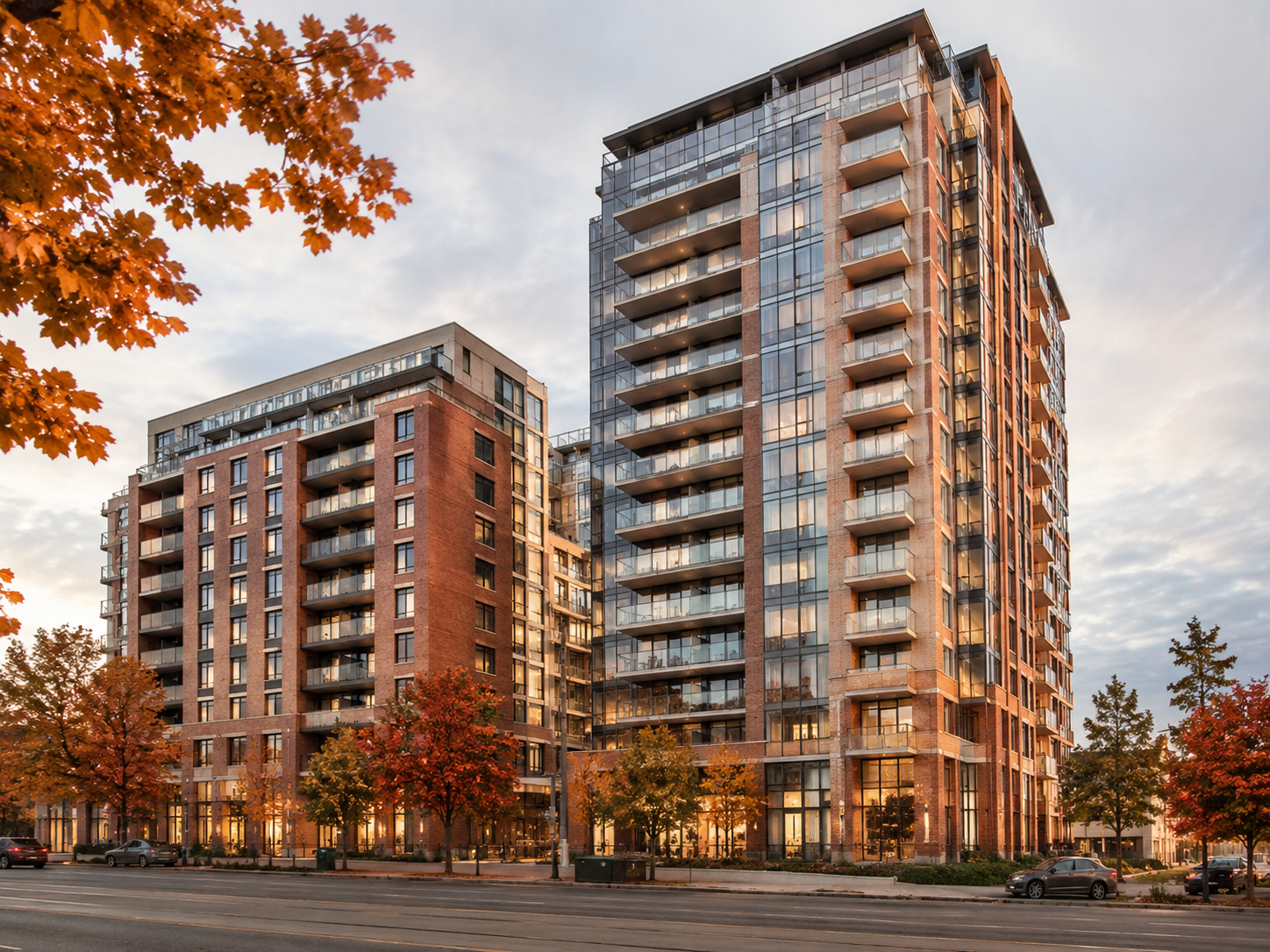
The numbers are the first thing to get straight, because the two buildings on this stretch of the Danforth, one block east of Donlands station, are doing genuinely different jobs. At 1117 Danforth, the non-profit Neighbours Community Homes is replacing a 27-unit rental building with a 14-storey, 108-unit tower: 27 of those homes go to tenants displaced by the redevelopment at their original rent, another 40 are new deeply affordable and affordable units, and the remaining 41 are rent-controlled but priced closer to the middle of the market. Next door at 1111 Danforth, the private investment firm Woodbourne is building a larger, 297-unit rental tower on the former funeral home site, with a mixed-income structure of its own and a ground-floor home for Le Théâtre français de Toronto, the city’s French-language theatre company, which has been searching for a permanent venue for years. Combined, the project totals more than 400 new rental homes, with occupancy targeted for 2029.
What actually funds a project like this is the part most coverage skips past. The City of Toronto is putting in more than $13 million in direct capital funding and more than $14 million in additional incentives through its Rental Housing Supply Program, but the city isn’t the developer, the landowner, or the builder here — it’s a financial partner layered underneath a private firm and a non-profit that each bring their own capital, financing, and construction expertise. That’s a meaningfully different structure from the city’s own Toronto Builds program, where the city acts as developer on city-owned land from the start. This is closer to a public-private-non-profit hybrid: the city subsidizes the affordability, Woodbourne underwrites the market-rate risk, and Neighbours operates the deeply affordable and rent-geared units long-term, the way it’s done with supportive housing across the city for decades. If Toronto is going to hit anything close to its stated goal of 65,000 new affordable homes this decade, projects that blend private capital with public subsidy rather than relying on city-led construction alone are going to have to carry a lot of that weight, and Danforth is a working test case for whether the math holds up at this scale. It’s also a useful comparison point for anyone trying to make sense of the pace of Toronto affordable housing development in 2026 more broadly: this single site, on its own, delivers roughly as many below-market homes as a mid-sized apartment building, using less direct city money than a fully city-financed project would require.
For renters actually watching this project, the practical question is less about the groundbreaking photo and more about how they’ll eventually get access to the 67 affordable and deeply affordable units at 1117 Danforth. Toronto no longer runs a single, static waitlist for new affordable rental buildings — new developments now typically use a random-draw system, where an application window opens a few months before occupancy, the pool of applicants gets shuffled into a randomized order, and households are invited to apply and get matched to units in that sequence over roughly 60 to 90 days. For a 2029 occupancy date, that points to an expression-of-interest window opening sometime in 2028, not now, and not through a general city waitlist — through whichever property manager Neighbours Community Homes assigns to the building closer to completion. The city is also in the process of building a centralized application system for affordable rental housing precisely because this building-by-building process has been hard for renters to track.
Getting Ready for Move-In Day, Whenever It Comes
Whether you’re a few years out from applying at Danforth or settling into a new place sooner, fast free shipping on everything from moving boxes to furniture makes a real difference once the keys are actually in hand. Amazon Prime is one of the easier ways to have it covered.
Try Amazon Prime →Affiliate Disclosure: This is a paid affiliate link. As an Amazon Associate, NestDigest earns from qualifying purchases made through this link, at no additional cost to you. This placement did not influence the editorial reporting above.
Here’s the detail that trips people up when they first hear “mixed-income rental tower with a market-rate component”: there is no presale happening, and there won’t be one. Every unit in both buildings, market-rate included, is purpose-built rental, not condominium. That distinction matters more than it sounds like it should. Toronto buyers are conditioned by two decades of condo culture to expect a presale phase — deposit structures, floor plan reveals, price lists released years before a building tops out. None of that applies here. The 297 market and mixed-income units at 1111 Danforth will be leased, not sold, and the city, Woodbourne, and Neighbours have not released specific rent figures for any category — affordable, rent-controlled, or market — for either building. That’s normal for a project this far from occupancy; asking rents on a 2029 delivery get set close to completion, not at groundbreaking, since they’re benchmarked against average market rent at the time units actually come online, not against today’s numbers. Anyone tracking this development for pricing should expect that information to surface in the twelve to eighteen months before occupancy, not before.
“Market-rate” in a mixed-income rental building doesn’t mean pre-sold or pre-priced — it means leased at whatever the going rate is when the building opens. There’s no presale list to get on here, because there’s nothing being sold.
The affordability framework itself is worth sitting with too, because “affordable housing” gets used loosely enough in headlines that it’s lost most of its meaning. In this project, and under the city’s current definitions, affordable housing costs less than 30 percent of a household’s before-tax income, and deeply affordable housing meets that same 30 percent threshold for the lowest-income households specifically — a household earning less at the bottom of the income scale still pays no more than 30 percent of what it actually makes, not 30 percent of the area median. That’s a meaningfully tighter commitment than a flat percentage-of-market-rent formula, and it’s the kind of detail that separates a project genuinely serving low-income tenants from one that’s technically “affordable” only by comparison to an already-inflated market average.
The heritage angle adds a layer most groundbreaking coverage left out entirely: the Woodbourne site absorbed a Neo-Gothic funeral home built in 1931 and listed on Toronto’s heritage register, which is part of why this particular parcel took years to assemble and entitle before a shovel ever went in the ground. Combine that with a non-profit partner managing tenant relocation for 27 existing households, a cultural tenant with its own programming timeline, and a financing stack involving three separate organizations, and it becomes clear why occupancy sits three years out. Mixed-income, mixed-developer projects move slower than a single private tower precisely because they’re solving more problems at once — displacement, affordability, culture, and heritage — inside a single site.
What makes Danforth worth watching past its groundbreaking is that it functions as a live answer to a question Toronto has been arguing about for years: whether the city can scale affordable housing without either fully subsidizing it or fully handing it to the private market. It’s a fair representative case study for Toronto affordable housing development in 2026 precisely because it isn’t a one-off pet project — it’s a repeatable financing shape. The structure here says neither, and if the rent figures that eventually get released for the 41 rent-controlled units and the 297 market homes land where the city needs them to, this becomes a template other neighbourhoods start asking for by name rather than a one-off ribbon-cutting.
A city reveals what it values not in what it promises to build, but in what it’s willing to fund before it knows the final price.
— NestDigest