
Why Homeowners Are Ditching the Emergency Repair Mindset for Preventative Maintenance
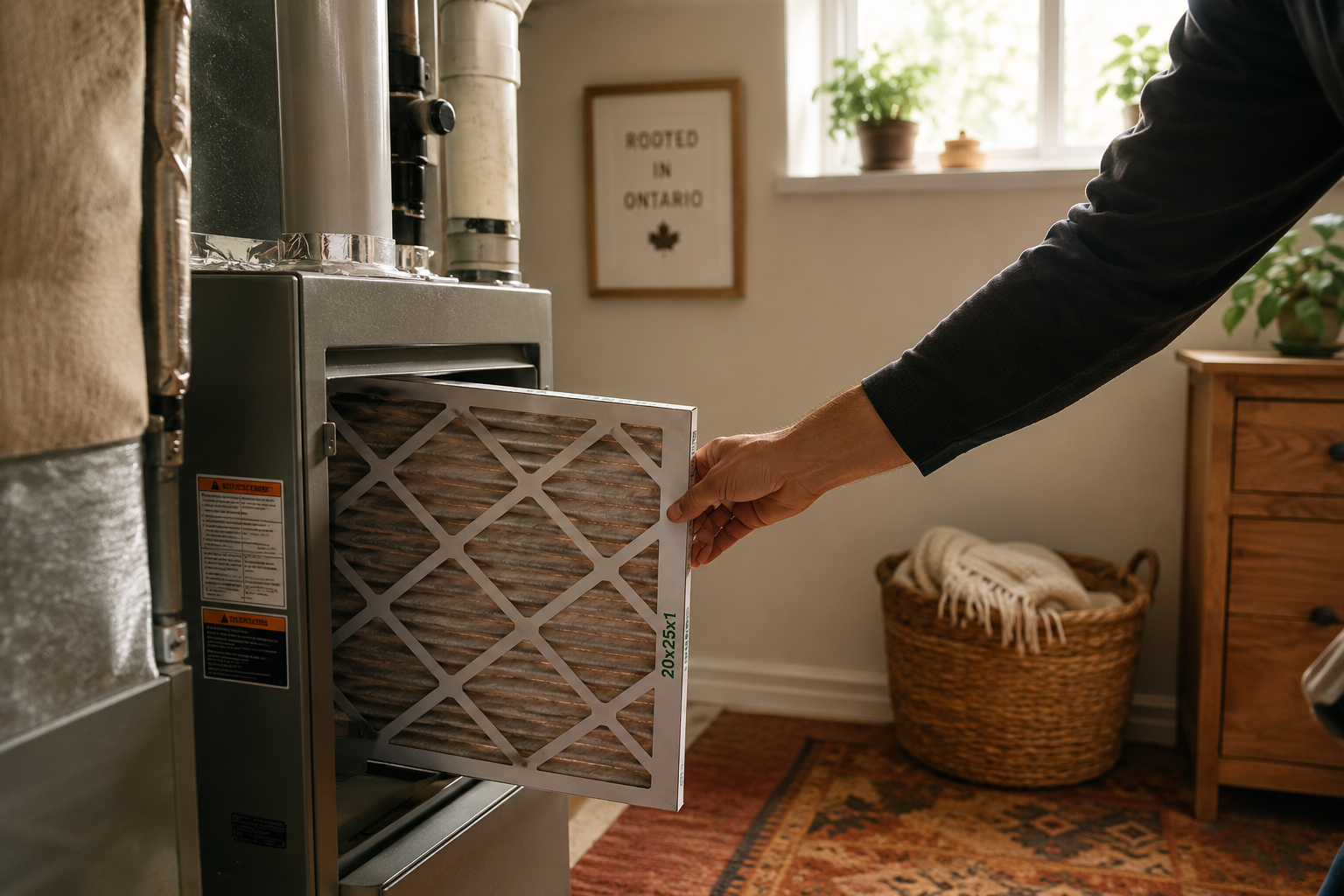
The furnace that dies on the coldest night of January was showing signs back in September — a hesitation before ignition, a faint burning smell that cleared in a few seconds, a pilot light that took two tries instead of one. Nobody stopped to notice, because nothing had actually broken yet. That gap, between the first quiet warning and the loud failure, is where a preventative home maintenance checklist earns its keep. It’s the difference between a $220 furnace inspection in the fall and a $4,000 emergency swap in the dead of winter, and homeowners are finally starting to plan around it instead of reacting to it.
That shift shows up in the numbers. Homeowners spent an average of $2,041 on maintenance in the most recent year tracked, up from $1,750 the year before — not because things are breaking more, but because people have stopped waiting for them to. The old pattern was to fix what’s visibly wrong: the stain on the ceiling, the drip under the sink, the AC that’s blowing warm air in July. The newer pattern treats a home more like a car that needs its oil changed before the light comes on, not after the engine seizes.
In Ontario, the math is especially unforgiving for the people who skip this. A furnace tune-up runs somewhere in the $150 to $250 range, but a mid-winter emergency service call — assuming a technician is even available — routinely lands between $400 and $700 before parts. Eavestrough cleaning twice a year costs a few hundred dollars; a single ice dam that backs water into an attic can mean $10,000 to $20,000 in insulation, drywall, and mould remediation. The preventative version of each of these tasks is cheap specifically because it happens before anything is actually wrong. Insurance adjusters know this too, which is why more Canadian home insurers are now asking directly about maintenance history — a documented furnace inspection or roof check can be the difference between a claim being paid in full and a claim being reduced for “lack of reasonable upkeep.”
Here’s the part most maintenance checklists get wrong: they organize everything by calendar season, when the more useful frame is usage. A furnace that ran constantly through a brutal February needs its filter checked in March, not in the generic “spring maintenance” slot three months later. A dehumidifier that ran nonstop through a humid August has earned an inspection in September, regardless of what the calendar says fall maintenance should look like. Technicians who actually do this work for a living tend to think in run-hours and stress cycles, not months — the appliance that just worked its hardest is the one due for attention next, not the one whose turn it happens to be on a printed schedule.
Check the system that just worked hardest — furnace filter, AC condensate line, or heat pump coils — within two to three weeks of the demand easing, not on a fixed seasonal date.
Test the systems you’re about to lean on before you need them — furnace ignition, AC refrigerant levels, exterior hose bibs and shutoffs — while a technician still has room on the schedule.
Smoke and carbon monoxide detectors, GFCI outlets, and sump pump battery backups don’t respond to seasons at all. Test them on fixed dates — many people use the twice-yearly clock change as the trigger.
Roof, foundation grading, and water heater anode rods age slowly enough that annual inspection is overkill for any one of them — but not for the group. Rotate a deeper look at one per year so nothing goes a full decade unchecked.
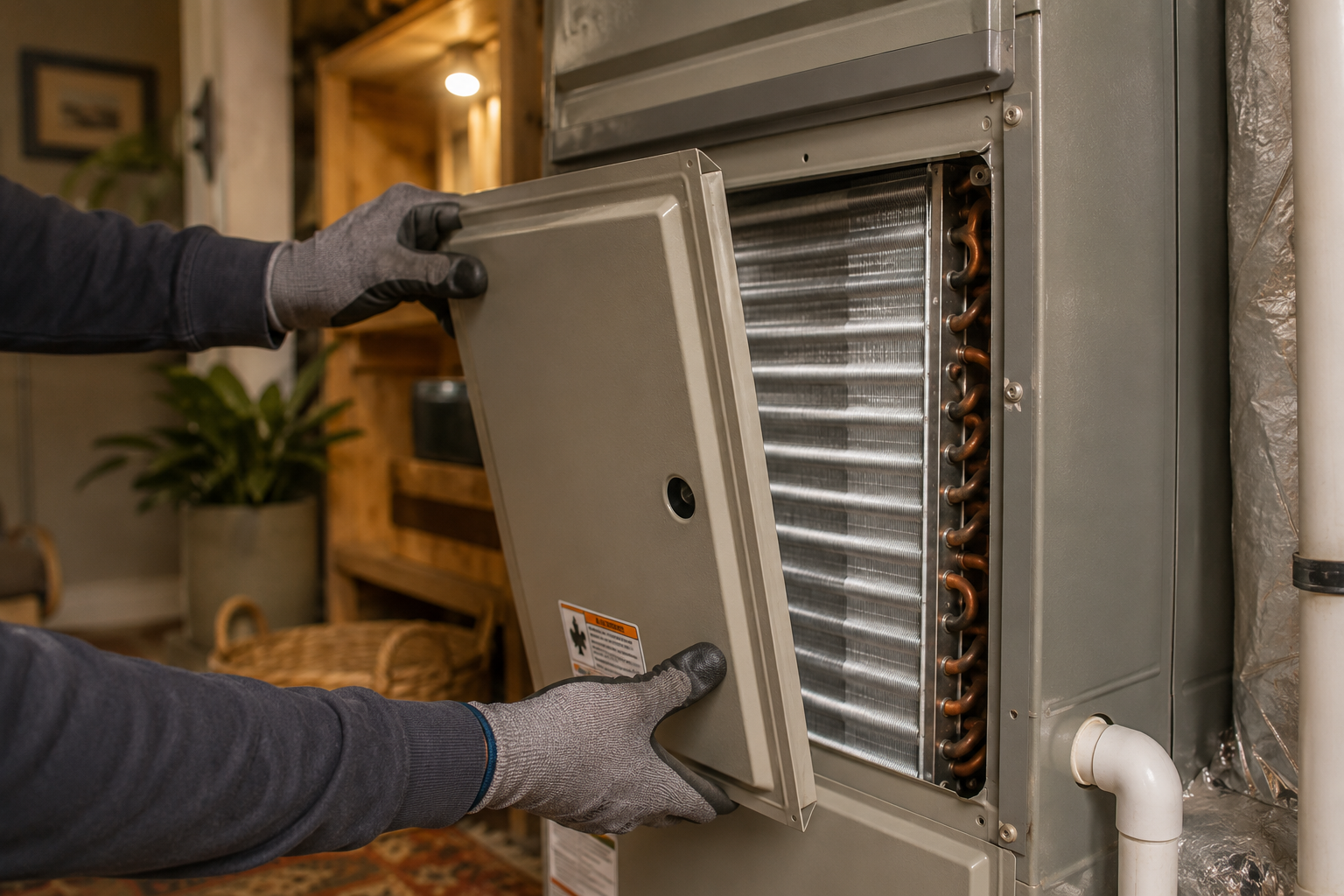
What most people miss entirely is the condensate line on a central air system — the small drain that carries moisture away from the indoor coil. It clogs quietly with algae and dust, and when it backs up, water doesn’t drip somewhere obvious; it pools in the drain pan and, in older installations, finds its way into the ceiling below. A technician can flush it in five minutes during a routine visit. Left alone, it’s one of the most common causes of “mystery” ceiling stains that homeowners assume are roof leaks and spend money chasing in the wrong place entirely.
There’s also a resale argument that gets underplayed. A documented maintenance history — receipts, service dates, even photos of a furnace tag showing annual inspections — reads to a buyer’s home inspector very differently than a house with no paper trail at all. It doesn’t just prevent a $4,000 emergency; it can shave real friction off a future sale, because the inspection report comes back cleaner and the negotiation has fewer places for a buyer’s agent to push.
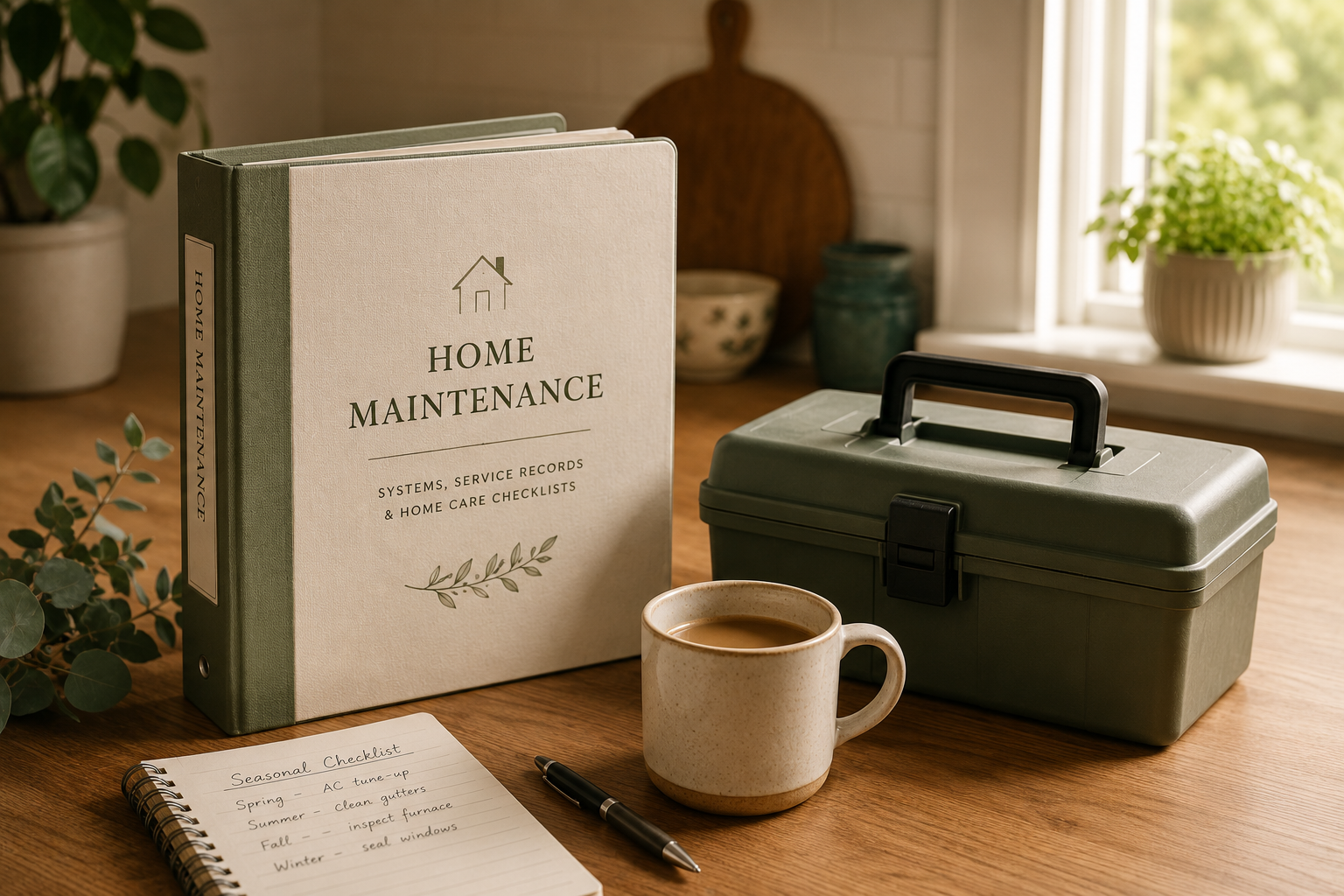
None of this requires turning into a full-time property manager. It requires a short list, checked against actual use rather than a generic calendar, and the discipline to book the $200 visit before the $2,000 one becomes necessary. The homeowners who’ve made this shift don’t talk about their houses in terms of what’s currently broken. They talk about what’s coming due — which is a much calmer way to live in a place, and a considerably cheaper one.
The house that’s cared for quietly rarely needs to be rescued loudly.
— NestDigest