Backyards & Outdoor · Ontario Landscaping
Native Plants, Serious Curb Appeal: The Ontario Homeowner’s Landscaping Guide
The most beautiful front yards in Ontario right now aren’t the most fussed-over ones. They’re planted with species that belong here — and they’re teaching the rest of us something important about what low-effort can actually look like.
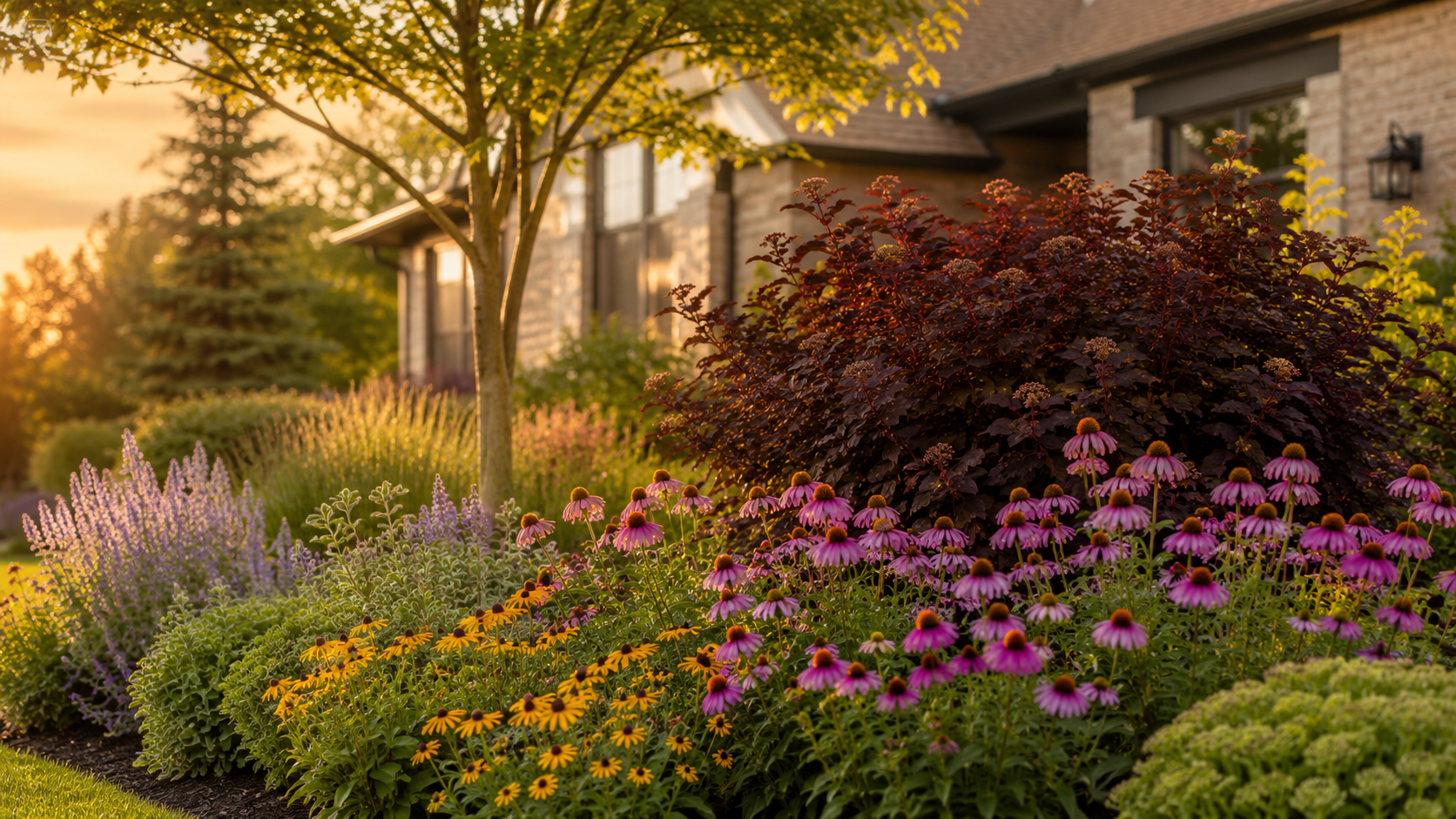
A front yard planted entirely with Ontario native plants does something that a perfectly manicured grass lawn almost never does: it stops people in the street. Not because it looks wild — a well-designed native garden is nothing of the sort — but because it looks alive in a way that a monoculture turf simply can’t. There are textures. There is movement. There is something blooming at nearly every point in the season from April through October, and something standing with quiet architectural dignity all the way through December. Native plants curb appeal in Ontario isn’t a compromise on aesthetics for the sake of the environment. It’s increasingly the most aesthetically compelling choice available to Ontario homeowners — and one of the most financially sensible ones too.
The financial case is not subtle. According to the Landscaping Network, a thoughtfully executed native planting scheme can add five to ten percent to a home’s resale value. In practical terms, on a home valued at $800,000 — comfortably below the Ontario average — that’s $40,000 to $80,000 in added value from a front yard that also costs less to maintain than what it replaced. Native plants use between 50 and 70 percent less water than a conventional lawn or exotic planting scheme, according to Gardening Know How’s research on Canadian native species. A mature native perennial bed saves homeowners roughly $200 to $500 annually on watering, fertilizing, and pest management costs. And because Ontario native perennials typically live 10 to 20 years with minimal intervention, the compounding value of a well-planned planting only grows over time.
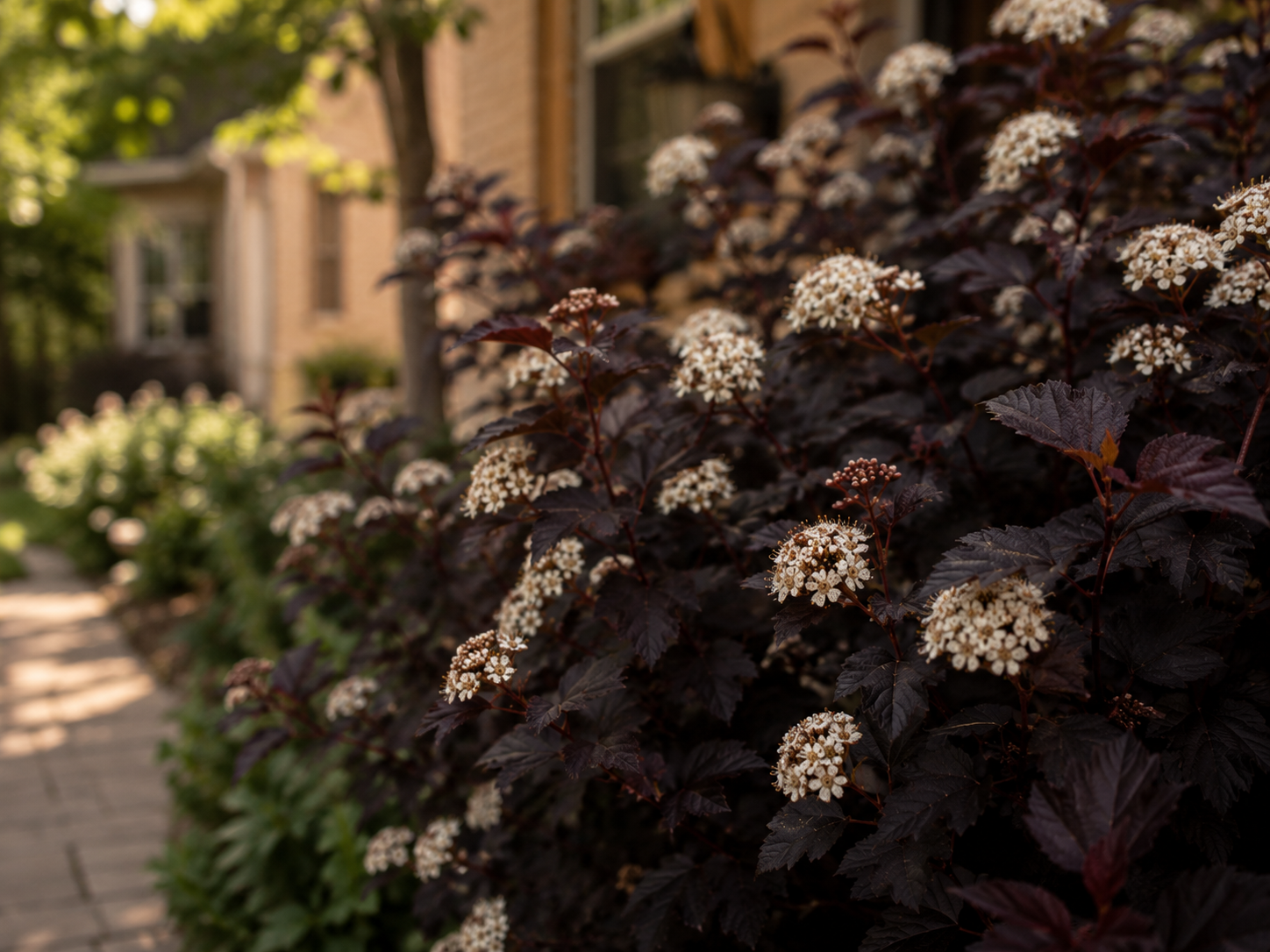
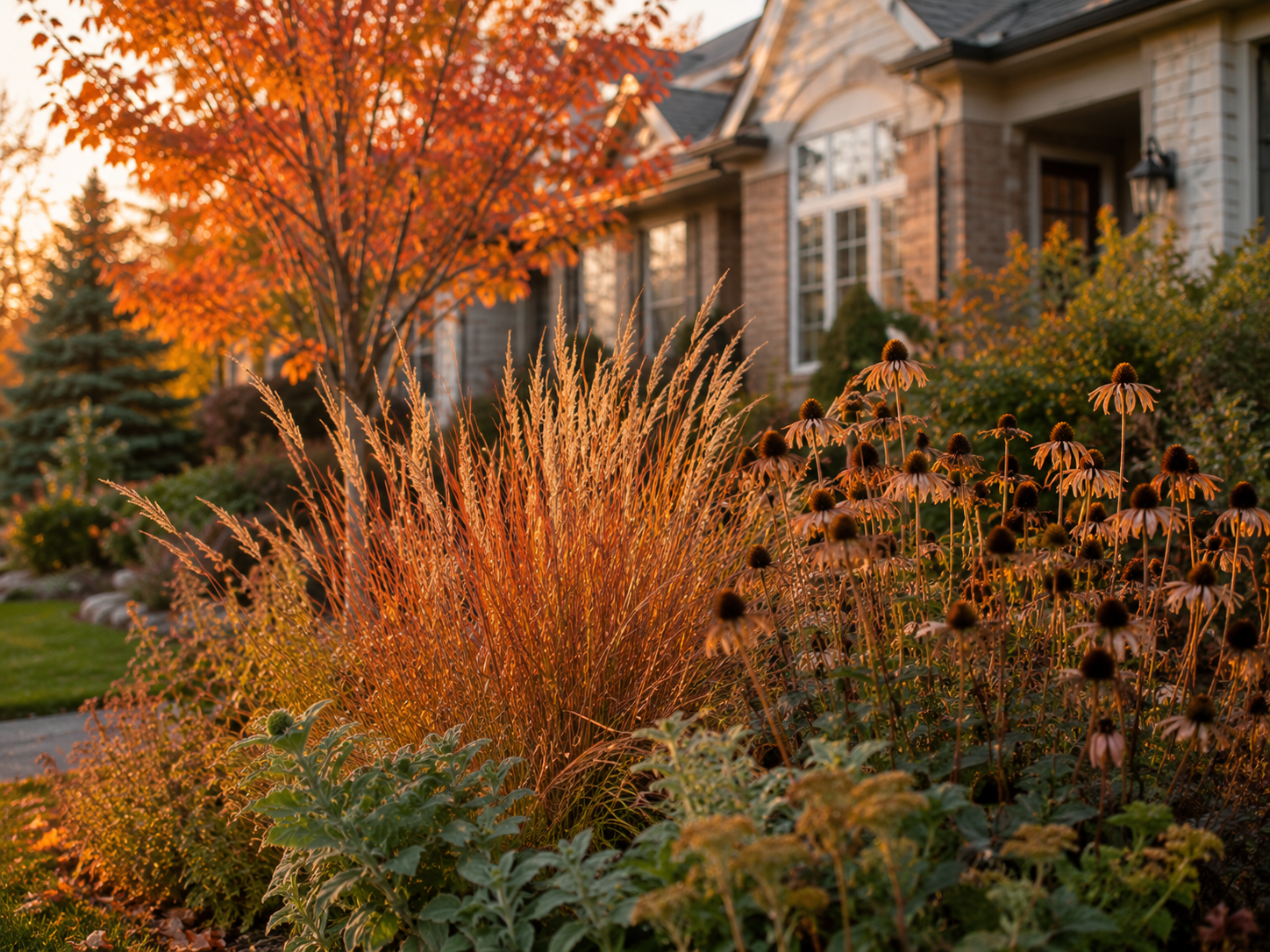
Understanding what makes native plants curb appeal in Ontario work so well starts with understanding what these plants actually do across the calendar. The mistake most homeowners make is imagining a native garden as something seasonal — beautiful in July, dormant and plain the rest of the year. The reality, when you select with intention, is almost exactly the opposite. Serviceberry (Amelanchier canadensis) opens in late April with a cloud of white blossoms before most other plants have stirred, and by June it’s producing clusters of sweet berries that attract birds to your front yard while your neighbours are still raking last fall’s gravel. Ninebark (Physocarpus opulifolius) offers burgundy or golden-leaved cultivars that give deep structure to a planting scheme from the moment the shrub leafs out in spring through to the architectural interest of its exfoliating bark in winter. Little Bluestem grass (Schizachyrium scoparium) turns a warm amber and copper through fall and winter, standing upright through snow with a kind of considered grace that no annual bedding plant could replicate.
The first showstopper of the Ontario garden year. White blossom clouds in late April, edible berries in June, brilliant orange-red fall colour. Perfectly scaled for urban front yards — reaches 4–6m but accepts pruning gracefully.
Ontario’s most versatile native shrub for structure. ‘Diablo’ offers deep burgundy foliage; ‘Dart’s Gold’ a warm chartreuse. Clusters of white flowers in late spring, interesting seed capsules through winter. Drought-tolerant once established.
The backbone of any summer Ontario native planting. Blooms July through September, feeds pollinators during peak season, and its seed heads remain visually striking through winter while nourishing goldfinches. Hardy, adaptable, long-lived.
Lavender-pink blooms from July into August with a faint oregano fragrance. One of Ontario’s most reliable hummingbird plants. Spreads gently to fill gaps between shrubs, creating the layered, full look of a mature planting with almost no intervention.
Bright yellow with a dark centre — one of the most recognizable native perennials in Ontario. Blooms from August into October, carrying colour through the season gap when most exotic plants have faded. Self-seeds lightly to naturalize over time.
Blue-green in summer, transforming to rich copper-amber by October and holding that colour through winter under snow. The finest structural grass for Ontario front yards — upright, elegant, provides off-season interest that no other plant in this list can match.
The design principle that separates a genuinely beautiful native front yard from one that just looks like a neglected lawn is layering. Think in three levels: a canopy or structural layer — the serviceberry or a native red osier dogwood anchoring the bed — then a mid-level shrub layer of ninebark or winterberry holly, and finally the perennial and grass layer filling in below. This is how Ontario’s natural landscapes actually organize themselves, and it’s why native planting schemes feel so coherent even without formal structure. Each layer supports the others visually, provides different seasonal interest, and creates the habitat depth that makes the garden feel genuinely alive.
Ontario municipalities including Toronto, Mississauga, and Kitchener-Waterloo are actively encouraging front-yard lawn reduction through planting programs, rebates, and bylaw exemptions for naturalized gardens. Several Conservation Authorities also offer free or subsidized native plant programs to homeowners in watershed areas. A front yard planting that would have raised eyebrows ten years ago is now, in most Ontario neighbourhoods, entirely legal, increasingly common, and quietly ahead of the curve.
A garden that belongs to its place doesn’t ask for much. It just needs you to stop fighting it.
The practical starting point for any Ontario homeowner considering native plants for curb appeal is not the plant list — it’s the site. Before anything goes in the ground, spend a season observing how your front yard actually behaves: where it holds moisture after rain, where it bakes in the afternoon sun, where tree shade creates a cool dry microclimate that most perennials would struggle in. Ontario’s native plant palette has species for every one of those conditions. Wild columbine (Aquilegia canadensis) thrives in dry shade where almost nothing else will. Blue flag iris (Iris versicolor) handles consistently wet areas with ease. Matching plant to condition isn’t just ecologically sensible — it’s what makes the difference between a planting that takes off in year two and one that limps along requiring constant attention.
Native plants also ask something different of you in year one than they do in every year after that. The first season after planting, most perennials and shrubs put their energy into root development rather than visible growth — this is the “sleep, creep, leap” rhythm that every experienced native gardener knows and that every impatient beginner misreads as failure. Water new plantings through the first summer, keep the weeds pulled while the natives establish, and resist the impulse to intervene. By year two, most native perennials will have nearly doubled in visual presence. By year three, the planting typically looks like it’s been there for a decade. That timeline is a feature of how these plants work, not a limitation of it.
For Ontario homeowners who want native plants curb appeal without committing to a full front-yard conversion right away, the simplest entry point is the entryway zone itself — the metre or two flanking the front path and door. A pair of ‘Diablo’ ninebark flanking the door, underplanted with a drift of purple coneflower and a few Black-Eyed Susans to carry colour into September, requires no irrigation after year one, produces genuinely striking seasonal interest, and communicates something about the home that a pair of trimmed boxwood simply doesn’t. It says the people who live here are paying attention.
To forget how to dig the earth and to tend the soil is to forget ourselves.
— Mahatma Gandhi