
Closing Your Pool the Right Way: Ontario Fall Checklist
A pool closing checklist for Ontario homes has to work around a moving target — the first hard freeze — and a rushed close almost always costs more than a patient one.
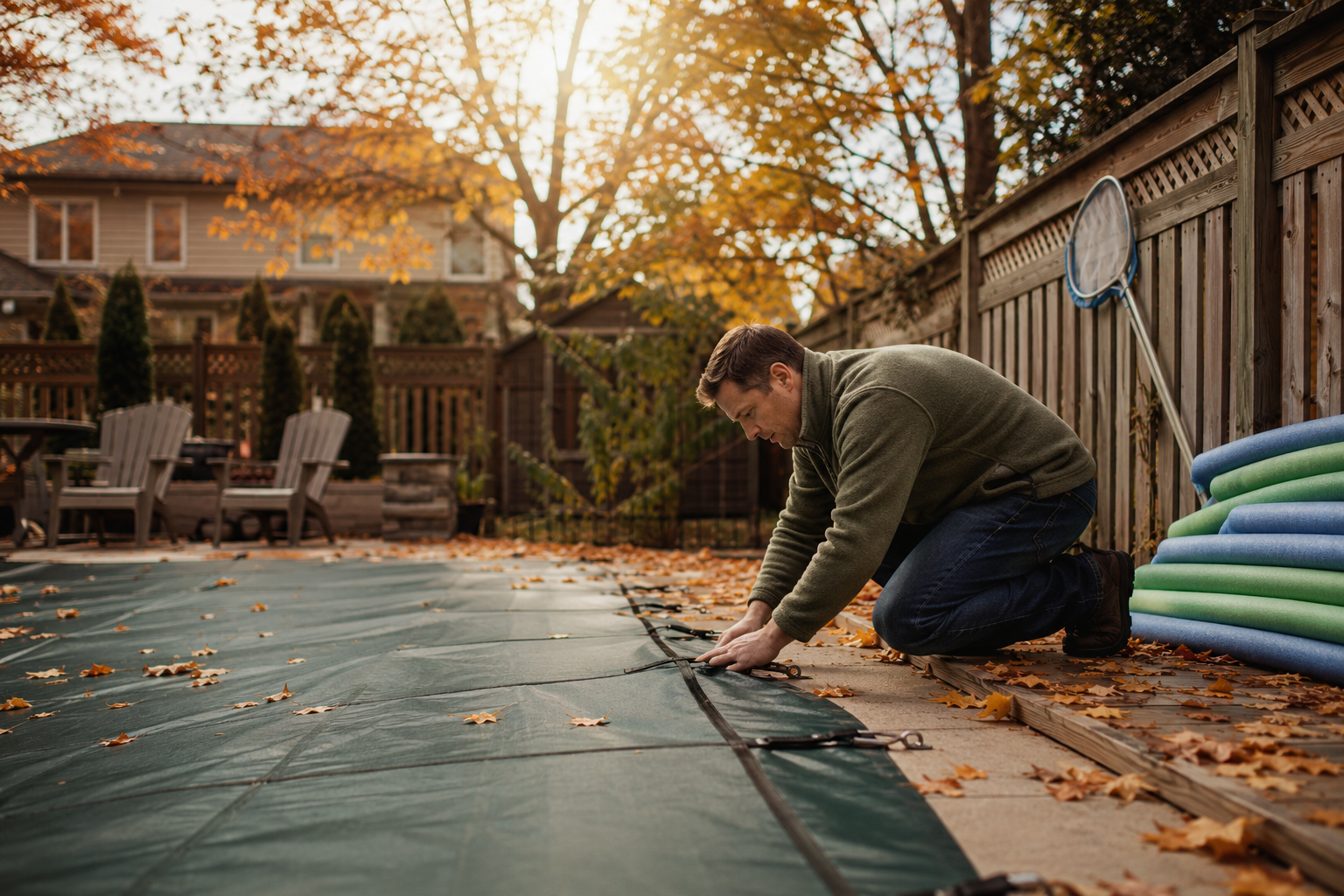
Frost doesn’t negotiate, and it doesn’t arrive on the same date twice. A proper pool closing checklist for Ontario properties has to be built around that uncertainty, not a single circled day on the calendar. The “safe” closing window across the province is wider than most homeowners assume, and the penalty for guessing wrong is a cracked line, not just a wrinkled cover. The goal every fall is the same: get the water balanced, the plumbing empty, and the equipment stored before the ground makes the choice for you.
Timing is the part homeowners get wrong most often, and it isn’t really their fault. Ontario’s fall doesn’t behave like a single climate. Lake Ontario keeps the immediate shoreline running weeks behind everywhere else, while inland and northern properties see hard ground frost much sooner. Zoom out to a Canada-wide view and the spread gets even more dramatic. Natural Resources Canada’s frost mapping shows the first fall frost landing in mid-September on the Prairies, into November along the Toronto waterfront, and not until December on parts of the BC coast. For an Ontario pool, that translates to a practical window of early-to-mid October for lakeshore and southwestern properties, and the last week of September for anyone farther inland or north of the Greenbelt. Waiting for a cold snap to announce itself is how equipment gets damaged.
The actual closing sequence is mechanical, not mysterious, and it goes in this order every time.
Skim, brush, and vacuum first. Anything organic left on the walls or floor over winter feeds algae under the cover, which is the single biggest reason spring openings turn into a full green-to-clear project instead of a quick balance-and-swim.
Target pH 7.2–7.6 and total alkalinity 80–120 ppm before adding a winterizing algaecide and a chlorine or non-chlorine shock. Balanced water sits still all winter; unbalanced water etches plaster and stains liners while nobody’s watching.
Drop it below the skimmer mouth — typically 4–6 inches below the tile line for inground pools — so ice forming at the surface has room to expand without pushing against the skimmer or the coping.
Skimmer, return, and main drain lines all need to be cleared with a shop vac or dedicated blower, then plugged or fitted with winterizing gizmos that give trapped water somewhere to expand. This step alone prevents most of the freeze damage pool techs see every spring.
Pumps, filters, heaters, and chlorinators all hold water in low spots that freeze and split. Drain plugs out, filter grids or cartridges cleaned and stored indoors, ladders and rails removed and dried before they go into the shed.
A safety cover rated for the pool’s actual dimensions, pulled drum-tight and secured at every anchor point, keeps out both debris and the risk of a covered pool being mistaken for solid ground. A loose cover that pools water is worse than no cover at all.
That repair range isn’t a scare tactic. Water left in a line expands by roughly 9% as it freezes, and that’s more than enough to split PVC or hairline-crack a pool shell. A professional closing in Ontario typically runs $200 to $450 for an inground pool — cheap insurance against a bill that’s ten to twenty times larger. Frost in southern Ontario regularly penetrates 3 to 4 feet into unprotected ground. That’s exactly why buried services need frost protection in the first place, and pool lines that aren’t blown out and pitched to drain are sitting well inside that danger zone all winter.
Here’s the detail that trips up almost every new pool owner: closing the pool does not close out the legal side of owning one. Ontario’s Building Code (O. Reg. 332/12) treats the pool enclosure requirement as a year-round obligation, not a summer one. An empty pool under a foot of snow still needs a compliant, self-latching fence around it, every single day it’s capable of holding water. Homeowners who take a gate off “since nobody’s swimming” are the ones who find out at claim time that their insurer treats a non-compliant enclosure the same in January as it does in July. If the fence needs repair, do it during the close, not after the first thaw.
Store what you removed with the same care you gave the water. Skimmer baskets, ladders, and solar covers should go somewhere dry and out of direct sun, since UV and freeze-thaw cycles are just as hard on stored plastic as they are on anything left poolside. Label the winterizing chemicals you didn’t use and keep them away from anything that will freeze solid, since a frozen jug of algaecide is a spring headache nobody needs.
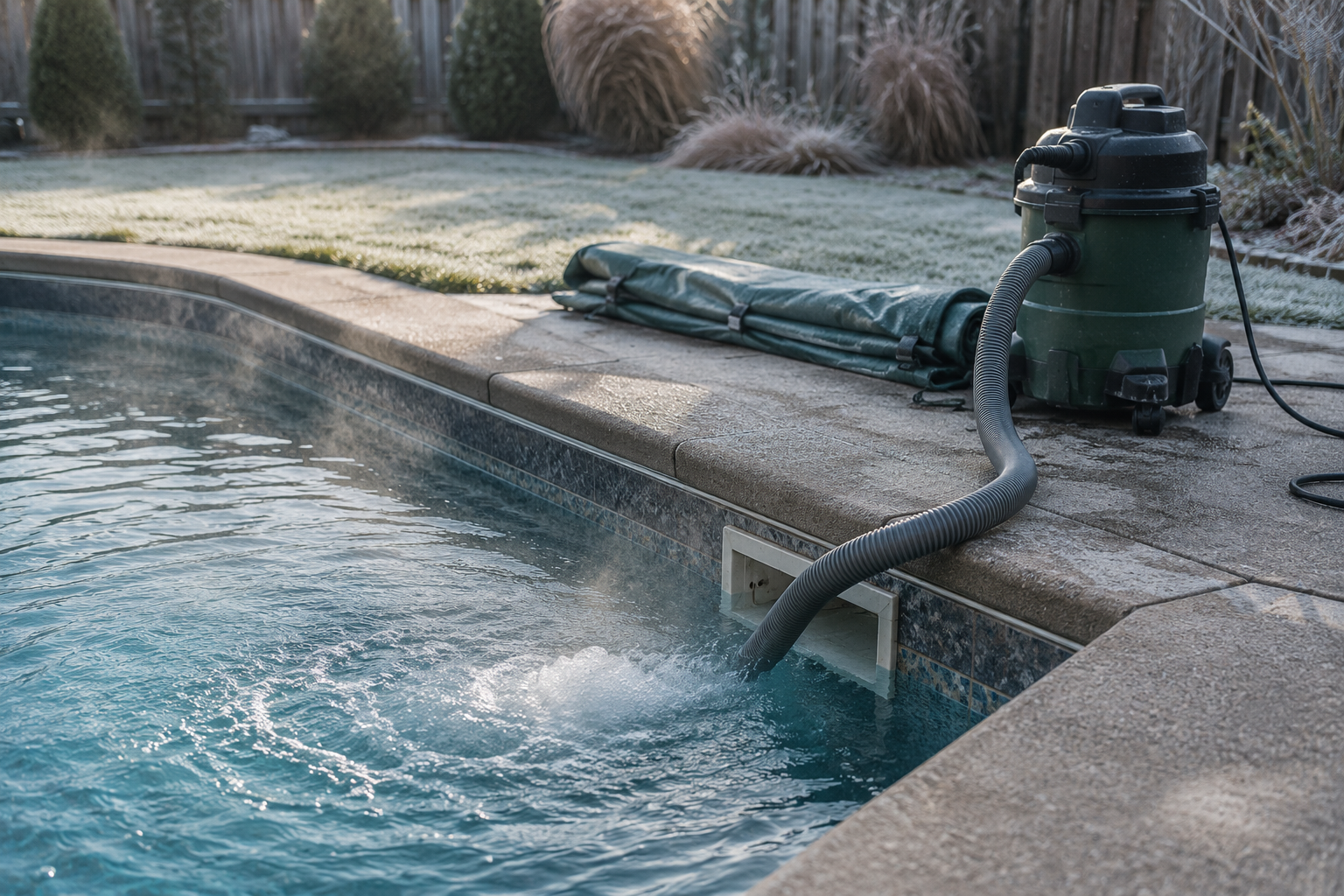
None of this is difficult work, but it’s unforgiving of shortcuts in a way that most fall maintenance isn’t. A furnace filter you forget to change costs you a month of slightly worse air. A pool line you forget to blow out costs you a spring morning finding out exactly which fitting cracked first. The whole point of doing it properly once, in the right order, is that opening day next May becomes the easy part again.
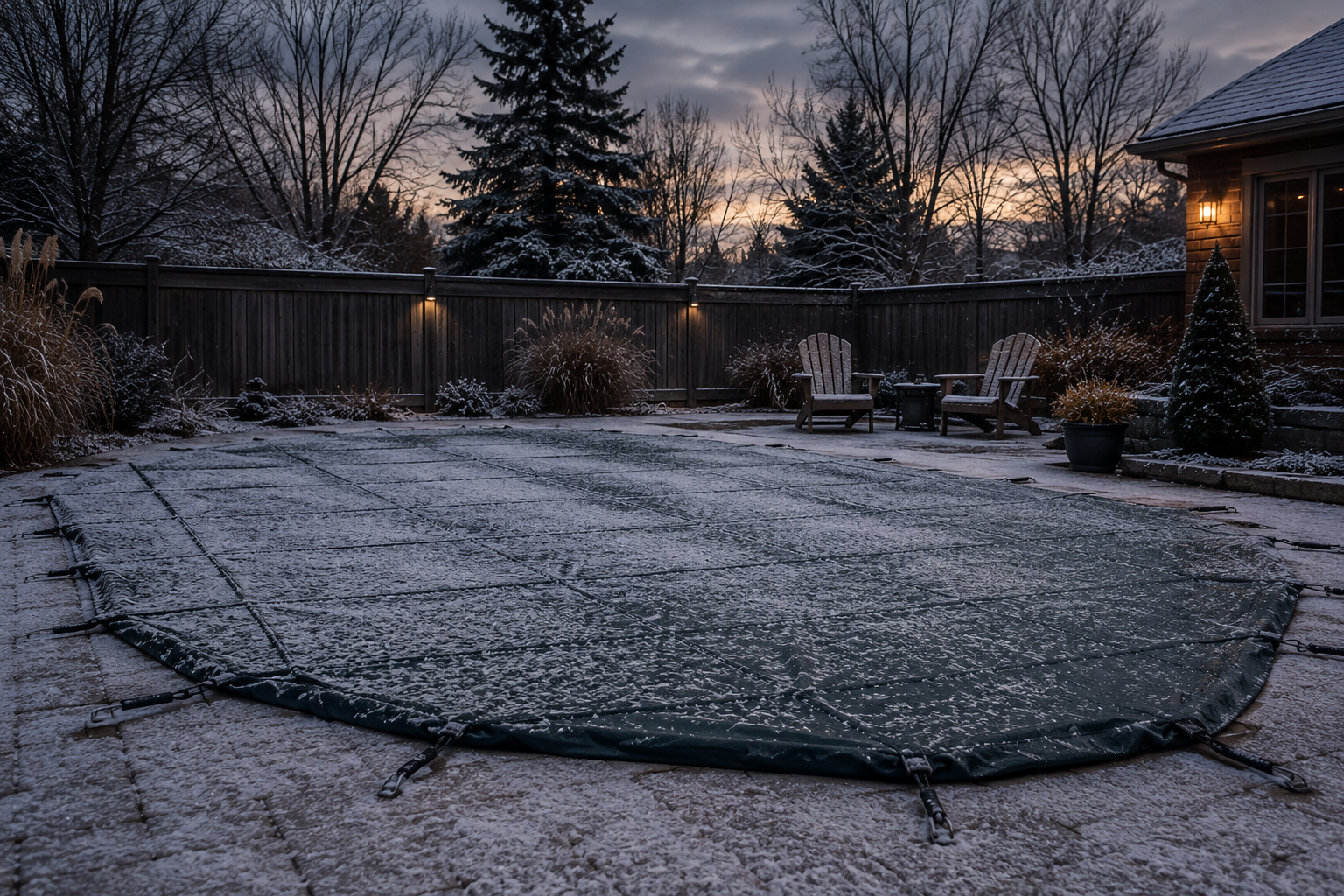
Winter doesn’t ask a pool to be perfect. It only asks that nothing was left half-finished.
— NestDigest