
In today’s housing market, where affordability constraints and elevated borrowing costs continue to limit mobility, homeowners are increasingly shifting their focus from relocation to optimization. As outlined in the broader micro-renovation economy, the emphasis is no longer on large-scale transformations, but on targeted upgrades that deliver maximum impact with minimal capital.
This raises a more practical question: which upgrades actually create value?
Not all renovations are equal. Some consume capital without materially improving functionality or perception, while others—often smaller and less expensive—can significantly enhance both. Understanding this distinction is critical, particularly in an environment where capital efficiency matters more than ever.
Rethinking ROI: Value Per Dollar, Not Total Spend
Traditional renovation thinking often equates higher spending with greater value creation. In reality, the relationship is far less linear.
High-cost renovations—such as full kitchen remodels or structural additions—can certainly increase property value, but they also introduce longer timelines, higher risk, and diminishing marginal returns. By contrast, small home improvements with high ROI operate differently. Their objective is not to maximize absolute value, but to maximize value per dollar deployed—an approach that aligns closely with the growing improve, don’t move strategy, where homeowners prioritize optimizing existing space over relocating.
This is where micro-renovations outperform. A relatively modest investment, often between $1,000 and $5,000, can meaningfully change how a space is experienced. These upgrades leverage perception, functionality, and design cohesion rather than scale.
Paint: The Highest Return Per Dollar
Among all renovation activities, painting remains one of the most efficient. It requires minimal capital, can be completed quickly, and has an immediate visual impact.
A fresh coat of paint does more than update color—it resets the entire tone of a space. Lighter palettes can make rooms feel larger and more open, while warmer tones can create a sense of comfort and cohesion. Increasingly, homeowners are adopting trending palettes such as soft greens, terracotta, and muted neutrals to modernize interiors without structural change.
From a market perspective, well-executed paint upgrades can improve listing appeal and reduce time-on-market. In rental contexts, they contribute to a cleaner, more updated presentation that supports tenant demand.
Lighting: Underrated but Transformational
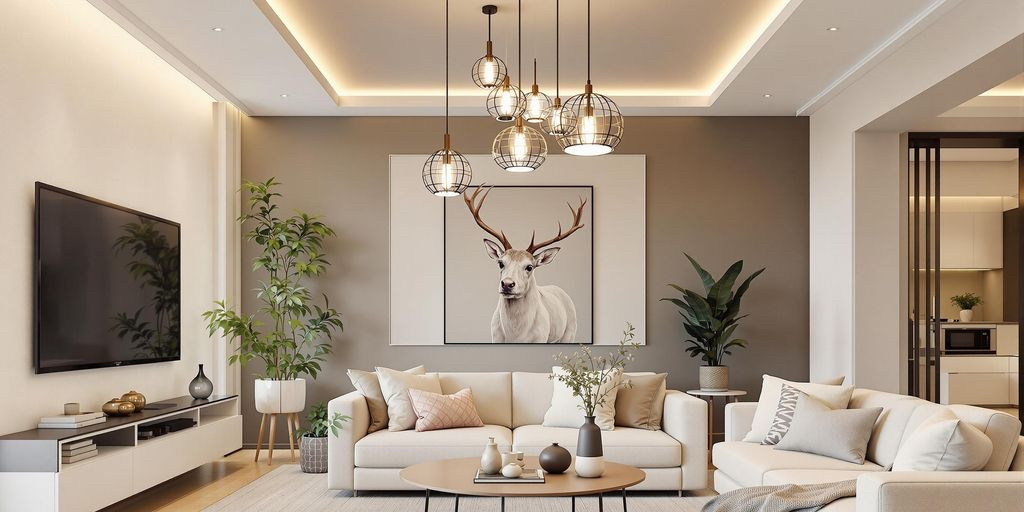
Lighting is often overlooked, yet it plays a central role in how a space is perceived. Poor lighting can make even well-designed interiors feel dated or uninviting, while upgraded lighting can dramatically enhance ambiance and usability.
Replacing outdated fixtures with modern alternatives—particularly layered lighting that combines ambient, task, and accent sources—can elevate a space at relatively low cost. Even simple changes, such as switching to warmer bulbs or adding dimmable features, can improve both functionality and atmosphere.
From an investment standpoint, lighting upgrades are particularly attractive because they influence perception across the entire space, not just a single element.
Hardware and Fixtures: Small Changes, Disproportionate Impact
Another category of high-impact upgrades lies in hardware and fixtures. Cabinet handles, faucets, door hardware, and similar elements may seem minor individually, but collectively they contribute to the overall impression of quality and modernity.
Replacing outdated finishes with more contemporary options—brushed brass, matte black, or minimalist steel—can create a cohesive design language throughout the home. These upgrades are relatively inexpensive and can often be completed without professional assistance.
What makes them effective is their visibility. They are frequently touched and seen, reinforcing the perception of an updated space.
Surface-Level Transformations: Backsplashes and Wall Treatments
Surface upgrades represent another efficient path to value creation. Peel-and-stick backsplashes, wall panels, and textured finishes allow homeowners to introduce visual interest without committing to full renovations.
In kitchens and bathrooms—areas that heavily influence buyer perception—these upgrades can be particularly impactful. A refreshed backsplash or feature wall can shift a space from dated to contemporary with minimal disruption.
These interventions operate squarely within the micro-renovation framework: low cost, high visual return, and quick execution.
Storage and Space Optimization
Beyond aesthetics, functionality plays a critical role in perceived value. Homes that feel organized and efficient are inherently more attractive, regardless of their size.
Small investments in storage solutions—modular shelving, closet organizers, or multi-functional furniture—can significantly improve usability. These changes may not be immediately visible in listing photos, but they enhance daily living and long-term satisfaction.
In smaller homes or urban settings, where space is limited, these upgrades can be particularly valuable.
The Role of Decor in Value Creation
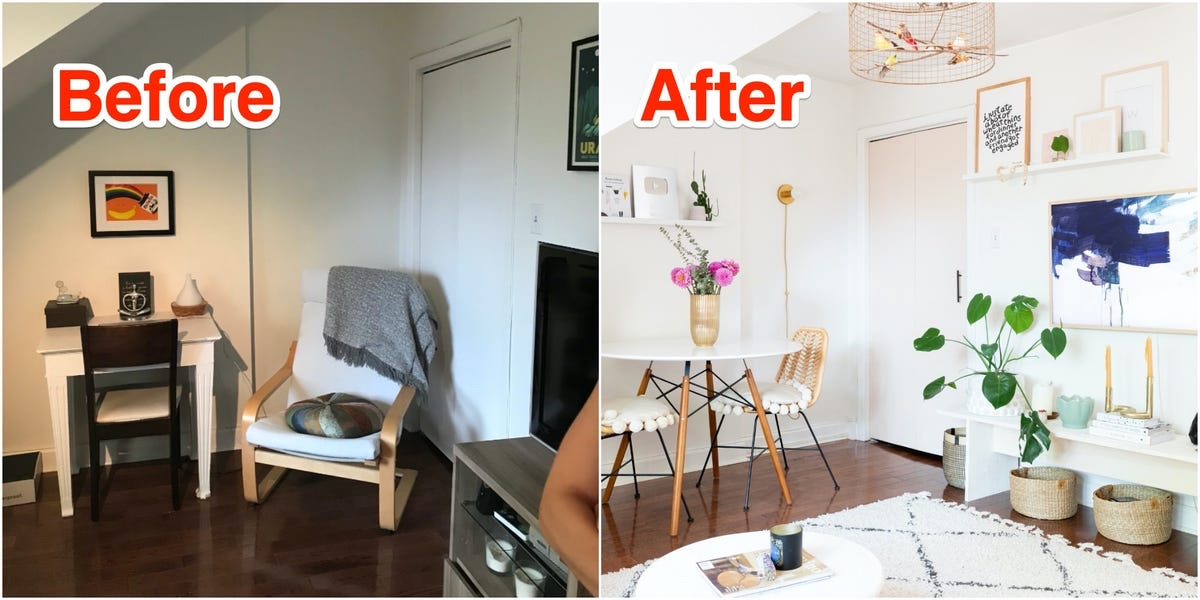
While often categorized separately from renovation, decor plays a central role in shaping perception. Rugs, cushions, artwork, and textiles can transform a space without altering its structure.
These elements contribute to what can be described as visual completeness. A well-styled room feels intentional, balanced, and inviting. Importantly, the cost of achieving this effect is relatively low compared to structural upgrades.
In both resale and rental scenarios, decor can influence first impressions, which in turn affect engagement and perceived value.
What Does Not Work: Where Capital Is Often Wasted
Just as important as knowing what works is understanding what does not. Over-customized renovations, overly bold design choices, and high-cost upgrades that do not align with market expectations often fail to deliver proportional returns.
Similarly, investing heavily in areas that are not visible or do not impact daily use may not translate into meaningful value. The key is alignment—between cost, function, and perception.
In the current environment, where efficiency is critical, avoiding these misallocations is as important as selecting the right upgrades.
From Renovation to Strategy
The growing emphasis on high-impact, low-cost upgrades reflects a broader shift in how homeowners approach renovation. It is no longer viewed purely as a discretionary activity, but as a form of strategic capital deployment.
Each decision—whether to repaint, replace fixtures, or reconfigure space—is evaluated not just in terms of cost, but in terms of return. This aligns directly with the “improve, don’t move” mindset, where the objective is to extract maximum value from an existing asset.
Conclusion: Precision Over Scale
In a market where large-scale renovations are becoming less accessible, the ability to create value through smaller, targeted upgrades is increasingly important.
High-impact, low-cost improvements demonstrate that meaningful transformation does not require significant capital. Instead, it requires precision—understanding which elements influence perception, functionality, and overall experience.
As the micro-renovation economy continues to evolve, these upgrades will play a central role in how homeowners, investors, and renters alike redefine value in residential real estate.

← Previous in Series
Improve, Don’t Move: The Smart Home Renovation Strategy for 2026
Next in Series →